
24/7 Customer Support

Free returns

Same-day & Next-day Delivery

Quality Guaranteed

Unlock Your Welcome Offers: FREE Delivery | Up to 80% OFF | Free 30-day JoyPlus trial
Download the APP
Choosing Rosewood small animal treats is not simply a matter of picking the most colourful packet. Rabbits, guinea pigs, hamsters, chinchillas, degus, gerbils, mice and rats have different feeding patterns, chewing strength and tolerance for rich ingredients. A treat that suits a rabbit may be unsuitable for a degu, while a large wooden log may present a poor fit for a small hamster enclosure.
The following guide focuses on the details that are easy to overlook: ingredient density, fibre content, chewing format, species suitability and storage.
Words such as “natural”, “dental” and “high-fibre” describe useful features, but they do not make a product a complete food. Most treats are complementary pet food and should sit alongside the animal’s normal species-appropriate diet, unlimited hay where suitable and fresh water.
Check the feeding guide rather than relying on the packet size. For example, some products suggest one or two pieces daily, while the Rosewood Veggie Burst Pea Pods are listed at one or two pieces per week.
A single-ingredient dried herb, a hay cookie and a fruit-based snack are very different options. Fruit products may contain naturally occurring sugars, whereas hay treats generally provide more fibre. A product with flowers, seeds or grains may be more interesting for foraging, but it can also be more calorie-dense than plain hay.
Look at the composition and analytical constituents. Do not select solely by claims such as “wholesome” or “gourmet”.
Edible chew toys are designed to be consumed or gradually worn down. Once a product becomes damp, heavily soiled, splintered or broken into small pieces, it should be removed. Hanging toys also need a secure attachment and regular inspection, particularly in active enclosures.
For herbivores, hay should remain central to the diet. As a practical comparison, the Rosewood Naturals Meadow Hay Cookies list 32% crude fibre, while the I Love Hay Forage Cube lists 30%. These are substantially different from fruit-led snacks, which are better considered occasional treats.
For rabbits and guinea pigs, look for hay-based options such as:
For chinchillas and degus, select products labelled for those species and avoid treating rich, sweet ingredients as everyday food. The Chinchilla & Degu Delight contains Timothy hay, oats, barley, carrot, pea flakes, dandelion, marigold and rosehip, with 15% crude fibre listed.
A hard-baked stick, hay cube, woodroll and loose forage salad provide different types of interaction. A chew toy should be large enough not to be swallowed whole, but not so large that a small animal cannot handle it.
The Rosewood Nibble Woodroll with Carrot combines an edible outer roll with a carrot, millet and vegetable starch filling. The Treat n Gnaw Logs Large uses finely chopped pine wood blended with alfalfa, glycerine and starch, with grains, carrot and apple included. These formats encourage gnawing and exploration, but supervision remains necessary.
Always check whether the product is intended for your animal’s species, age and size. Products listed for adult animals may not be suitable for babies. Avoid items designed for rabbits or larger rodents in very small hamster habitats if they obstruct movement or contain pieces that could be swallowed.
Keep treats sealed in a cool, dry place. Moisture can soften baked items and damage wooden toys. Follow the product label if it differs from general guidance.
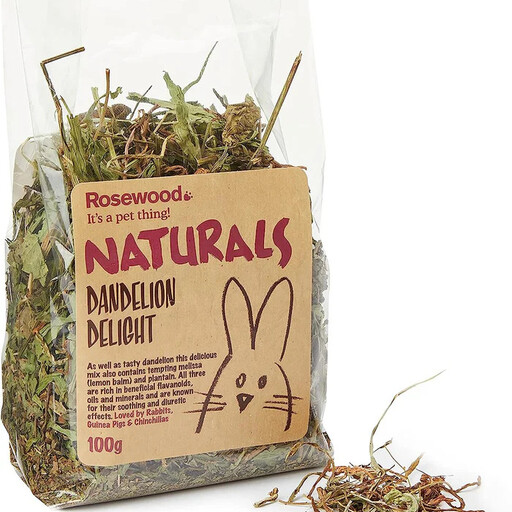
Why This Fits Their Persona: A straightforward single-ingredient option for owners introducing natural small animal treats without buying a mixed selection.
The composition states 100% dandelion, making the ingredient list easy to assess rather than hiding a complex recipe behind broad marketing language.
100g resealable pack; listed at 15% crude fibre and suitable for adult rabbits, guinea pigs and hamsters.
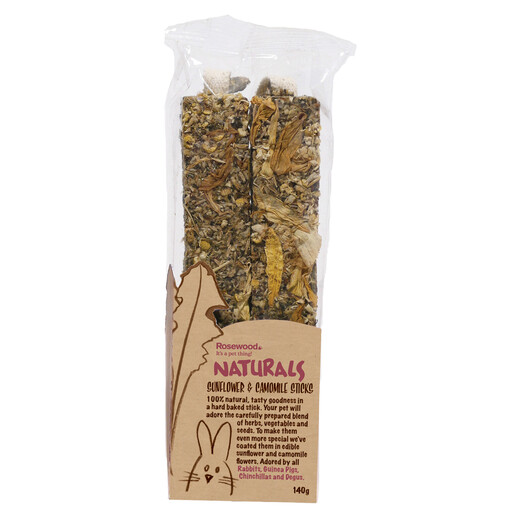
Why This Fits Their Persona: Suitable for owners who want a longer-lasting, varied texture rather than loose pieces that disappear quickly.
The composition specifies vegetables, seeds, herbs, chamomile and sunflower petals, so the variety is identifiable rather than merely described as “natural”.
140g resealable pack; suitable for rabbits, guinea pigs, chinchillas, degus and several rodents.
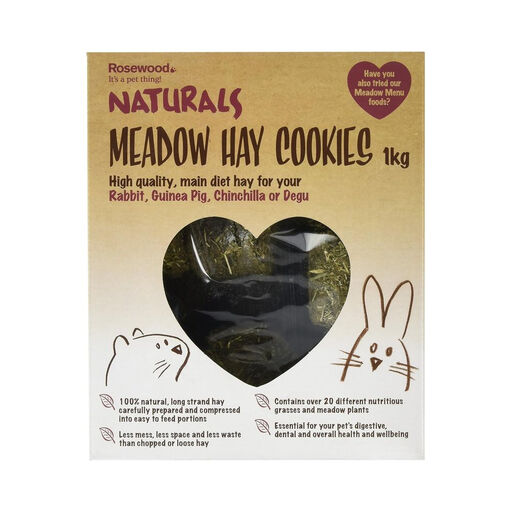
Why This Fits Their Persona: A practical bulk format for multi-pet households or owners who use hay treats regularly as enrichment.
It is made from 100% meadow hay, reducing uncertainty about added sweeteners or an overly complicated ingredient list.
1kg quantity; listed at 32% crude fibre and designed for rabbits, guinea pigs, chinchillas and other small herbivores.
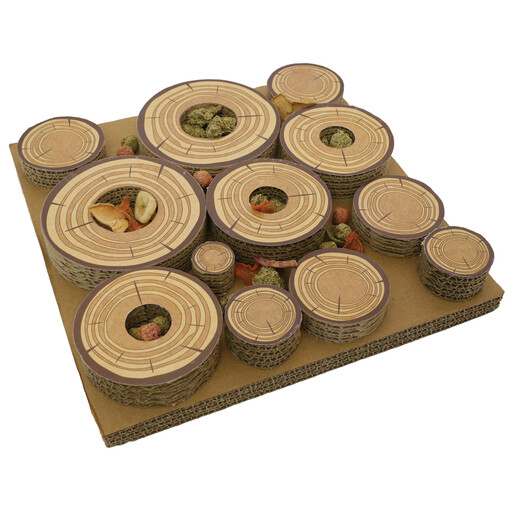
Why This Fits Their Persona: Useful for owners who want foraging activity rather than simply placing treats in a bowl.
Hidden compartments make the activity interactive, while the instructions advise checking for cracks, loose parts and food residue.
Refillable design; compact pine-wood format for hamsters, gerbils, mice, rats and selected smaller rabbits or guinea pigs.
We have compiled a complete, real-time list of products that fully satisfy these strict selection criteria and UK safety regulations.
Use the product label as the starting point and adjust for species, size, age, activity and the rest of the diet. Treats should remain a small addition rather than replacing hay, pellets or other staple food. Introduce new rabbit treats, guinea pig treats or hamster treats gradually and monitor changes in appetite or droppings.
No. Hay remains a key part of many herbivorous small pets’ diets. Edible chew toys and crunchy treats can add texture and activity, but they are not a substitute for a balanced feeding routine or veterinary advice where dental problems are suspected.
Lifespan depends on the animal, toy size and how often it is used. A hay cube may be consumed gradually, while a wooden log can be damaged more quickly by a strong gnawer. Inspect products frequently, remove damp or soiled items and replace anything cracked, loose or reduced to small pieces.