
24/7 Customer Support

Free returns

Same-day & Next-day Delivery

Quality Guaranteed

Unlock Your Welcome Offers: FREE Delivery | Up to 80% OFF | Free 30-day JoyPlus trial
Download the APP
Choosing Rosewood small animal treats and toys can be more complicated than it first appears. Product photos may show colourful treats, elaborate tunnels or chew toys, but the important details are often found in the composition, dimensions and feeding guidance.
For UK rabbit, guinea pig, chinchilla, degu and hamster owners, three common buying traps are worth avoiding:
Start with the exact species and life stage. Rabbit treats, guinea pig treats, chinchilla treats, degu treats and hamster treats have different practical requirements.
Look for:
Treats should be offered as a supplement to a balanced diet. For example, the Rosewood Naturals Healthy Fruit Salad lists rosehips, banana, apple and other ingredients, with natural sugars shown in its nutritional information. It is therefore sensible to follow the stated one-to-two-piece guideline rather than treating it as unlimited forage.
For herbivorous pets, fibre is a useful comparison point. Meadow hay products can be practical for owners looking for a simple ingredient list. The Rosewood Naturals Meadow Hay Cookies are made from 100% meadow hay and list 32% crude fibre in the supplied product information.
That does not make every hay cookie suitable as a complete food. It remains a complementary treat, and fresh hay should continue to form an appropriate part of a rabbit or guinea pig’s diet. Owners of chinchillas and degus should also check whether a product is specifically labelled for those species.
Be cautious with vague phrases such as “healthy”, “dental” or “natural” unless the listing also explains what the item contains and how it should be used.
When comparing small animal chew toys, inspect the construction and dimensions:
No chew toy lasts indefinitely. Regular inspection is more useful than assuming a product will remain suitable for a fixed number of months.
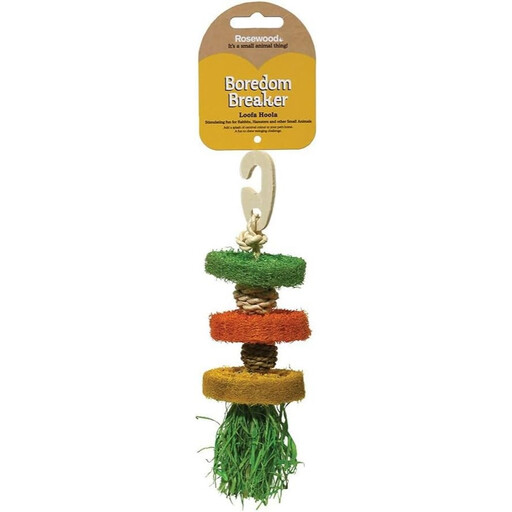
Why This Fits Their Persona: A single lightweight toy offers a straightforward starting point for rabbits, guinea pigs, hamsters and other small pets, with flexible floor or hanging placement.
The listing identifies natural loofah, vegetable-based dyes and a net quantity of one toy, rather than leaving the material or pack size unclear.
Ring design supports pushing and climbing-style play; it can also be used with small treats for supervised foraging.
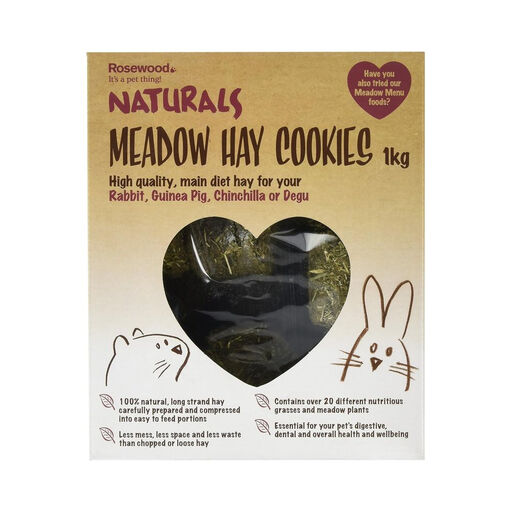
Why This Fits Their Persona: The 1kg pack suits households that want a clearly specified, high-fibre treat option for regular use across suitable small herbivores.
The ingredient list is limited to meadow hay, with feeding instructions and storage guidance supplied for comparison.
100% meadow hay composition; listed crude fibre is 32%; suitable for rabbits, guinea pigs, chinchillas and other small herbivores.
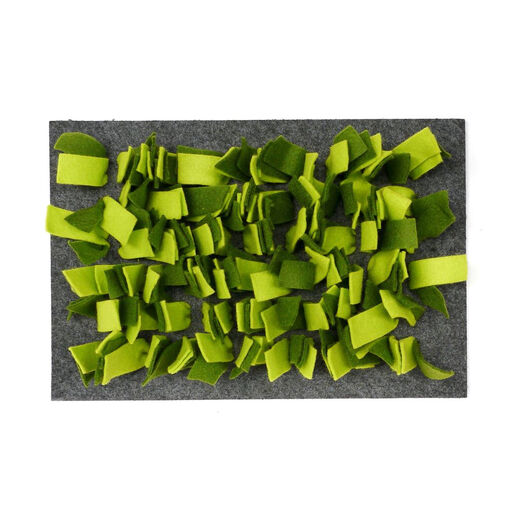
Why This Fits Their Persona: Owners managing indoor enrichment or rotating activities can hide suitable dried or fresh food in the mat for supervised foraging sessions.
The product specifies a 29.5 x 20cm size, hand-washable felt construction and a warning not to let pets ingest the material.
Suitable for a broad range of rabbits and rodents; washable design supports repeated enrichment use.
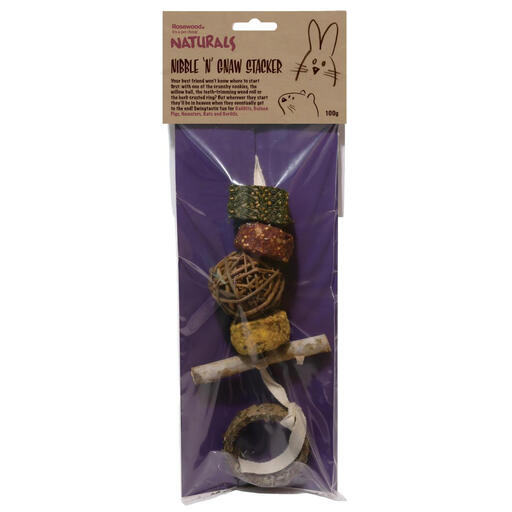
Why This Fits Their Persona: This format is suited to owners wanting one hanging enrichment item combining treats, willow and gnawing elements for several compatible species.
The 100g set lists its components, including baked treats, a willow ball, gnaw stick and herb-coated ring, so buyers can assess what they are receiving.
Combines treat access with gnawing and slower feeding; listed for rabbits, guinea pigs, chinchillas and several small rodents.
Introduce one new item at a time so you can observe how your pet interacts with it. For edible small animal toys, remove packaging before use and follow the feeding guidance. Fresh water should always be available.
For non-edible products, supervise initial use and inspect them regularly. Discard a toy if it becomes heavily soiled, develops sharp edges, loses loose parts or is being chewed in an unintended way. A snuffle mat should be washed according to its instructions and fully air-dried before storage.
Owners of chinchillas and degus should pay particular attention to species labelling and sugar content. Owners of hamsters and gerbils should prioritise appropriately sized foraging toys for rabbits and rodents, rather than choosing a large item simply because it contains more material.
We have compiled a complete, real-time list of products that fully satisfy these strict selection criteria and UK safety regulations.
No. Suitability depends on the product label, ingredients, size and feeding instructions. A treat marked for rabbits and guinea pigs should not automatically be given to a degu, chinchilla or hamster. Check the packaging and introduce new foods gradually.
Replace them when they are heavily worn, damaged, contaminated or producing sharp pieces. Lifespan depends on the material, moisture level, chewing intensity and how often the toy is used. Store edible items in a cool, dry place and inspect cage accessories routinely.
No. Treats and small pet enrichment toys can add variety, but they do not replace a balanced diet, suitable hay where required, fresh water, exercise or appropriate housing. Use them to complement everyday care, not as a substitute.