RPG players facing daylight or room lights
If a window or lamp reflects in the screen, dark scenes, maps and dialogue may be harder to see. RTINGS identifies both room lighting and reflection handling as factors in monitor visibility.


For RPGs in a bright room, prioritise reflection handling and everyday screen brightness before HDR peak brightness or refresh rate: RTINGS explains that room lighting, reflections and brightness all affect visibility. A high-resolution Mini LED monitor may suit players who also prioritise HDR presentation, while 4K IPS favours fine detail and QHD IPS offers a less demanding resolution for mixed-genre play. Check independent reflection and standard dynamic range (SDR) brightness results for the exact model, particularly if a window faces the screen.
If a window or lamp reflects in the screen, dark scenes, maps and dialogue may be harder to see. RTINGS identifies both room lighting and reflection handling as factors in monitor visibility.
If you spend time reading maps and menus or exploring detailed environments, resolution and screen size matter once the display is usable in your room. HDR presentation is a separate consideration from everyday brightness.
If the same monitor will serve RPGs and faster games, weigh its refresh modes against the resolution your PC can drive. ASUS ROG and Dell both list models with gaming-focused refresh options, but those options do not settle how either screen handles glare.
For RPG play in a bright room, establish whether you can see the screen comfortably before deciding how much detail and refresh flexibility you need.
Consider it when: Strong room lighting is a recurring concern and high-resolution HDR scenes are important to you; LG positions its 27GM950B-B for bright indoor environments.
Keep in mind: LG’s stated peak brightness does not establish sustained SDR brightness or reflection handling, and demanding games at high resolution place greater demands on a PC.
Consider it when: Fine text, maps and scenery are priorities and you want a matte screen, as offered by BenQ’s 27-inch EX2710U.
Keep in mind: A matte coating alone cannot resolve a window reflected directly in the display; assess the room layout and the exact model’s brightness.
Consider it when: You also play faster games and prefer a resolution that places less demand on your GPU than 4K; ASUS ROG lists the anti-glare XG27ACS at QHD and up to 180Hz.
Keep in mind: QHD provides less fine image detail than 4K at a comparable screen size, and an anti-glare specification is not a measured bright-room result.
| Concern | What to check | Who this matters to |
|---|---|---|
| Glare and daytime readability | Look at the direction of windows and lamps, then compare reflection tests and SDR brightness for the exact model. | When light reflects across dark scenes, I need dialogue and maps to remain legible; around 36% of consumers would put glare control first. |
| RPG detail and HDR | Compare native resolution and the PC needed to drive it; assess HDR separately from ordinary SDR visibility. | I spend time examining scenery and reading dense menus, so fine image detail matters after I can see the screen clearly; roughly 29% of consumers would make detail and presentation their primary concern. |
| Smooth mixed-genre play | Check refresh modes at the resolution you will use and compatibility with your source device. | If I switch from RPGs to faster games, I want motion that suits both without choosing a mode my PC cannot sustain; around 21% of consumers would prioritise that flexibility. |
| Desk and connection fit | Measure the desk and check stand adjustment, mounting options and the required port modes. | My screen needs to fit where I can position it away from reflected light and connect it to my devices; roughly 14% of consumers would treat setup fit as their main concern. |
HDR highlights and ordinary SDR gameplay use different brightness measures. As RTINGS’ brightness guidance makes clear, brightness matters in a well-lit room, but an HDR peak figure alone does not tell you how visible menus and maps will be during daytime play.
Compare SDR brightness and reflection handling first; assess HDR capability separately if you play HDR games.
RTINGS notes that the position of room lights and the screen’s reflection handling both affect what you see. A window facing the panel can remain distracting even when the screen is described as matte or anti-glare.
Check the view from your intended seat and plan whether you can move the display or light source. Use independent reflection tests when comparing shortlisted models.
A monitor’s advertised modes depend on its inputs, the source device and the frame rates your games can reach. A higher native resolution also increases graphics demands.
Check the exact monitor and PC or console output modes before choosing between higher-resolution detail and higher-refresh play.
Reaching a desired mode may call for different in-game settings, a suitable cable or a graphics-card upgrade.
A screen that meets your image preferences may still be difficult to use if the desk forces it to face a bright light.
Measure the available space and check the exact model’s stand adjustments or mounting options before deciding where it will sit.
LG’s 27GM950B-B illustrates a high-resolution Mini LED option for players interested in HDR and bright-room use.
Samsung’s Odyssey Neo G7 illustrates a larger, curved 4K Mini LED option.
BenQ’s EX2710U is a 4K IPS option with a matte coating and an RPG picture mode.
The ROG Strix XG27ACS illustrates a QHD Fast IPS option for RPGs and faster games.
Dell’s Alienware AW2725QF offers separate resolution and refresh modes for players who switch between RPGs and faster games.
These choices include 4K OLED and IPS monitors and a smaller Full HD curved screen. For any of them, assess everyday brightness and reflections in the room where you play rather than treating resolution or a coating label as the answer to glare.
 No image available
Consider this for detailed RPG scenery if a large 4K screen suits your desk. The title lists dual modes with a maximum 330Hz refresh rate; check which mode your device can use. Its OLED screen also makes prolonged static game elements worth considering, while SDR brightness and reflection handling need checking for your room.
 No image available
This large Ultra HD OLED screen may suit players who prioritise RPG scenery and interface detail. Check reflection handling and SDR brightness for the LS32DG802SUXXU in your lighting, along with the connections and stand adjustment your setup requires.
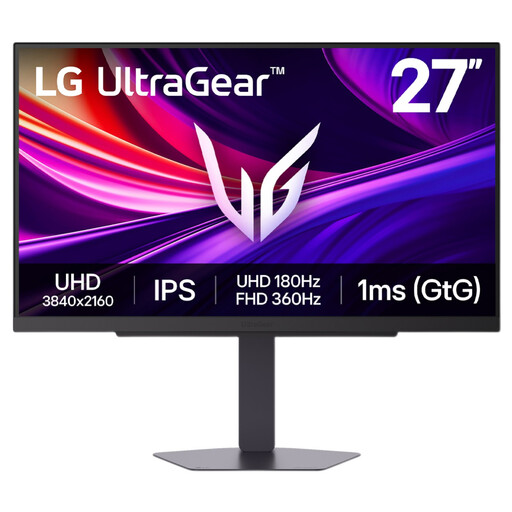 No image available
Consider this 4K IPS option if you want fine RPG detail at a 27-inch size and also use faster-game modes. The title lists dual modes with a maximum 360Hz refresh rate; confirm the supported resolution and connection for the mode you intend to use. Check SDR brightness and reflections before placing it opposite a light source.
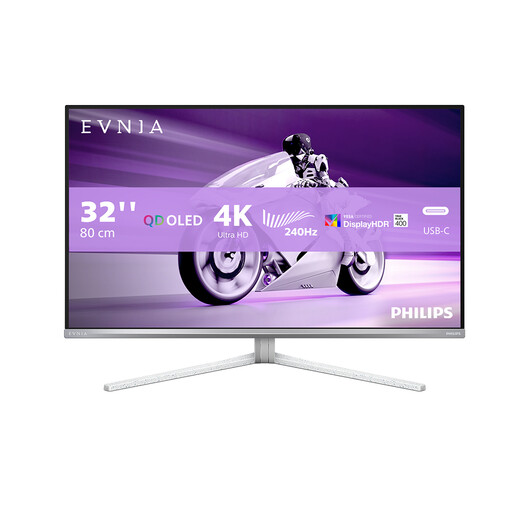 No image available
The 32-inch 4K OLED format suits players considering a larger screen for detailed RPG scenes. Confirm the exact supported refresh modes before ordering, as the listing gives conflicting figures. Check bright-room reflections and SDR brightness, and consider the warning about prolonged static images on the OLED panel.
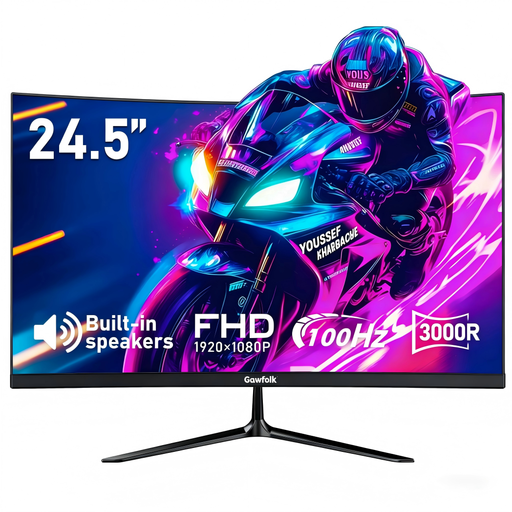 No image available
This smaller Full HD option may suit a compact setup if you accept less fine RPG detail than 4K provides. Its title lists a 100Hz refresh rate, anti-glare screen, HDMI connection and 75 × 75mm VESA mounting. Check SDR brightness and measured reflections rather than assuming the coating will handle light facing the screen.
Neither replaces the other: check both reflection handling and usable SDR brightness for the exact monitor. RTINGS identifies room lighting, screen brightness and reflections as separate factors, so a matte label alone cannot tell you whether a window facing the screen will be distracting.
No. HDR peak brightness describes highlights, not necessarily the visibility of ordinary SDR maps, menus and gameplay across the screen. For daytime use, compare SDR brightness and reflection handling as well as any HDR specification.
Choose 4K if fine text, maps and scenery take priority and your PC can run your games satisfactorily at that resolution; consider QHD if you prefer lower graphics demands alongside high-refresh play. For model-specific context, BenQ lists its EX2710U at 4K and 144Hz, while ASUS ROG lists the XG27ACS at QHD and up to 180Hz. Neither specification resolves bright-room glare on its own.
Match the monitor’s supported input modes to the outputs of your PC or console at the resolution and refresh rate you intend to use. Connector shape alone is not enough: BenQ lists HDMI 2.1 and DisplayPort 1.4 for the EX2710U, while ASUS ROG lists HDMI 2.0, DisplayPort 1.4 and USB-C DisplayPort Alt Mode for the XG27ACS.