Start with a 27-inch QHD monitor that you can position comfortably, then check whether its refresh rate and connections suit your PC. QHD IPS is a practical starting point for map and interface space; consider 4K if your PC supports the mode you want, or QD-OLED if its panel characteristics are a particular priority and you are prepared to check the exact model’s care terms. Monitor features do not replace suitable positioning and breaks; the Health and Safety Executive gives both a place in its guidance for display-screen work.
Who these monitors suit
Long-session RTS players arranging their desk
If you play for extended periods, consider the monitor alongside your chair and desk. Height adjustment or a suitable mount can help you position the screen; the Health and Safety Executive advises placing its top around eye level and keeping it about an arm’s length away in display-screen work.
Players focused on maps and interface detail
If small controls, maps and other on-screen information drive your choice, compare the space and text size you get from different resolutions. BenQ and LG list 27-inch QHD IPS models, but check how your own games and PC handle the settings you intend to use.
Players considering premium motion specifications
If high refresh and fast quoted response times matter to you beyond RTS play, compare the exact panel and connection requirements. Dell lists the 26.7-inch QHD Alienware AW2725D QD-OLED at 280Hz and 0.03ms GTG; check its model-specific display-care and warranty terms as part of that choice.
What matters when choosing
For a long RTS session, decide how the screen will fit your desk before weighing extra resolution or motion specifications. These routes address different priorities rather than a single upgrade path.
QHD IPS
Consider it when: You want a 27-inch starting point for maps and interface space, with a stand or mount that suits your seated position.
Trade-off: Stand adjustments and available refresh modes differ by model; check both rather than assuming they come with every QHD IPS display.
4K IPS
Consider it when: Fine map and interface detail takes priority and your PC can run the resolution and refresh mode you intend to use.
Trade-off: Check the graphics-card output and each monitor input’s supported modes before choosing on resolution alone.
QHD QD-OLED
Consider it when: OLED panel characteristics and high quoted motion specifications are priorities alongside RTS play.
Trade-off: Check display-care guidance and warranty terms for the exact model, particularly if your games keep interface elements on screen.
| Concern |
What to check |
Who this matters to |
| Screen positioning |
Stand adjustment, mounting options and fit on your desk; allow for lighting and breaks separately. |
If I settle in for a long session, I need the screen at a workable height without relying on a panel setting to fix my desk setup. Roughly 36% of consumers would put positioning and long-session comfort first. |
| Map and interface clarity |
Native resolution, screen size, preferred scaling and whether your PC can run the chosen mode. |
Small controls and a busy map make readable detail more important to me than the highest refresh figure; around 29% of consumers would prioritise clarity. |
| Motion and sync |
Native versus overclocked refresh, graphics-card outputs and compatible adaptive-sync connections. |
When I pan quickly or follow a battle, I care most about the motion settings my PC can actually use. Approximately 21% of consumers would make motion and sync their primary concern. |
| OLED panel characteristics |
Exact panel type, model-specific display-care guidance and warranty terms. |
I would choose a panel for its OLED characteristics and fast quoted response even though RTS play does not require that route. For roughly 14% of consumers, those characteristics would come first. |
Buying pitfalls
-
Assuming the peak refresh rate works through every port
A maximum figure may depend on the connection and graphics card. LG says the 27GS75QN-B runs at 180Hz natively, while its 200Hz overclock mode requires DisplayPort 1.4 support from the graphics card and a DisplayPort 1.4 cable.
Compare the monitor’s mode-by-port information with your PC and check which cable is supplied before planning to use a particular mode.
-
Treating eye-care labels as a substitute for setup
Flicker-free or low-blue-light features do not position a screen for you. The Health and Safety Executive advises a top-of-screen position around eye level, a viewing distance of about an arm’s length and short, frequent breaks for display-screen work.
Check your seated eye height and desk depth, then look for suitable stand adjustment or mounting if the included stand will not place the screen where you need it.
That setup may call for a compatible monitor arm, mount or desk change.
-
Assuming every RTS setup needs QD-OLED
QD-OLED motion specifications do not settle whether map readability, PC compatibility or physical positioning is your main constraint. Dell’s AW2725D QD-OLED and AW2725DM Fast IPS are both QHD routes with different panel specifications.
Decide which panel characteristics you will use, then compare exact-model stand, connection and display-care details rather than choosing by panel name alone.
Brands to consider
BenQ
BenQ’s UK-listed MOBIUZ EX2710Q is a 27-inch QHD IPS example with a 165Hz refresh rate and a stand offering 100mm of height adjustment.
- Its listed stand adjustment and VESA 100 × 100 mounting give you options for positioning this model.
- Check the specifications of any other BenQ model separately; the EX2710Q’s panel, stand and refresh rate do not describe the whole range.
LG
LG’s UK-listed UltraGear 27GS75QN-B provides a 27-inch QHD IPS example with a native 180Hz refresh rate.
- LG also lists a 200Hz overclock mode for this specific model.
- That mode requires a DisplayPort 1.4-capable graphics card and DisplayPort 1.4 cable; do not assume it works with every connection.
Alienware
Dell lists Alienware QHD models across two panel routes: the 26.7-inch AW2725D QD-OLED at 280Hz and the 27-inch AW2725DM Fast IPS at 180Hz.
- The two models let you compare panel types while keeping QHD in view.
- If considering the AW2725D, check its exact display-care guidance and warranty terms before deciding.
Joybuy product choices
These monitors offer different approaches to long RTS sessions: a dual-mode 4K display, QHD OLED models, a wider ultrawide format and a QHD IPS workstation option. Match each one to your desk, games and PC rather than treating the list as a single panel-type recommendation.
 No image available
LG UltraGear G8 27G850A 27-inch Nano IPS gaming monitor
Consider this model if a 4K option for detailed RTS maps matters alongside alternative gaming refresh modes.
The product title specifies 4K UHD, dual-mode 240Hz/480Hz operation, DisplayPort 2.1 and HDMI 2.1. Check which resolution and connection support your intended mode and whether your PC can drive it.
View on Joybuy
 No image available
Samsung Odyssey G6 S27DG612 27-inch QHD OLED monitor
Consider this QHD OLED model if its panel type and high-refresh specification are priorities for your RTS setup.
The product title states 240Hz and a quoted 0.03ms response time. Before choosing it for games with persistent interface elements, check the exact model’s display-care guidance and warranty terms.
View on Joybuy
 No image available
Acer X Predator X27U W3 26.5-inch QHD QD-OLED monitor
This near-27-inch QHD option suits consumers who specifically want a QD-OLED panel and high quoted refresh for gaming.
The product title specifies 2560 × 1440 resolution, 240Hz and a quoted 0.03ms response time. Check whether its stand or a compatible mount provides the position you need, along with exact-model display-care and warranty terms.
View on Joybuy
 No image available
Philips Evnia 6000 34M2C6500 34-inch ultrawide monitor
Consider the wider format if you want more horizontal room for RTS play and can accommodate a 34-inch screen on your desk.
The product title specifies 3440 × 1440 resolution, height, swivel and tilt adjustment, and maximum listed refresh rates of 175Hz via DisplayPort or 100Hz via HDMI. Check how your preferred games present their interface at this format and whether your PC supports the connection you plan to use.
View on Joybuy
 No image available
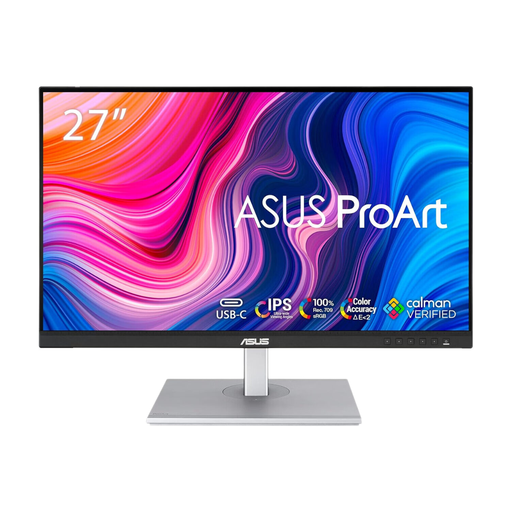
ASUS ProArt PA278CFRV QHD IPS 100Hz monitor
This QHD IPS option is worth considering if your setup serves workstation tasks as well as RTS play and a higher gaming refresh is not your main priority.
The product title specifies a 100Hz refresh rate. Check its stand adjustments against your desk and confirm the exact port configuration if USB-C is important to your setup.
View on Joybuy
Common questions
Can low-blue-light or flicker-free features replace breaks during long RTS sessions?
No. Those monitor features do not replace suitable screen placement, lighting and breaks. The Health and Safety Executive advises short, frequent breaks in its guidance for display-screen work; that workplace guidance is useful for planning a home gaming setup, not a gaming-specific legal rule.
Do I need DisplayPort for the highest advertised refresh rate?
Check the exact monitor and mode rather than assuming every connection offers the same refresh rate. LG says its 27GS75QN-B needs a DisplayPort 1.4-capable graphics card and DisplayPort 1.4 cable for its 200Hz overclock mode; compare your own monitor’s connection requirements with your PC and cable.
What should I check before disposing of an old gaming monitor?
Check your local recycling and retailer take-back options for electrical equipment. GOV.UK defines electrical and electronic equipment by its dependence on electrical current; confirm the arrangements available to you before disposing of a monitor.


