
24/7 Customer Support

Free returns

Same-day & Next-day Delivery

Quality Guaranteed

Unlock Your Welcome Offers: FREE Delivery | Up to 80% OFF | Free 30-day JoyPlus trial
Download the APP
Buying a rubber basketball should be straightforward, but product descriptions can make it difficult to compare the details that affect everyday play. A ball may look suitable in a listing yet prove uncomfortable for a child, lose pressure quickly or become difficult to handle on a damp outdoor court.
For UK families, schools, clubs and recreational players, the practical priorities are usually clear: the right size, a grippy surface, dependable bounce and construction that can cope with driveways, parks and sports halls. This guide explains what to check before buying and highlights our top recommendations for different types of player.
Age guidance is useful, but it should not be the only consideration. Children of the same age can have noticeably different hand sizes and coordination levels. A ball that is too large may make dribbling and passing frustrating, while one that is too small may not prepare a player for their club or school equipment.
Always compare the circumference in centimetres with the player’s hand size and the requirements of their league or PE programme.
A rubber basketball is generally suited to hard outdoor surfaces because rubber can withstand contact with asphalt and concrete. However, bounce and grip still vary according to inflation, surface texture, temperature and moisture.
Terms such as “waterproof” or “wet-grip” should be treated as product features described by the seller, not a guarantee that a ball will perform identically when wet. Wipe the ball after use and avoid leaving it outside in prolonged rain or direct sunlight.
Many basketballs are shipped deflated. If the listing does not clearly state whether a pump, needles or carry bag are included, you may need to buy these separately. A basketball with pump and storage bag can be more convenient for parents, schools and players who travel between courts.
Also check the air-retention information. Some Longsail listings describe a hermetic seal designed to retain pressure for up to 48 hours when properly inflated. This is a product specification, not a promise that the ball will never need topping up.
Use this guide as a starting point:
| Ball size | Approximate circumference | Typical use | |---|---:|---| | Size 3 basketball | 57 cm | Young children and junior practice | | Size 4 basketball | 65 cm | Younger youth players | | Size 5 basketball | 70 cm | Youth and junior players | | Size 7 basketball | 75 cm | Teenagers and adults; standard men’s size |
A size 7 basketball is commonly associated with players aged 13 and above and adult men’s leagues. A size 5 basketball is often used for children aged around 9–12, although league rules can differ. Size 3 and size 4 options are more manageable for younger children.
If you are buying for a school or club, confirm the required size before ordering. For casual family play, prioritise comfortable handling as well as age guidance.
Look for a moulded rubber outer cover if the ball will regularly be used outdoors. A pebbled or dimpled texture with defined channels can provide tactile contact for dribbling, passing and shooting.
An anti-slip basketball should still be held securely rather than judged by the label alone. Deep grooves may help finger placement, but moisture, dirt and incorrect inflation will affect control. Rubber can also feel firmer than indoor composite or leather-style covers, so consider where the ball will be used most often.
A butyl rubber bladder is commonly used to help retain air. Some products also include nylon yarn wrapping intended to support shape integrity and reduce deformation. These details are useful when comparing a durable basketball for frequent outdoor use.
Inflate gradually with the supplied pump and needle, following the product’s recommended pressure. The Longsail listings that specify pressure recommend approximately 7–9 PSI. Do not rely on appearance alone: under-inflation can create a sluggish bounce, while over-inflation can make the ball hard to control and place unnecessary strain on its construction.
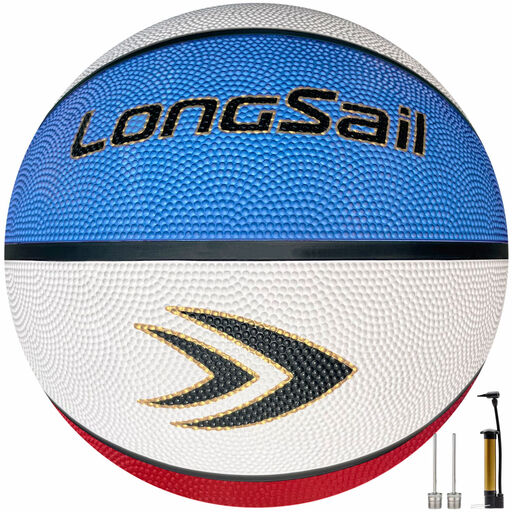
Why This Fits Their Persona: A manageable junior-sized option for children starting to practise dribbling, passing and shooting at home, in a park or at a school playground.
The listing provides a stated 57 cm circumference and includes a hand pump, two air needles and a carry bag, reducing the need for immediate accessories.
Textured rubber cover, deep grooves, butyl bladder and a complete inflation kit.
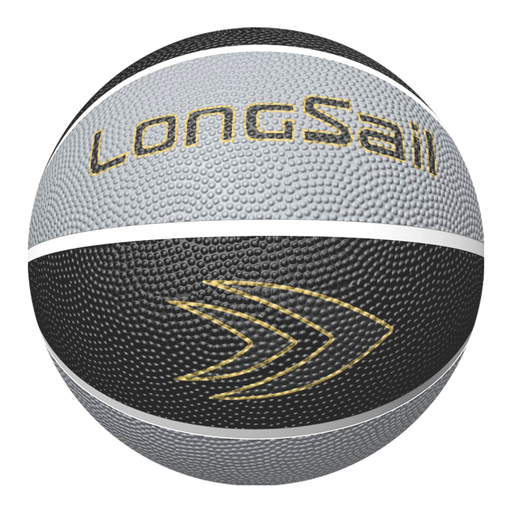
Why This Fits Their Persona: A full-size choice for teenagers and adults who want one ball for training, casual matches and outdoor shooting practice.
The stated 75 cm circumference makes the size easy to verify, while the rubber construction is described for indoor and outdoor use rather than a single court type.
Dimpled surface, deep channels, butyl bladder, hand pump, two needles and carry bag.
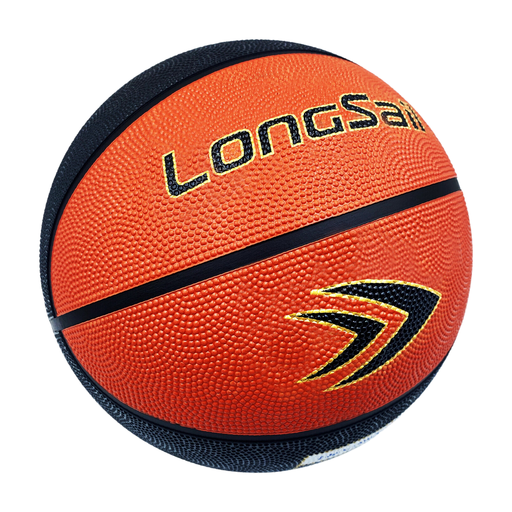
Why This Fits Their Persona: A youth-sized option for regular driveway, playground, beach or poolside sessions where surface resilience and easy cleaning matter.
The product information identifies a textured, scuff-resistant rubber surface and advises storage away from prolonged sunlight and heat.
Listed as waterproof, with a butyl liner, reinforced nylon wrapping and included pump, needles and storage bag.
We have compiled a complete, real-time list of products that fully satisfy these strict selection criteria and UK safety regulations.
Many rubber basketballs are designed for both settings, but check the individual product description. Rubber covers are commonly selected for outdoor courts because they are practical on asphalt and concrete. For polished indoor competition courts, a composite or leather-style ball may offer a different feel, so confirm the venue’s requirements.
Start with the size chart and the child’s hand size. A size 3 basketball is approximately 57 cm and is intended for young children. A size 4 basketball is around 65 cm, while a size 5 basketball is approximately 70 cm for older youth players. School or league rules should take priority where applicable.
This depends on the bladder, valve, storage conditions and frequency of play. Check the pressure before each session, particularly after long storage or changes in temperature. A product with a pump and needles makes small adjustments easier and avoids the cost of buying inflation accessories separately.