
24/7 Customer Support

Free returns

Same-day & Next-day Delivery

Quality Guaranteed

Unlock Your Welcome Offers: FREE Delivery | Up to 80% OFF | Free 30-day JoyPlus trial
Download the APP
A rugged Android smartphone can be a practical choice for construction workers, tradespeople, delivery drivers, hikers and travellers who regularly face rain, dust, drops or long periods away from a charger. However, a tough-looking case does not automatically make a phone suitable for demanding conditions.
The most useful comparison is not based on dramatic marketing language. It is based on protection ratings, battery capacity, network compatibility, storage and the features you will actually use.
A high-capacity battery can reduce charging stops, but it may also make a phone heavier and slower to recharge. Check both the battery capacity and the included charging specification. Reverse charging through OTG can also be useful for powering smaller accessories, but it should not replace a proper power bank for extended work.
MIL-STD-810H refers to a set of environmental and durability test methods. It does not mean that every phone will survive any drop, impact or misuse. Similarly, IP68 and IP69K ratings describe resistance to dust and water under stated test conditions. Ports, seals and covers still need to be kept clean and properly closed.
Some listings combine physical RAM with virtual or extended memory. For example, an advertised “16GB” configuration may consist of 4GB physical RAM plus up to 12GB allocated from storage. Virtual memory can support certain multitasking scenarios, but it is not identical to installed RAM. Check the specification carefully before paying more for a large memory figure.
For a construction site phone or outdoor smartphone, look for clearly stated protection standards rather than vague phrases such as “shockproof”.
These ratings do not make a phone suitable for swimming, high-pressure cleaning or deliberate impact testing. Follow the manufacturer’s instructions, especially around charging ports and water exposure.
A 5,000mAh battery may suit ordinary workdays, while an 8,350mAh or larger battery can be more suitable for long shifts, travel or camping. Very large batteries usually increase weight and thickness, so compare portability with endurance.
If you need a long battery life phone, also check charging speed, charger availability and whether the battery is built in. A rugged mobile phone with OTG reverse charging may provide emergency power to earbuds or another small device, but output and compatibility can vary.
A dual SIM smartphone can be useful if you separate personal and work numbers or use different networks when travelling around rural areas. For a 5G rugged phone, confirm the supported bands and your UK network’s coverage rather than assuming every 5G-labelled handset works equally well everywhere.
Expandable storage is valuable for offline maps, photographs, videos and work documents. A phone described as an expandable storage smartphone may support a microSD or TF card, but the maximum capacity and whether the second SIM slot is shared should be checked before purchase.
Useful extras include NFC smartphone support for contactless payments, GPS for navigation, a 3.5mm headphone jack, glove-friendly controls and a bright enough display for outdoor use.
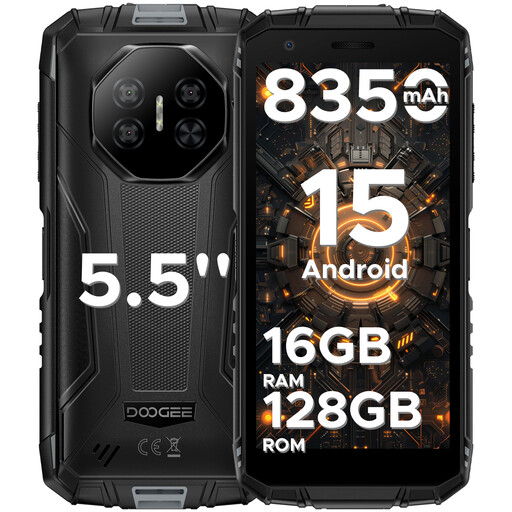
Why This Fits Their Persona: Its compact 5.5-inch format suits users who want a durable everyday phone without choosing one of the largest rugged designs.
The listing specifies IP68/IP69K and MIL-STD-810H protection, rather than relying only on a general “rugged” description.
8,350mAh battery, dual SIM, NFC, 3.5mm headphone jack and storage expansion up to 2TB via the listed card support.
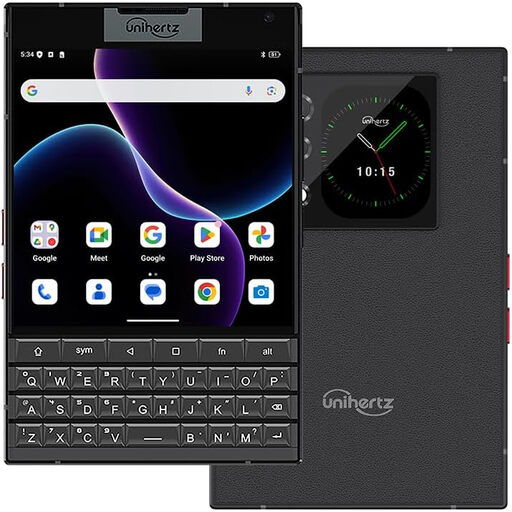
Why This Fits Their Persona: A practical option for professionals who value physical typing, broad connectivity and compact productivity for travel or field administration.
Its product information identifies the processor, supported 5G bands, dual SIM configuration and Android 15 system, making key compatibility points easier to check.
12GB RAM, 512GB storage, NFC, GPS and a programmable physical QWERTY keyboard.
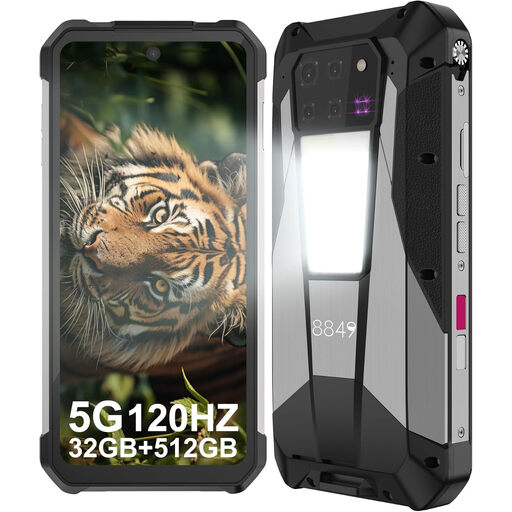
Why This Fits Their Persona: Its large battery and outdoor-focused features are suited to camping, remote work, vehicle support and extended periods away from mains power.
The listing gives specific details for IP68 water resistance, battery capacity, storage and network capability instead of presenting durability as an undefined promise.
23,800mAh battery, 512GB storage, expandable storage support, dual 5G SIM and an integrated projector and camping lamp.
We have compiled a complete, real-time list of products that fully satisfy these strict selection criteria and UK safety regulations.
No. IP68 describes resistance under specified test conditions, not unlimited waterproofing. Avoid salt water, chemicals, high-pressure jets and charging while the port is wet. Seals can also deteriorate through wear or impact.
Electricity used for charging is usually a small part of ownership cost. The more relevant considerations are charging frequency, battery replacement availability, mobile data use and whether the phone supports your preferred network. A larger battery may reduce charging stops but can require a higher-output compatible charger.
There is no universal lifespan. Service life depends on drops, heat, moisture, battery ageing, software support and care of the charging port. Choosing a model with expandable storage, replaceable accessories and clearly stated support information can make it easier to keep the device useful for longer.