
24/7 Customer Support

Free returns

Same-day & Next-day Delivery

Quality Guaranteed

Unlock Your Welcome Offers: FREE Delivery | Up to 80% OFF | Free 30-day JoyPlus trial
Download the APP
For anyone working on a construction site, trekking through the British countryside or simply prone to accidental drops, a standard smartphone often feels like a liability. A cracked screen, water damage from a sudden downpour or a battery that dies halfway through the day are common frustrations. The solution is a device built for the job: a rugged smartphone.
These tough phones are designed from the inside out to withstand the elements and demanding environments. This guide cuts through the marketing hype to help you identify the key features that matter and presents our top recommendations for devices that prioritise durability, battery life and practical performance.
Choosing the right rugged device goes beyond just looking for a thick case. Here are a few key specifications to consider.
The most important indicators of a phone's resilience are its IP (Ingress Protection) and MIL-STD (Military Standard) ratings. For a truly waterproof phone, look for an IP68 rating, which means it's tested to survive submersion in water. An IP69K rating goes further, certifying protection against high-pressure, high-temperature water jets. This makes it ideal for environments where cleaning equipment with pressure washers is common. These ratings also ensure the device is completely sealed against dust and sand.
For a phone for construction workers or outdoor enthusiasts, a long battery life phone is not a luxury; it's a necessity. Standard phones might struggle to last a full day, but many rugged models come with massive batteries, often exceeding 10,000mAh. This can translate to several days of use on a single charge. A useful bonus feature is OTG (On-The-Go) reverse charging, which allows your phone to act as a power bank to charge other devices.
A good builder's phone should offer more than just toughness. A dual SIM rugged phone is incredibly useful for managing separate work and personal numbers on a single device. Also, consider storage. While internal storage is important, having a microSD card slot for expandable memory means you'll never have to worry about running out of space for site photos, documents or offline maps.
Here are our standout choices that balance durability, performance and value.

Why It Stands Out The DOOGEE S118 PRO is a powerhouse, combining top-tier rugged credentials with impressive performance specifications. With 5G connectivity, a high-refresh-rate screen and a massive amount of RAM, it doesn't compromise on speed, making it suitable for demanding applications and multitasking on the go.
Pros
Who is it for? This is an ideal choice for professionals and power users who need a shockproof smartphone that delivers flagship-level performance without sacrificing durability or battery life.

Why It Stands Out The Blade 10 Power focuses on delivering core rugged features and exceptional battery endurance. Its triple card slot is a standout feature, allowing users to run two SIM cards and a memory card simultaneously, offering maximum flexibility.
Pros
Who is it for? A great all-rounder for tradespeople and outdoor adventurers who prioritise battery longevity and flexible connectivity in a dependable outdoor phone.
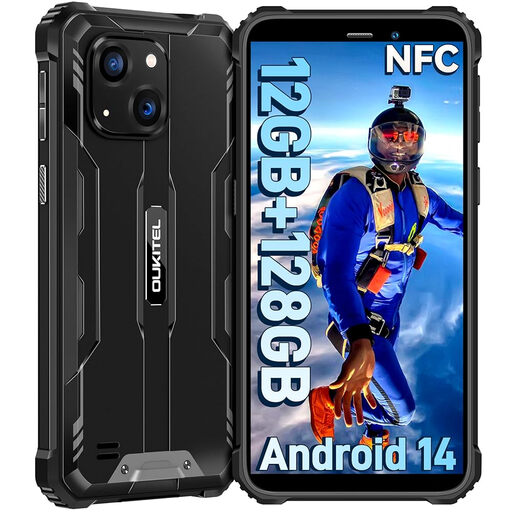
Why It Stands Out The OUKITEL WP32 offers a fantastic entry point into the world of rugged smartphones. It provides all the essential durability and battery features in a more compact and affordable package, without cutting corners on protection.
Pros
Who is it for? Perfect for anyone seeking a no-nonsense, reliable and affordable tough phone for work or hobbies, where core durability and battery life are the main priorities.
These three models represent a great cross-section of what's available, but the world of rugged devices is vast. If you're still weighing your options or want to see a wider selection of durable devices with different features and price points, explore our full range.
Explore our complete collection of Outdoor Smartphones here
1. Are rugged smartphones truly waterproof? Yes, models with an IP68 rating are designed to be submerged in fresh water for a specific depth and duration (e.g., 1.5 metres for 30 minutes). An IP69K rating adds protection against close-range, high-pressure water jets. However, this protection relies on all port covers (for charging and SIM cards) being securely sealed. They are not designed for prolonged submersion in saltwater or other corrosive liquids.
2. Can I use a rugged phone as my main, everyday device? Absolutely. Modern rugged smartphones are no longer the slow, bulky devices they once were. Many now feature powerful processors, high-resolution cameras, large and bright displays and essential features like NFC for contactless payments. While they are heavier than standard phones, their all-round capability makes them perfectly suitable as a single device for both work and personal life.
3. What is the advantage of a 'builder's phone' over a normal phone with a tough case? A tough case only provides external protection against drops and impacts. A true rugged phone is engineered for durability from the ground up. This includes a reinforced internal frame, shock-absorbent materials integrated into the body, sealed ports to prevent water and dust ingress and screens made from toughened glass. This holistic design provides a far higher level of protection against the hazards of a demanding environment.