
24/7 Customer Support

Free returns

Same-day & Next-day Delivery

Quality Guaranteed

Unlock Your Welcome Offers: FREE Delivery | Up to 80% OFF | Free 30-day JoyPlus trial
Download the APP
A standard smartphone is a fragile device. A single drop onto a pavement or an accidental slip into a puddle can lead to a cracked screen, water damage and a costly repair bill. For many, especially those working in demanding trades or who enjoy the great outdoors, a standard phone simply isn't practical. This is where a rugged smartphone comes in.
These devices are built to withstand the knocks, drops and splashes of a challenging environment. But with so many options on the market, how do you choose the right one? This guide cuts through the clutter to help you find a tough phone that meets your needs, focusing on durability, battery life and performance.
Before diving into specific models, it's helpful to understand the key features that define a quality rugged device.
You will often see codes like 'IP68' or 'IP69K' in product descriptions. These are Ingress Protection ratings, a standard used to measure how well a device is sealed against dust and water.
Many rugged phones also carry a MIL-STD-810G or 810H certification, a military standard that tests for resistance to shocks, vibrations and extreme temperatures.
For a phone for construction workers or anyone spending long hours away from a power source, battery life is critical. A standard smartphone might have a battery around 4,000-5,000mAh, but a long battery life smartphone in the rugged category can offer double or even triple that capacity. Look for devices with at least 8,000mAh to ensure you have power for multiple days of use, including running power-intensive apps and using the device as a GPS.
A tough phone shouldn't compromise on modern features. Look for an unlocked rugged phone to give you the freedom to choose your mobile network provider. For fast data speeds and future-proofing, a 5G rugged phone is an excellent choice, ensuring quick downloads and smooth streaming when you're on the go. Pay attention to the RAM and internal storage, as this will affect how smoothly the phone runs multiple applications.
Here are our recommendations for devices that balance durability with performance, catering to a range of needs and budgets.

Why It Stands Out: The Blade 10 Power is a workhorse focused on endurance and multitasking. Its enormous battery and generous RAM make it a reliable companion for long shifts or extended trips where charging opportunities are scarce.
Pros:
Who is it for? This is an excellent choice for field service technicians, long-haul drivers and anyone who prioritises battery longevity and reliable performance over cutting-edge features.
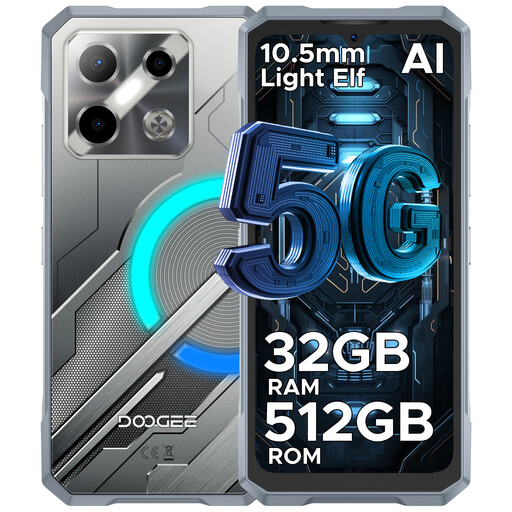
Why It Stands Out: The Blade GT Pro 5G proves that an outdoor phone doesn't have to be bulky or slow. It combines a slim, modern design with a powerful 5G processor and a high-resolution camera system, making it suitable for both work and leisure.
Pros:
Who is it for? Ideal for the user who wants a durable daily driver that doesn't compromise on speed, display quality or camera capabilities. It's a great fit for tech-savvy outdoor enthusiasts and professionals who need a high-performance device.
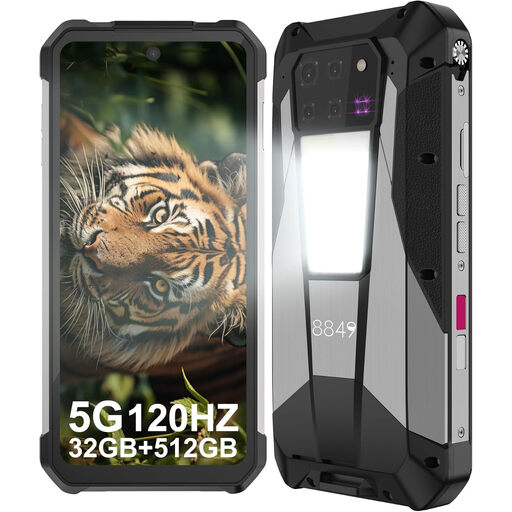
Why It Stands Out: The Unihertz Tank 3 Pro is in a class of its own, packing an unparalleled feature set into a rugged frame. With a built-in projector, an astronomical battery and a powerful camping light, it's more of a multi-tool than just a phone.
Pros:
Who is it for? This device is for the serious adventurer, camper or professional who needs ultimate utility in the field. If you need a phone that doubles as a projector, a work light and a power station, the Tank 3 Pro is a compelling option.
The models above represent some of the most capable rugged devices available, many of which also offer dual SIM functionality. If you're specifically looking for a phone that can manage two separate numbers for work and personal use, you may want to explore a wider selection.
Check out our full range of dual sim smartphone options to find a device that fits your specific connectivity needs.
If you work in construction, agriculture or field services, or if you are simply prone to dropping your phone, a rugged device is a sensible investment. The upfront cost can be offset by avoiding expensive screen repairs or full replacements that are common with more fragile, mainstream smartphones.
Both ratings indicate a high level of protection. IP68 certifies that a device can be submerged in water (usually 1.5m for 30 mins). IP69K adds protection against close-range, high-pressure and high-temperature water jets. This is particularly useful in environments where equipment is regularly cleaned with pressure washers.
Generally, yes. An unlocked phone is not tied to a specific network provider, giving you the flexibility to choose or switch carriers. However, it is always a good practice to confirm that the phone's network bands are compatible with your chosen provider, especially for 4G and 5G services.