
24/7 Customer Support

Free returns

Same-day & Next-day Delivery

Quality Guaranteed

Unlock Your Welcome Offers: FREE Delivery | Up to 80% OFF | Free 30-day JoyPlus trial
Download the APP
Choosing rugs and runners is not simply a matter of picking a colour that matches your sofa. The wrong size can make a room feel awkward, an unsuitable material may show wear quickly, and a loose hallway runner can become a daily nuisance on smooth flooring.
As the Joybuy Product Recommendation Officer, I focus on separating useful specifications from vague marketing language. Before buying, watch for these common pitfalls.
Product photographs can make a rug appear larger than it is. Always compare the listed dimensions with your room, furniture and available floor space. A 100 cm round rug, for example, works well as an accent beneath a small table, beside a bed or in a reading corner, but it may not be large enough to anchor a full seating arrangement.
For runners, measure the usable length rather than the entire hallway. Leave enough clearance around doors, skirting boards and furniture so the runner does not catch when doors open.
A non-slip backing can help a runner stay in position, but performance varies with flooring type, dust levels and moisture. Smooth laminate, vinyl, stone and polished wood may require a clean, dry surface and careful positioning. Check the product instructions and consider a separate rug grip if movement continues.
Avoid placing rugs over uneven flooring or near loose cables. In homes with young children, older residents or pets, stability should be treated as a practical priority rather than a decorative feature.
Natural fibres, including jute, can provide texture and visual warmth but generally need gentler care. Spot cleaning and avoiding prolonged moisture are important. A synthetic polypropylene runner may be more convenient in a busy entrance or kitchen, particularly when it is machine washable, but it still needs to be washed and dried according to its care instructions.
Match the material to the room’s demands:
A hand-woven jute rug will naturally show small variations in fibre and pattern. These differences are part of the construction rather than evidence that two pieces will look exactly alike.
Use masking tape to outline the rug or runner’s footprint before ordering. For a round design, check both its diameter and thickness. For a hallway runner, measure:
A runner measuring 67 × 180 cm is suited to a relatively compact hallway, kitchen section or entrance area. It may not cover a long corridor from end to end, so check the proportions before buying.
Neutral colours can be easier to coordinate, but the practical choice depends on lighting and foot traffic. A beige rug can brighten a darker room, while a charcoal grey runner may be more forgiving of everyday marks. Patterned designs can also help disguise minor dust between cleaning sessions.
For a natural interior, a natural and black rug introduces contrast without relying on a bright accent colour. Always consider how daylight and warm artificial lighting affect the appearance of beige, grey and natural fibres.
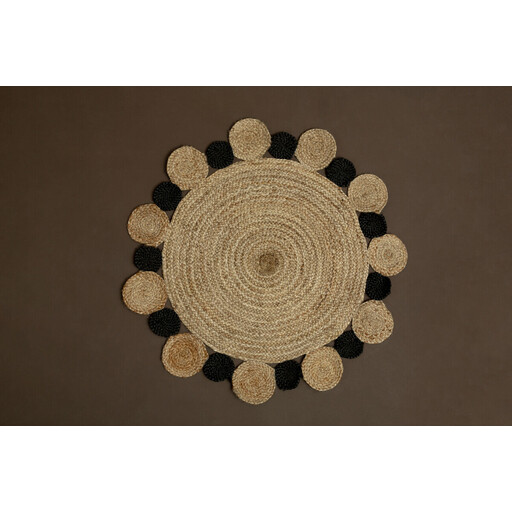
Why This Fits Their Persona: This round jute rug suits shoppers who want natural texture and a considered focal point for a living room, bedroom, home office or reading corner. Its 102 cm diameter is suitable for smaller zones and layered arrangements.
The listed dimensions make its scale clear, while the care guidance specifically recommends gentle spot cleaning and avoiding soaking.
Hand-woven natural and black jute; concentric two-tone circular pattern; renewable and biodegradable material.

Why This Fits Their Persona: A practical choice for renters or first-time home furnishers seeking a beige patterned hallway runner that adds definition without requiring complex care.
The 67 × 180 cm size supports accurate planning, while its machine-washable format avoids relying only on surface vacuuming.
Polypropylene construction; machine washable; diamond pattern with a mocha and cream colour scheme; non-slip backing.
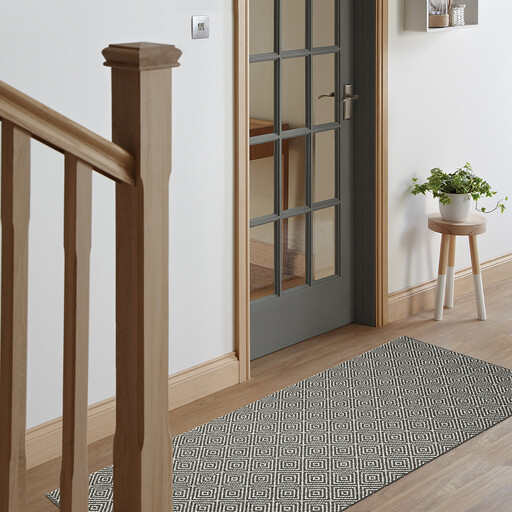
Why This Fits Their Persona: This charcoal grey runner is suited to busy kitchens, entrances and hallways where regular foot traffic makes straightforward cleaning and a visually forgiving colour useful.
Its care instructions specify machine washing and complete air drying, while the non-slip backing addresses the common problem of a runner shifting on hard floors.
Polypropylene fibre; machine-washable design; sugar-flecked diamond pattern; non-slip underside; 67 × 180 cm format.
Place any rug on a clean, dry floor and allow it to settle flat before regular use. Creases should be addressed according to the product’s instructions rather than treated with high heat. Vacuum gently and regularly, particularly around entrances where grit can be brought indoors.
Keep indoor rugs and runners away from open flames, heaters and other heat sources. For washable designs, follow the stated wash temperature and allow the item to dry fully before putting it back in position. Natural jute should be protected from soaking, damp storage and prolonged exposure to moisture.
We have compiled a complete, real-time list of products that fully satisfy these strict selection criteria and UK safety regulations.
Start with a clean, dry floor and ensure the runner lies flat. A non-slip runner rug with a suitable backing can reduce movement, but flooring compatibility matters. If it still shifts, use a rug grip designed for that floor type and check it regularly for dust or curling edges.
Lifespan depends on fibre, construction, foot traffic, sunlight and maintenance. A hand-woven jute rug may retain its structure when used and cleaned appropriately, while a polypropylene runner is designed for practical everyday use. Rotate rugs where possible and deal with spills promptly to reduce uneven wear.
A washable runner can reduce the need for frequent specialist cleaning and may be convenient for households dealing with regular dirt or spills. However, washing uses water, detergent and electricity, so follow the care label and wash only when necessary. Air drying can help avoid additional drying costs when conditions allow.