
24/7 Customer Support

Free returns

Same-day & Next-day Delivery

Quality Guaranteed

Unlock Your Welcome Offers: FREE Delivery | Up to 80% OFF | Free 30-day JoyPlus trial
Download the APP
As a Joybuy Product Recommendation Officer, I often see how a simple rug, mat or runner can transform a space. It can add warmth, define a zone or provide a crucial safety function. However, the market is filled with options that look great online but fail to perform in a real UK home. Choosing the right one isn't just about colour and pattern; it's about avoiding common pitfalls that lead to disappointment and wasted money.
Before you add that stylish rug to your basket, let's look at a few frequent issues. Many buyers find their new purchase falls short due to overlooked flaws:
To make a smart purchase, focus on the core construction of the product. These three parameters are non-negotiable for ensuring your new rug or mat meets your household's needs.
The material on the underside of your mat is critical for both safety and protecting your floors. It's a detail that is often overlooked.
The material of the pile (the top surface) dictates the mat's primary function, texture and durability.
Consider how much effort you are willing to put into cleaning. A beautiful rug that is difficult to maintain can quickly become a burden.
Instead of a generic list, we've matched specific products to the distinct needs of UK households.

Why This Fits Their Persona: For households with children or elderly members, bathroom safety is paramount. This mat is designed specifically for use inside the bath or shower, where the risk of slipping is highest.
It directly counters the "non-slip myth" by using high-strength suction cups that physically adhere to the tub floor, providing a secure footing that a simple fabric mat cannot guarantee in wet conditions.
Made from durable natural rubber for long-lasting performance. It is also treated to help resist bacteria and mould build-up, addressing hygiene concerns.

Why This Fits Their Persona: This user wants a highly functional entrance mat that performs well, is easy to clean and aligns with a sustainable mindset. It needs to stop dirt effectively without creating more mess.
It sidesteps the "shedding doormat" problem by using absorbent cotton fibres instead of coir. This traps dirt and moisture effectively without leaving a trail of fibres, and being machine washable makes it far easier to maintain.
Features a durable non-slip backing for safety and is made with an eco-friendly construction. The highly absorbent cotton pile is effective at capturing dirt and water.
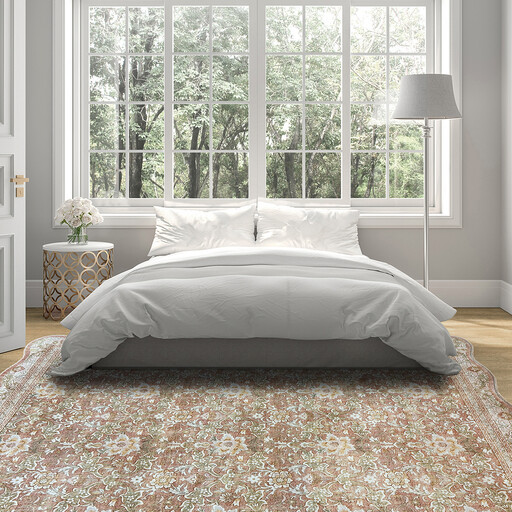
Why This Fits Their Persona: This individual is looking for a large area rug to be a centrepiece, prioritising aesthetic appeal, texture and a specific design like a vintage or classical look to tie a room together.
While it delivers a high-end classical look, its 100% polyester pile is far more durable and easier to care for than delicate natural fibres. It resists fading and wear, avoiding the trap of a beautiful rug that looks worn out after a year.
The dense pile provides a soft, luxurious feel underfoot, while the intricate floral pattern offers a timeless aesthetic. It combines decorative elegance with practical resilience.
We have compiled a complete, real-time list of products that fully satisfy these strict selection criteria and UK safety regulations.
For hygiene and to prevent mould growth, it's advisable to wash fabric bath mats, such as those made from microfibre or cotton, once a week. If the bathroom is used by a large family or is poorly ventilated, washing it twice a week may be better. Always ensure the mat is completely dry before placing it back on the floor.
Yes, you can place a runner over a carpet. It's a great way to protect high-traffic areas of your existing carpet from wear and tear, such as in a hallway or entryway. To prevent the runner from bunching up or slipping, it's recommended to use a specific carpet-to-carpet underlay or gripper tape.
The main difference is their function and material. A coir doormat is made from stiff coconut fibres and is designed primarily to scrape dirt and mud from shoes. A rubber doormat is typically heavier and features patterns or holes to trap debris and water, with excellent non-slip properties. Coir is for scraping, while rubber is more for trapping and grip, especially in very wet conditions.