
24/7 Customer Support

Free returns

Same-day & Next-day Delivery

Quality Guaranteed

Unlock Your Welcome Offers: FREE Delivery | Up to 80% OFF | Free 30-day JoyPlus trial
Download the APP
Bringing the warmth and character of the countryside into your home is a wonderful way to create a cosy, inviting space. The appeal of rustic home decor lies in its celebration of natural textures, simple forms and a sense of history. However, as its popularity has grown, so have the number of products that miss the mark, leading to disappointment and wasted money.
Many of us have been there: you order what looks like a charming farmhouse-style piece online, only for it to arrive looking cheap, feeling flimsy or proving completely impractical for your home. To help you choose with confidence, we're highlighting the common pitfalls to watch out for and the key features that define authentic, lasting rustic style.
To sidestep these issues, focus on a few non-negotiable details. Analysing these parameters will help you distinguish quality pieces from the imitations.
The soul of the rustic aesthetic is in its materials. Look for natural home accessories made from genuine, honest materials.
Always check the specifications before adding an item to your basket.
To illustrate how to apply these principles, here are some items matched to different home styling needs.
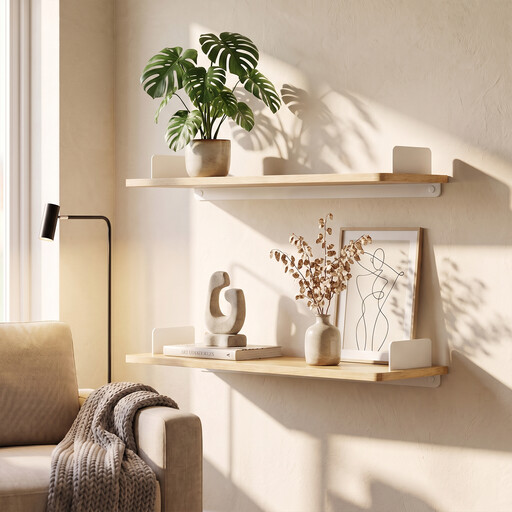
Why This Fits Their Persona: Ideal for those in the UK who need stylish, functional storage. These shelves blend a rustic wood finish with strong, minimalist metal brackets, making them perfect for organising a kitchen, displaying books in a living room or holding toiletries in a bathroom.
It directly counters the "impractical proportions" trap with a clearly stated 44 lbs (20 kg) weight capacity. It also avoids the "rustic-effect" deception by using FSC-certified solid rubberwood, not a cheap imitation.
The wood is coated with a varnish layer, making it waterproof and suitable for humid environments like kitchens and bathrooms. The high-quality aluminium alloy brackets are rust-resistant and stable.
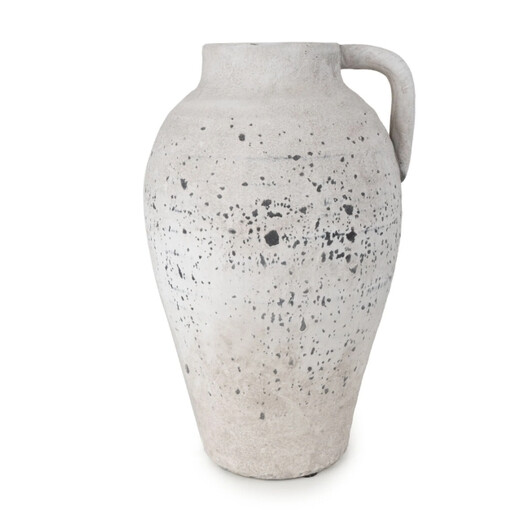
Why This Fits Their Persona: Perfect for someone focused on creating an atmospheric focal point. This urn-style vase has the look of a classical artefact, ideal for a mantelpiece, console table or even a sheltered patio to add a touch of timeless, rustic elegance.
It avoids the "impractical proportions" trap with its substantial 37.5 cm height, ensuring it works as a statement piece. The description is clear about its material—a stone-effect composite—which provides the look without the unmanageable weight of solid stone.
The weathered, mottled finish is carefully applied to give each piece a unique, artisan character. Its neutral stone palette allows it to blend with various interior styles, from traditional farmhouse to modern minimalist.
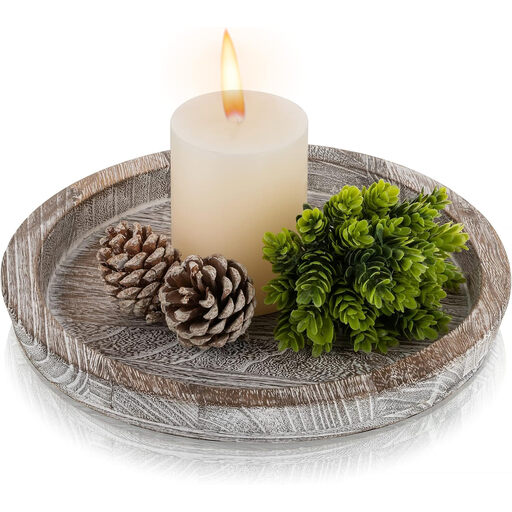
Why This Fits Their Persona: This tray is for the host who values both aesthetics and practicality. It's perfect for serving drinks, creating a candle display or as a base for a dining table centrepiece. The distressed white-washed finish fits seamlessly into a farmhouse decor scheme.
It avoids the "unsuitable finish" trap by having a hand-crafted distressed finish that is both decorative and durable for its intended use. The use of Paulownia wood makes it sturdy yet lightweight, avoiding the trap of being too heavy to be a practical serving tray.
It is approximately 40% lighter than ordinary wood, making it easy to carry. The curved edges are a thoughtful design feature that helps prevent items from sliding off during transport.
We have compiled a complete, real-time list of products that fully satisfy these strict selection criteria and UK safety regulations.
You don't need a full renovation. Start by introducing texture. Swap out synthetic materials for natural ones: a woollen throw, some linen cushions or a jute rug. Add character with a few key pieces, such as wooden wall shelves for displaying plants and books or a statement decorative terracotta vase on a sideboard. The key is to layer these natural, tactile elements into your existing space.
The core materials are those that feel connected to the natural world. Think solid wood (especially with visible grain or a distressed finish), stone, terracotta and clay. For textiles, focus on natural fibres like cotton, linen, wool and jute. These materials provide the authentic textures and earthy colour palette that define the style.
While they share many similarities, there are subtle differences. Rustic decor often embraces more raw, rugged and dark-toned elements, celebrating the unfinished and organic. Farmhouse decor, a popular sub-style, tends to be a lighter, cleaner and more polished interpretation. It often incorporates more white, practical and family-friendly elements and a slightly more refined country charm. Many pieces can fit beautifully into both aesthetics.