
24/7 全天候客户支持

免费退货

当日/次日达

品质保障

开启新人专享福利: 全场免邮 | 低至 2 折 | 免费试用 30 天 JoyPlus 会员
下载 Joybuy
For UK RV owners, caravan travellers, van lifers and campers, the right RV power and camping accessories can make travel more comfortable and reduce avoidable roadside problems. However, product listings often focus on headline wattage, battery capacity or “fast charging” while leaving out the details that determine whether equipment suits your vehicle and intended setup.
Before buying, watch for these common traps:
Start with your vehicle’s electrical system. Most cars, campervans and many RVs use 12V, while some trucks, buses and larger vehicles use 24V. A product designed for one voltage should not be connected to the other unless the manufacturer specifically confirms compatibility.
For a pure sine wave power inverter, distinguish between:
Do not run high-draw equipment through a cigarette-lighter socket unless the manufacturer expressly permits it. The EAFC inverter listing recommends direct battery-terminal connection for loads above 150W. Installation should be carried out carefully, with correct polarity, ventilation and appropriate fusing.
A LiFePO4 battery is often selected for off-grid power because it is lighter than many lead-acid alternatives and is suited to repeated charge and discharge cycles. Nevertheless, the headline amp-hour figure is only part of the decision.
Check:
A traditional deep-cycle RV battery may be appropriate for simpler systems, but do not assume that a lithium battery can replace it without checking the charger, solar controller and vehicle charging system. The complete system must be compatible.
Outdoor products need more than a portable appearance. Look for practical specifications such as:
For vehicle safety accessories, an RV tyre pressure monitoring system should show the information you actually need, such as pressure, temperature, sensor status and alarm type. A reversing camera kit should be checked for monitor size, camera viewing angle, night vision, waterproofing and whether it supports both 12V and 24V systems.
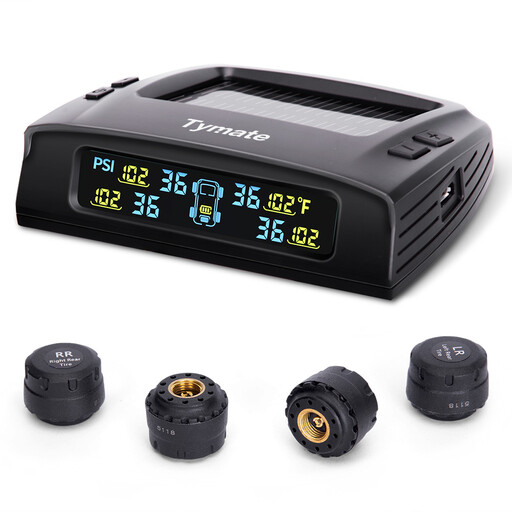
Why This Fits Their Persona: A straightforward addition for drivers who want to monitor four tyres during commuting, motorway journeys or caravan travel without installing a complex vehicle system.
It provides separate pressure and temperature readings, rather than relying only on a general warning light. Confirm the vehicle-length guidance and pressure range before purchase.
Four external sensors, colour LCD display, automatic sleep mode and alarms for pressure, temperature and rapid air leakage.
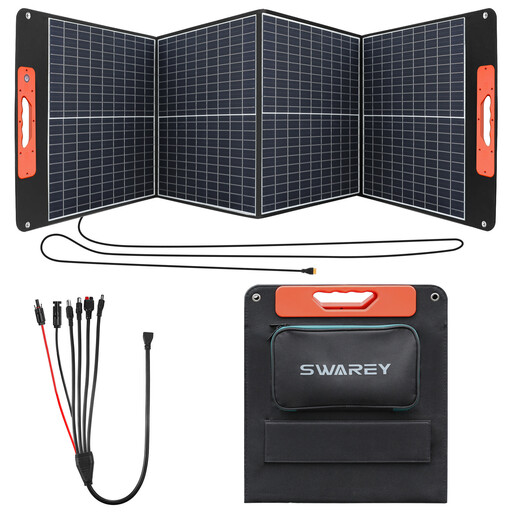
Why This Fits Their Persona: A useful option for campers and RV travellers who value a portable setup for topping up a power station, phone, tablet or laptop away from mains electricity.
The foldable design and adjustable kickstands make positioning easier, while the included multi-connector cable helps reduce compatibility surprises. Actual output varies with UK weather, shade and panel angle.
100W rated panel, 60W USB-C PD, 18W USB QC3.0, four kickstands and a listed 24-month warranty.
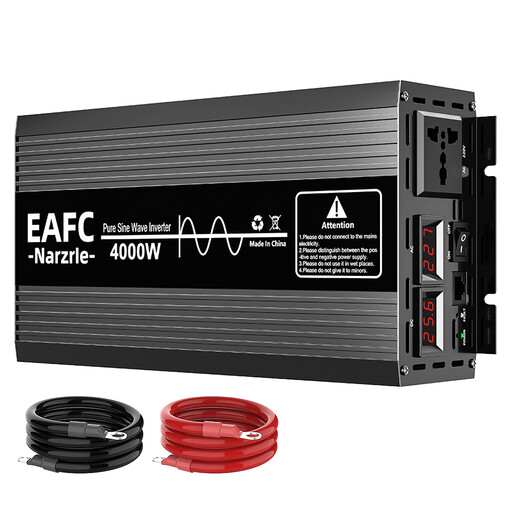
Why This Fits Their Persona: Suited to 12V RV, truck, marine and emergency backup applications where users need to operate higher-load appliances or tools away from a mains supply.
The listing separates 2,000W rated output from 4,000W peak output and specifies direct battery connection for loads above 150W. Allow ventilation and verify appliance demand before use.
Pure sine wave output, dual digital voltage displays, intelligent cooling fans and multiple protection functions.
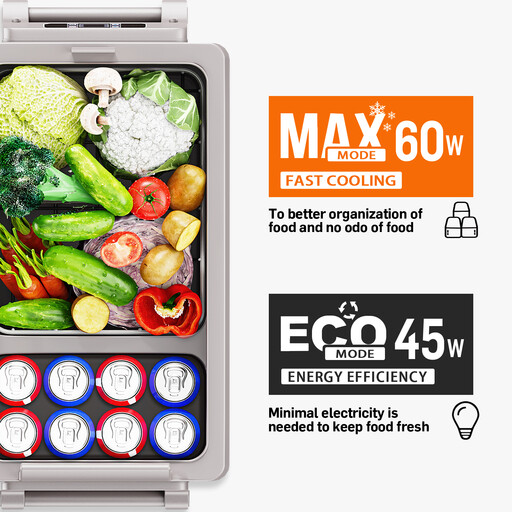
Why This Fits Their Persona: Its larger dual-zone capacity suits longer trips, fishing weekends, boat use and family camping where separate chilled and frozen storage is useful.
It includes three battery-protection levels and supports 12/24V DC plus 240V AC. Secure it during travel and leave the specified ventilation clearance around the compressor.
49.4-litre capacity, temperature setting from -20°C to 20°C, Bluetooth control and ECO/MAX modes.
We have compiled a complete, real-time list of products that fully satisfy these strict selection criteria and UK safety regulations.
Before placing an order, compare the product specification with your actual setup:
A dual reversing camera kit can also be valuable for caravans, buses, trucks and vans. Check whether the monitor supports the vehicle’s voltage, whether the camera is rated for outdoor exposure and whether the supplied cable is long enough for the vehicle body.
Common choices include a solar panel or portable solar charger, battery monitor, LiFePO4 or deep-cycle RV battery, suitable charge controller and pure sine wave power inverter. Start by calculating your daily energy use and then select equipment that works at the same voltage.
Runtime depends on battery watt-hours, ambient temperature, fridge settings, insulation, compressor duty cycle and other connected devices. A fridge with ECO mode and battery protection may reduce unnecessary consumption, but use the manufacturer’s stated input figures for planning rather than assuming continuous maximum draw.
Only when the product specifications allow it. Some accessories support both systems, such as the listed compressor cooler and reversing camera kit, while others are designed specifically for 12V or 24V. Confirm voltage before connecting, and use an appropriate converter where required.