
24/7 Customer Support

Free returns

Same-day & Next-day Delivery

Quality Guaranteed

Unlock Your Welcome Offers: FREE Delivery | Up to 80% OFF | Free 30-day JoyPlus trial
Download the APP
As the days grow shorter and the skies over the UK turn a familiar shade of grey, many of us feel a dip in energy and mood. For some, this is more than just the "winter blues"; it's a recognised condition. The search for an effective solution often leads to a SAD lamp, but the market is flooded with options that look the part but fail to deliver. Choosing incorrectly can mean wasting money on a device that is ineffective or, worse, unsafe.
Before you buy, it's crucial to understand the common traps. Many shoppers are drawn in by sleek designs or low prices, only to find their purchase is little more than a glorified desk light. Here are the key pitfalls to watch for:
daylight therapy lamp.portable SAD lamp with an adjustable stand is far more practical for modern life, whether at your desk or while travelling.To ensure you are choosing a genuine therapeutic device, focus on these non-negotiable parameters. These are the technical details that separate an effective SAD lamp from a simple lighting fixture.
The widely recommended intensity for effective light therapy is 10,000 lux. Lux is a measure of the intensity of light as perceived by the human eye. To put this in perspective, a brightly lit office is typically around 500 lux, while direct sunlight can exceed 50,000 lux. A lamp must be able to deliver 10,000 lux at a comfortable and practical distance (usually 20-30 cm) to be considered for 10000 lux light therapy. Always check the manufacturer's specifications for both the lux output and the distance required to achieve it.
Natural sunlight contains ultraviolet (UV) rays, which can cause damage to the eyes and skin. A reputable UV-free daylight lamp is specifically designed to filter out these harmful rays. Never purchase a light therapy device that does not explicitly state it is 100% UV-free. This is a fundamental safety requirement, not an optional extra.
While not a legal requirement for all lamps sold in the UK, a medical device certification indicates that the product is intended for therapeutic purposes and has been manufactured to meet certain quality and safety standards. This certification provides confidence that the lamp is designed to perform as a winter blues lamp and is not just a standard household light.
Choosing the right light depends entirely on your needs. A device for managing winter fatigue has very different requirements from one designed for office ergonomics or home decor. Here, we match specific lighting solutions to different user profiles.
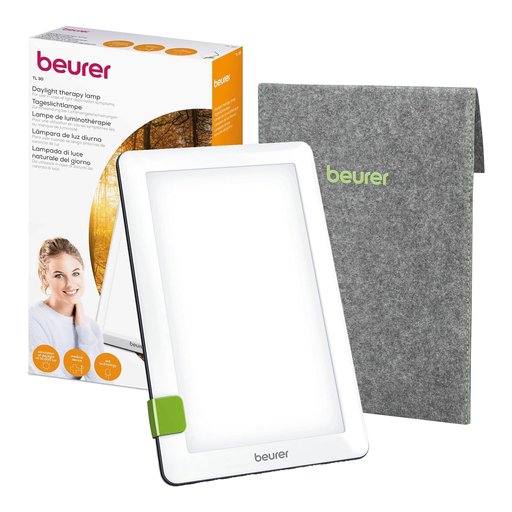
Why This Fits Their Persona: This user needs a consistent routine, whether at home, in the office or on the go. Its slim, lightweight design and included travel bag make it an ideal portable SAD lamp, ensuring therapy is never missed.
It is a medically certified device delivering the recommended 10,000 lux intensity and is guaranteed UV-free. It is a purpose-built therapeutic tool, not a simple lamp.
Features a versatile clip stand for both portrait and landscape orientation, making it easy to position on any desk. Simple one-button operation for fuss-free use.
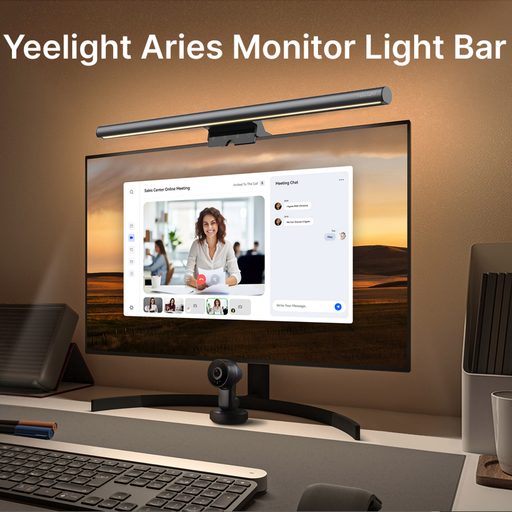
Why This Fits Their Persona: This user spends long hours at a computer and is concerned with eye strain and desk clutter. Their goal is ergonomic lighting for productivity, not light therapy.
This is an ergonomic task light, not a winter blues lamp. It solves screen glare and eye fatigue but should not be mistaken for a therapeutic device for SAD.
Its anti-glare design illuminates the desk without reflecting on the screen. The space-saving clip fits most monitors and adjustable colour temperature helps match lighting to the task.
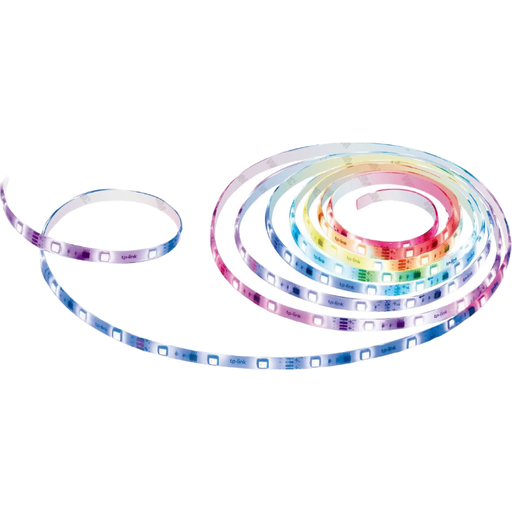
Why This Fits Their Persona: This user wants to create atmosphere and ambience. They value customisation, smart home integration (Alexa, Google Assistant) and the ability to change a room's feel with colour.
While excellent for mood lighting, smart LED strips do not provide the focused, high-intensity light required for 10000 lux light therapy. This is for decoration, not treatment.
Offers control over 50 separate colour zones for dynamic effects. It connects directly to Wi-Fi without a hub and can be trimmed to fit any space for creative installations.
We have compiled a complete, real-time list of products that fully satisfy these strict selection criteria and UK safety regulations.
1. How long should I use a SAD lamp each day? Most recommendations suggest a session of 20 to 60 minutes per day, preferably in the morning. This helps to simulate the dawn and can assist in regulating your internal body clock. It is advisable to start with shorter sessions and see how you feel. Always follow the manufacturer's guidelines and place the lamp at the recommended distance.
2. Do SAD lamps use a lot of electricity? Modern SAD lamps use LED technology, which is highly energy-efficient. A typical LED SAD lamp consumes very little power, often between 10 and 20 watts. The cost of running one for an hour a day is minimal, usually amounting to just a few pence.
3. Can I just use a very bright household LED bulb instead of a SAD lamp? No, this is not recommended. A standard household bulb, even a very bright one, is not designed to produce the specific intensity (10,000 lux) and full-spectrum light needed for therapy. Crucially, it may not be UV-filtered, posing a potential risk to your eyes with prolonged, close-range exposure. For safety and effectiveness, always choose a device specifically designed and sold as a SAD lamp.