If your allergy plan excludes salmon or fish, neither tinned salmon nor fresh salmon fillets are a suitable substitute for the other: both contain fish. If fish is permitted but another ingredient is a concern, compare the current pack’s ingredients and allergen statements; a plain tin or unseasoned fillet calls for a different check from a glazed fillet. Choose a skinless-and-boneless tin for its format, not as a guarantee about allergens or remaining bones.
Who needs to make this choice?
Shoppers avoiding allergens other than fish
If your allergy plan permits salmon, the decision is about the other ingredients and any precautionary statement on the product you intend to buy. A plain tin and a flavoured fresh fillet may need different checks.
Shoppers with an individual fish-allergy plan
Salmon is fish, whether it comes in a tin or as a fillet. The North West Allergy Network notes that fish allergy can vary between people and types of fish; follow your individual clinician-led plan rather than assuming a change of format makes salmon suitable.
Shoppers concerned about bones and skin
If salmon is permitted, compare ordinary tins with skinless-and-boneless versions and read any bone caution. That wording helps with a practical format choice, but it does not change the fish allergen declaration.
What should you check before buying?
Establish whether salmon itself is permitted before choosing between a tin and a fillet. Then check additional ingredients and the preparation or bone-related details that matter to you.
| Concern |
What to check |
Who this matters to |
| Whether fish is permitted |
Check your individual allergy plan and the pack’s fish declaration. A tin does not remove the fish allergen. |
If salmon is restricted under my allergy plan, switching to a different format does not resolve that restriction; about 43% of consumers put permission to eat fish first. |
| Other ingredients and cross-contact |
Read the current ingredients list, emphasised allergens and any precautionary statement. Check glazes and other added ingredients individually. |
When fish is permitted but another ingredient is a concern, I need to know what a sauce or glaze adds; about 29% of consumers prioritise added-ingredient and cross-contact checks. |
| Bones, skin and preparation |
Read bone cautions even on skinless-and-boneless tins. For fillets, check whether they are unseasoned and whether their storage and preparation suit you. |
I want a manageable portion with fewer bone concerns, or a plain fillet I can season myself; about 28% of consumers place format and preparation first. |
For UK prepacked food, the Food Standards Agency says allergens present as ingredients must be emphasised in the ingredients list. A precautionary statement addresses possible unintended presence rather than replacing the ingredient list; assess both against your own allergy plan.
Mistakes to avoid
-
Assuming processing makes tinned salmon suitable for a fish allergy
Changing from a fresh fillet to a tin does not change the fact that salmon is fish. The reviewed salmon labels identify fish, while the North West Allergy Network notes that individual fish allergies can differ.
If fish is restricted, do not choose either format on appearance or processing alone; follow your individual clinician-led plan.
-
Relying on an old online ingredient list
An earlier listing is no substitute for the labelling on the pack you are buying, particularly if the recipe, packaging or size has changed.
Read the physical pack’s ingredients, allergen emphasis and precautionary statements each time you buy it.
-
Reading skinless and boneless as a guarantee
M&S Food cautions that small bones may remain in its 170 g red salmon product. Removing skin or bones also does not remove the fish allergen.
Use format wording to guide your texture and preparation choice, but read the bone caution and allergen declaration separately.
-
Picking a flavoured fillet to avoid added ingredients
Fresh fillet ranges can include both plain products and glazed versions. For example, M&S Food lists a salmon fillet product with a chilli and fermented-soybean glaze.
If you want to choose the seasoning yourself, check that the particular fillet is unseasoned and assess any ingredients you add separately.
Brands and formats to compare
These examples show why the exact product label matters more than the brand name: ingredient lists and bone cautions differ between formats.
Princes
Princes lists both Wild Pacific Red Salmon and a Skinless Boneless Wild Red Salmon format.
- Princes gives red salmon (fish) and salt as the ingredients for these examples.
- The skinless-and-boneless description is not an allergen-safety claim; check the current pack for your own requirements.
John West
A John West Pink Salmon 213 g listing provides an example of a plain tinned format.
- Tesco Groceries lists pink salmon (99%) and salt, with fish declared as an allergen.
- The same listing warns that the product contains bones; compare its current pack with your needs.
Tesco
Tesco Wild Pacific Pink Salmon is an own-label tinned option to assess by its individual label.
- Tesco Groceries lists pink salmon (fish) (99%) and salt for the 418 g product.
- That ingredient list does not make the product suitable where fish must be avoided; read the pack you are buying.
M&S
M&S Food lists tinned red salmon as well as plain and glazed fresh salmon fillets.
- Its Wild Alaskan Red Salmon 170 g listing gives red sockeye salmon (fish) (99%) and salt.
- M&S Food cautions that small bones may remain in that tin. Its glazed fillets have additional ingredients to assess separately.
Salmon products on Joybuy
These choices cover a plain tinned format and two frozen salmon alternatives. If you specifically need a chilled fresh fillet, do not treat a frozen product as the same format; in every case, check the current pack against your allergy plan.
 No image available
Morrisons Pink Salmon 213g
Consider this tinned format if your allergy plan permits fish and you want to compare a plain salmon product with your own ingredient requirements.
It contains fish. Read the physical pack for its current precautionary statements and bone information before choosing it.
View on Joybuy
 No image available
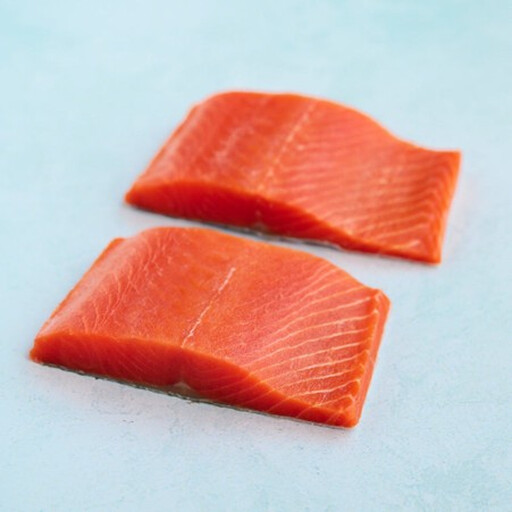
The Fish Society Wild Sockeye Salmon Fillet Steaks 220g
These fillet steaks are an alternative to a tin if your allergy plan permits fish and you are prepared to use a frozen, skin-on product rather than a chilled fresh fillet.
The product information also cautions that they may contain crustaceans and molluscs. Check those warnings and the current physical pack against your requirements.
View on Joybuy
 No image available
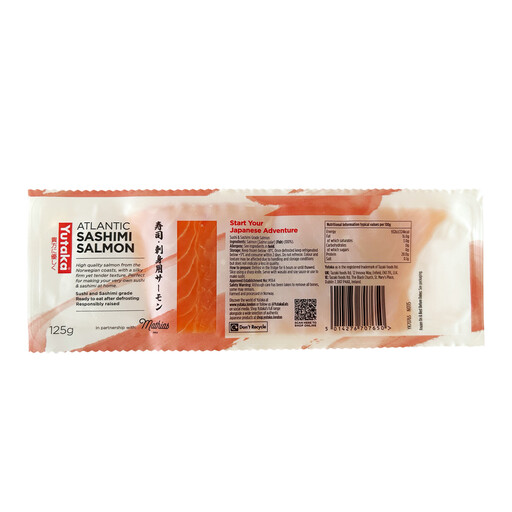
Yutaka Atlantic Sashimi Salmon 125g
This is a more specialised salmon format than an ordinary tin or chilled fresh fillet, for shoppers whose allergy plan permits fish.
It is frozen, and its product information cautions that bones may remain. Read the current pack for allergen and precautionary statements before buying.
View on Joybuy
Questions about salmon and allergy labels
Can someone with a fish allergy choose tinned salmon instead of fresh fillets?
Not simply because it is tinned: salmon remains fish in either format. The North West Allergy Network notes that fish allergies can vary by person and fish type, so follow an individual clinician-led plan rather than testing suitability by switching formats.
What should I look for on a UK prepacked salmon label?
Read the ingredients list and the emphasised allergens on the physical pack, as well as any precautionary statement relevant to your allergy. The Food Standards Agency says UK prepacked food must have an ingredients list and allergens present as ingredients must be emphasised each time they appear.
Does a may contain statement mean that allergen is definitely present?
No. Food Standards Agency research describes precautionary allergen labelling as a warning about possible unintended presence from cross-contact, not confirmation that the allergen is present or a guarantee that the food is free from other allergens. Assess the statement using your own allergy advice.


