
24/7 Customer Support

Free returns

Same-day & Next-day Delivery

Quality Guaranteed

Unlock Your Welcome Offers: FREE Delivery | Up to 80% OFF | Free 30-day JoyPlus trial
Download the APP
Finding suitable salmon cat treats is not simply a matter of choosing the most attractive packet. Salmon flavour can mean a small percentage of fish in a cereal-based biscuit, while some soft treats contain a higher proportion of fish and animal derivatives. Texture, calorie content, pack size and feeding guidance also affect whether a product suits your cat and your routine.
This guide helps UK cat owners compare cat treats without relying on exaggerated packaging claims.
“Salmon flavour” does not necessarily mean salmon is the main ingredient. For example, some crunchy cat treats list cereals and meat or animal derivatives before fish ingredients, with salmon included at 1–4%. This is not automatically unsuitable, but it matters if you are specifically seeking fish cat treats with a more prominent salmon ingredient.
Check the composition and look for the stated percentage of salmon, salmon meal or salmon oil. Do not assume that a salmon-coloured biscuit contains a substantial amount of fish.
Most snacks in this category are complementary pet food, not a complete meal. Added taurine, vitamins or minerals may be listed, but these treats should still be given alongside a complete and balanced cat food. Reduce the main meal if the feeding instructions advise doing so, particularly when using low-calorie cat treats frequently.
A cat treat multipack can offer convenience and value, but an opened bag may lose its texture if it is not resealed properly. Soft cat treats can also be harder to portion if your cat expects an entire stick each time. Choose resealable packaging, individual sachets or treats that can be broken into smaller pieces according to your cat’s routine.
Ingredients are generally listed by weight. Compare:
A higher salmon percentage does not make a treat suitable for every cat, but it gives a clearer picture of what you are buying.
Texture should match how you plan to use the snack:
Always supervise feeding, especially when offering larger pieces or sticks.
Look for calories per treat, per stick or per 100g rather than judging by pack size alone. Some biscuits contain fewer than 2 kcal per piece, while Webbox Tasty Sticks list 36.4 kcal per stick. These products serve different purposes and should not be compared by weight alone.
Also check whether the product is suitable for adult cats, kittens or all life stages. For example, some biscuit products specify that kittens under eight weeks should not receive them, whereas Webbox Tasty Sticks are listed for cats over three months.
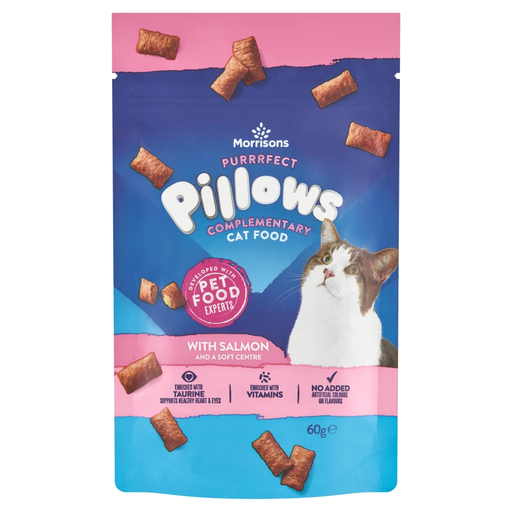
Why This Fits Their Persona: A straightforward option for owners introducing salmon-flavoured cat treats for everyday rewards, playtime or short training sessions.
The listing identifies 4% salmon and 0.5% salmon oil, so shoppers can assess the fish content rather than relying on the flavour name alone. Check the final pack weight on delivery, as the supplied product information contains differing net-weight references.
Includes taurine and vitamins A, D3 and E; no added artificial colours or flavours are listed.
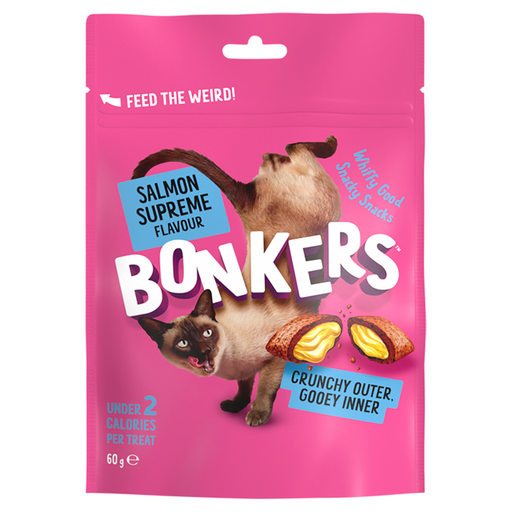
Why This Fits Their Persona: Suitable for owners who prioritise a clearly described texture and recipes without wheat, soy or artificial colours and flavours.
The ingredient list states dehydrated salmon proteins and hydrolysed fish proteins, while the product description makes clear that chicken proteins are also included. This helps owners avoid assuming it is a salmon-only treat.
Crunchy outside with a gooey centre; listed at under 2 calories per treat and suitable for all life stages.
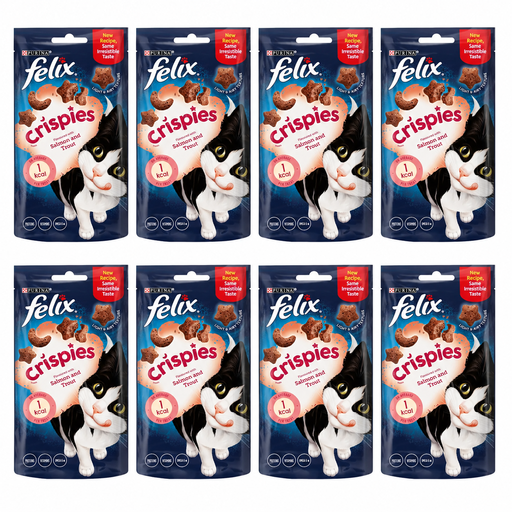
Why This Fits Their Persona: An eight-pack format suits multi-cat households, frequent reward routines and owners who want stock available for training or daily interaction.
The bundle states eight 45g packs and provides a daily guide of up to 13g for an average adult cat. That makes portion planning clearer than feeding directly from a large bag.
Light, crispy texture; approximately 1 kcal per treat; salmon and trout are each listed at 4%.
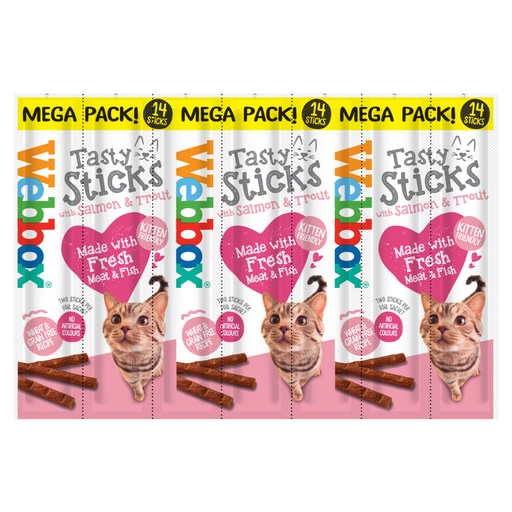
Why This Fits Their Persona: A soft stick format can be broken into smaller pieces for cats over three months, making it practical for early reward routines.
The age guidance is specific: cats over three months. Individual foil sachets also help preserve freshness and make portioning more manageable.
Soft texture; salmon and trout are specified in the composition; no artificial colours are listed.
We have compiled a complete, real-time list of products that fully satisfy these strict selection criteria and UK safety regulations.
Some are, but age guidance varies. Webbox Tasty Sticks are listed for cats over three months, while certain biscuit products are not suitable for kittens under eight weeks. Always follow the packaging instructions and break larger treats into manageable pieces where appropriate.
Use the product’s feeding guide, your cat’s size and activity level as a starting point. Treats should remain a small part of the daily intake, and the main meal may need adjusting. Low-calorie cat treats can make frequent rewards easier to manage, but they still count towards total intake.
No. These products are complementary treats rather than complete food. Keep a nutritionally complete main diet in place, provide fresh drinking water and monitor your cat’s weight and appetite. If your cat has a diagnosed condition or dietary restriction, check the ingredients with your veterinary practice before introducing a new snack.