
24/7 Customer Support

Free returns

Same-day & Next-day Delivery

Quality Guaranteed

Unlock Your Welcome Offers: FREE Delivery | Up to 80% OFF | Free 30-day JoyPlus trial
Download the APP
Choosing salmon dog food can look straightforward until you compare ingredient lists, feeding claims and pack sizes. A salmon recipe may be a complete daily diet, a complementary topper or simply a salmon-flavoured treat. These products are not interchangeable, particularly if your dog has a sensitive stomach, is entering its senior years or needs carefully controlled portions.
This guide explains the practical details to check before buying salmon wet dog food, salmon dry dog food or salmon dog treats in the UK.
“Salmon flavour” does not necessarily mean the product contains a substantial amount of salmon. For example, a biscuit may list cereals first and use salmon gravy or fish derivatives for flavour. That can be suitable as an occasional reward, but it should not be treated as a fish-based complete meal.
Check the composition list, not just the front-of-pack wording. Look for the percentage of salmon and whether it is fresh, dried, an oil or a flavouring.
Grain-free salmon dog food excludes ingredients such as wheat, maize, rice or barley, but it can still contain other animal proteins, soya, dairy or ingredients your dog does not tolerate. Some products are made on production lines that also handle grains, which may matter to owners managing a known sensitivity.
A grain-free recipe is not automatically a veterinary hypoallergenic diet. If your dog has recurring digestive or skin problems, speak to a vet before making a significant dietary change.
Salmon dog treats, including freeze-dried fillets and biscuits, are generally complementary pet food. They are intended for rewards, toppers or occasional snacks rather than replacing a balanced daily diet. Treat calories should be included in your dog’s overall intake, especially for less active or older dogs.
Look for wording such as complete pet food for adult dogs, all life stages or senior dog food. An adult dog food should match your dog’s age, size and activity level. Puppy diets have different nutritional requirements, while senior recipes may use different energy and nutrient levels.
For example:
Do not rely on the word “salmon” alone. The product’s statutory name and feeding instructions provide more useful information.
Compare the actual recipe. Some salmon-based wet foods list salmon and chicken together, while others use salmon as the principal named protein. Dry foods may include dried salmon, salmon meal, salmon oil or a combination.
A higher stated fish percentage does not automatically make a food suitable for every dog. Consider the complete ingredient profile, including carbohydrate sources and additional animal proteins. If you are looking for dog food for sensitive stomachs, a simpler recipe may make it easier to identify what your dog tolerates.
Salmon wet dog food usually has high moisture content and comes in trays, pouches or tins. It can be served as a complete meal or mixed with kibble, depending on the label. Once opened, it normally needs refrigeration and should be used within the stated period—often 24–72 hours.
Salmon dry dog food is convenient to measure and store. Check the bag size, reseal it securely and keep it in a cool, dry place. Large 6kg or 12kg packs may suit multi-dog households, but a smaller bag can help you assess acceptance before committing to bulk buying.
Salmon dog treats can be useful for training or as a meal topper. Freeze-dried products are lightweight and easy to break into portions, while biscuits are often more economical for frequent rewards. Neither should replace complete food unless the packaging explicitly states otherwise.
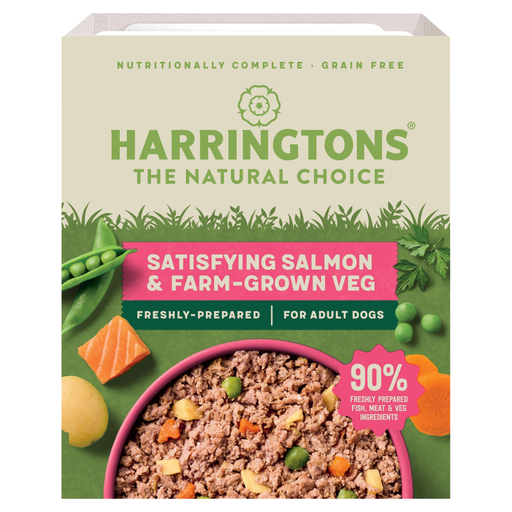
Why This Fits Their Persona: A manageable 400g tray is practical for owners trialling salmon wet dog food without buying a large multipack.
The listing identifies it as an adult recipe and states that it is complete, grain-free and free from wheat, gluten, dairy and soya.
Steam-cooked tray format; includes 32% freshly prepared salmon and salmon oil.

Why This Fits Their Persona: Suits owners seeking a grain-free adult meal with multiple named animal ingredients rather than a single-protein recipe.
The composition clearly lists venison at 40%, pheasant at 15% and salmon at 10%, helping you distinguish ingredients from flavour claims.
Complete grain-free food for adult dogs from four months; no artificial additives listed.
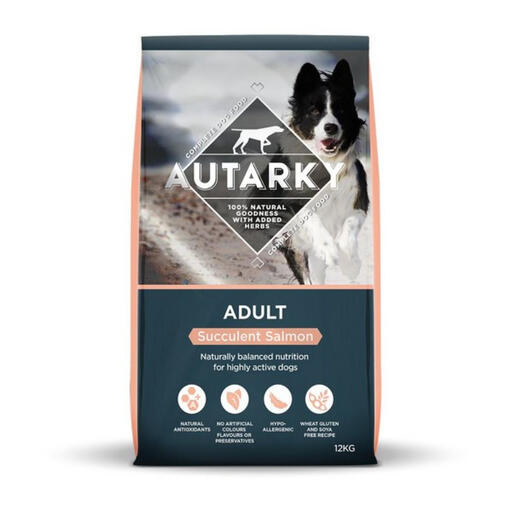
Why This Fits Their Persona: The 12kg bag is suited to active adult dogs, multi-dog homes or owners who prefer fewer repeat purchases.
The recipe states 35% salmon and is free from wheat gluten and soya, while still containing rice and oats—so it is not incorrectly presented as grain-free.
Dry kibble with 24% crude protein and salmon plus linseed sources of fatty acids; resealable storage is recommended.
We have compiled a complete, real-time list of products that fully satisfy these strict selection criteria and UK safety regulations.
Some salmon recipes are described as hypoallergenic or gentle on digestion, but tolerance is individual. Check all ingredients, particularly additional proteins and carbohydrate sources. For persistent vomiting, diarrhoea, itching or other concerns, consult a vet before selecting a new diet.
Wet food often costs more per calorie because it contains substantial moisture, while dry food is concentrated and easier to store in bulk. Compare the cost per day, not just the shelf price, using the feeding guide for your dog’s weight.
A freeze-dried salmon fillet can be flaked over food or rehydrated, but it is a complementary treat rather than a complete diet. Follow the product’s portion guidance and reduce the main meal if necessary. Always check the label for minimum age and storage instructions.