
24/7 Customer Support

Free returns

Same-day & Next-day Delivery

Quality Guaranteed

Unlock Your Welcome Offers: FREE Delivery | Up to 80% OFF | Free 30-day JoyPlus trial
Download the APP
Salted caramel chocolate and snacks combine sweet caramel, creamy chocolate and a savoury finish, making them popular for personal treats, sharing, gifting and packed lunches. However, product descriptions can make very different foods sound similar. A large sharing bar, a protein caramel bar and a Belgian hot chocolate drink serve entirely different purposes.
Before adding products to your basket, look beyond phrases such as “indulgent”, “premium” or “guilt-free”. The ingredient list, portion size, allergen information and storage instructions provide a more useful basis for comparison.
A 180g or 220g product may appear economical, but it is worth comparing the price per 100g and the number of portions. Individual bars can cost more per gram while offering better portability and portion control. Conversely, a multi-pack may be more practical for family sharing or keeping snacks in different locations.
Salted caramel snacks vary considerably. Some use a caramel filling, while others contain caramel pieces, caramel flavouring, biscuit, wafer or nuts. For example, a bar with pretzel crumbs offers a more savoury, crunchy texture, whereas a filled chocolate bar is typically softer and sweeter.
Check the ingredients and product format rather than relying only on the front-of-pack flavour name.
Chocolate and caramel confectionery commonly contains milk, soya, wheat, nuts or peanuts. “Vegetarian” does not mean vegan, and “gluten-free” does not automatically mean suitable for people with every allergy or intolerance.
In the UK, food labels should identify relevant allergens, but recipes and packaging can change. Always check the product label supplied with your order, particularly when buying vegan caramel chocolate, gluten-free snacks or products for someone with an allergy.
Decide whether you want:
The percentage of caramel, nuts or chocolate can help explain the eating experience. Tony’s Chocolonely Milk Chocolate Caramel, Almond, Pretzel & Sea Salt, for instance, lists 6% caramel pieces, 4% almonds and 4% pretzel crumbs.
For occasional treats, a 38g single bar may reduce opened-pack waste and fit easily into a handbag or desk drawer. Multi-packs such as four 38g bars or three 30g nut bars can be more convenient for work, commuting and school-holiday cupboards.
Sharing blocks are suited to film nights and visitors, but their nutrition information is often listed per 100g. Compare the stated serving size with how you realistically eat the product rather than assuming the whole pack is one portion.
Nutrition labels help you compare products objectively. The Options Belgian Choc Salted Caramel 220g drink states 38 calories per serving when prepared according to its instructions, while the powder contains 345 calories per 100g. Preparation with hot milk instead of water will change the final nutritional values.
For protein caramel bars, check protein, fibre, sugars, saturated fat and salt together. Nature Valley Protein Salted Caramel Nut Bars provide 10.4g protein and 5.5g fibre per 40g bar according to the supplied information, but they also contain peanuts, soya, milk and almonds. Nutritional features do not remove the need to review the allergen statement.
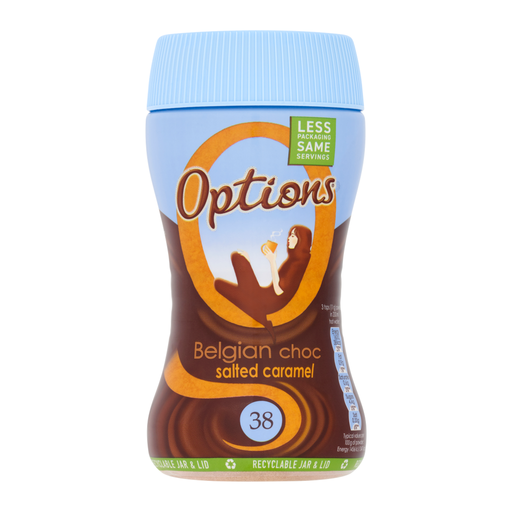
Why This Fits Their Persona: A jar of instant salted caramel hot chocolate suits shoppers wanting multiple mugs from one purchase, whether relaxing at home or serving guests.
The instructions specify a serving quantity, making it easier to compare cost and calories per mug rather than judging the jar by size alone.
220g jar; gluten-free and suitable for vegetarians according to the supplied product information.

Why This Fits Their Persona: It offers several textures in one bar, making it suitable for slow, after-dinner tasting or sharing at a UK gathering.
The ingredient declaration identifies caramel, almonds, pretzel crumbs and sea salt, so the flavour and texture are not hidden behind a generic description.
180g bar; includes caramel pieces, roasted almonds and pretzel crumbs for contrasting textures.

Why This Fits Their Persona: Four individually sized bars work for commuting, desk drawers, travel or planned snacks between activities.
The pack states per-bar nutrition, allowing a clearer comparison than a large sharing pack. It also clearly identifies nut, milk and soya allergens.
10.4g protein and 5.5g fibre per 40g bar according to the supplied information; suitable for vegetarians.
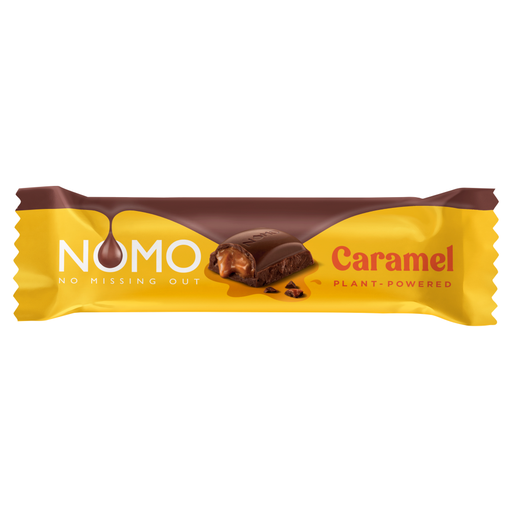
Why This Fits Their Persona: A single bar is convenient for a personal treat and is listed as vegan and free from milk, eggs, gluten and nuts.
The supplied information gives specific free-from details rather than relying only on a plant-based flavour description. Check the current wrapper before consumption.
38g individual format; vegan and free from cereals containing gluten, eggs, milk, nuts and peanuts according to the supplied details.
We have compiled a complete, real-time list of products that fully satisfy these strict selection criteria and UK safety regulations.
Most chocolate and caramel confectionery should be kept in a cool, dry place, away from direct sunlight and heat. Avoid refrigerating products unless the packaging specifically advises it, as condensation and odour transfer can affect texture and flavour. Reseal opened packs where possible.
It depends on the recipe. Options Belgian Choc Salted Caramel is listed as suitable for vegetarians, while Nomo Caramel Filled Chocolate Bar is listed as vegan. Other products may contain milk, whey, honey, eggs or gelatine. Check both the suitability statement and full allergen declaration.
“Protein” is a description of nutritional content, not a universal health judgement. Compare the complete label, including calories, sugars, saturated fat, fibre and salt. A protein bar may suit a particular snack routine, but it should still be selected according to your dietary needs and the manufacturer’s serving guidance.