
24/7 Customer Support

Free returns

Same-day & Next-day Delivery

Quality Guaranteed

Unlock Your Welcome Offers: FREE Delivery | Up to 80% OFF | Free 30-day JoyPlus trial
Download the APP
As a Joybuy Product Recommendation Officer, my role is to help you navigate the market and find products that genuinely meet your needs. Sourcing authentic ingredients for traditional dishes can be a challenge, especially when you're looking for that specific taste of home. Whether you're preparing for the Dragon Boat Festival, craving a comforting bowl of congee or experimenting with new recipes, the right salted duck eggs can make all the difference.
This guide is designed to simplify your search. We'll walk through what to look for when buying Chinese salted eggs and highlight a few standout options available for delivery in the UK, helping you choose with confidence.
Before adding to your basket, consider these key points. They will help you select the product best suited to your culinary plans.
Your intended dish is the most important factor.
The hallmark of a high-quality salted duck egg is its yolk: it should be a deep orange-red, with a rich oil that seeps out when cut and a slightly grainy or "sandy" (沙) texture. This is achieved through traditional curing methods.
Look for products that are individually vacuum-packed. This not only maintains freshness and extends shelf life but also offers great convenience. You can use one egg at a time without compromising the others. For yolks, check if they are frozen, which is excellent for long-term storage, allowing you to stock up for festive cooking like the Dragon Boat Festival food preparations.
Based on their features, preparation style and suitability for different dishes, here are our recommendations.
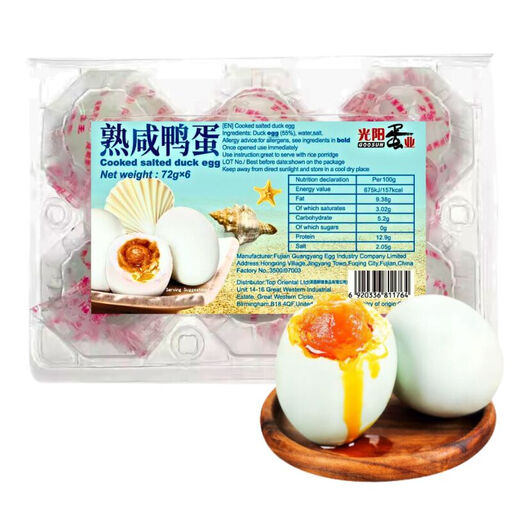
Why It Stands Out: This product is a fantastic all-rounder. The eggs are cured using a traditional yellow clay method, which results in the sought-after rich, oily and sandy yolk. The saltiness is well-balanced, making it a pleasant accompaniment that doesn't overpower other flavours.
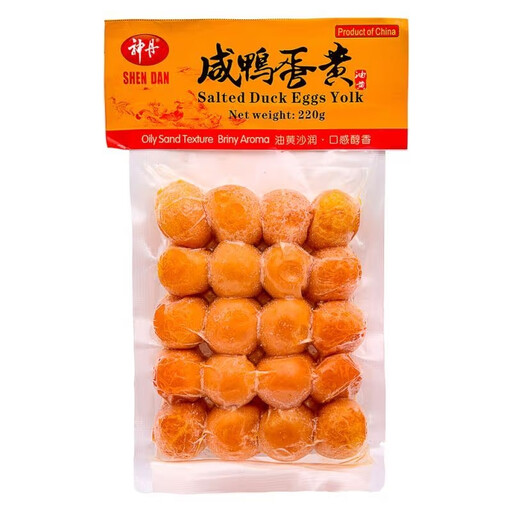
Why It Stands Out: For bakers and those preparing for festivals, these yolks are a game-changer. With a high content of 98% fresh duck egg yolk, they provide pure, concentrated flavour. Being pre-separated and frozen saves significant preparation time and reduces food waste.
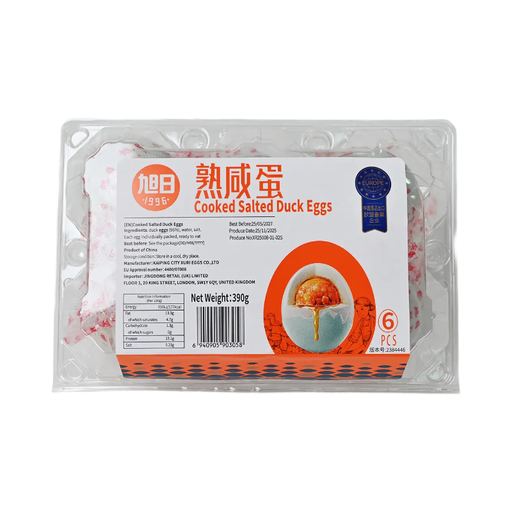
Why It Stands Out: This product is notable for its use of a century-old "straw ash" brining technique, an intangible cultural heritage method. This process gives the eggs a distinct, savoury flavour profile that sets them apart. It is also certified for export to the EU, meeting specific quality standards.
If you have a different use in mind or simply wish to browse further, there are many other varieties available. From different pack sizes to other regional specialities, you can find an ingredient that perfectly matches your next culinary project.
Explore our full range of duck eggs here.
1. How do you eat cooked salted duck eggs? The simplest way is to peel the shell and eat it alongside plain rice or congee. You can cut it in half to reveal the beautiful yolk. They can also be mashed or chopped and used as a flavouring for steamed tofu, mixed into stir-fried vegetables or added to steamed meat patties.
2. What makes a good salted duck egg yolk? A high-quality salted duck egg yolk is prized for three main characteristics. It should have a vibrant, deep orange or reddish colour. When cut, it should release a fragrant, clear oil. Finally, the texture should be "sandy" (沙), meaning it has a slightly grainy, dense and rich mouthfeel rather than being smooth or pasty.
3. Can I use whole salted duck eggs for zongzi? Yes, you can. However, you will need to cook the raw salted eggs first (if they aren't pre-cooked), then carefully peel them and separate the yolk. Using a product of only salted duck egg yolks is often more convenient and ensures you have perfect, unbroken yolks for your zongzi filling.