
24/7 Customer Support

Free returns

Same-day & Next-day Delivery

Quality Guaranteed

Unlock Your Welcome Offers: FREE Delivery | Up to 80% OFF | Free 30-day JoyPlus trial
Download the APP
For many, the rich, savoury flavour of a salted duck egg is a nostalgic taste of home, an essential partner to a comforting bowl of congee. For others, it's a gateway to authentic Asian cuisine, a key ingredient for everything from mooncakes to stir-fries. However, when you try to buy duck eggs online in the UK, the search can be surprisingly tricky. It's easy to end up with a product that doesn't meet expectations.
Many shoppers find themselves disappointed by common purchasing pitfalls. You might accidentally buy the wrong type of preserved egg, or worse, crack one open to find a dry, chalky yolk instead of the luscious, oily centre you were hoping for. This guide will help you navigate the options and understand the key markers of quality, ensuring your next purchase is the right one.
Before adding to your basket, be aware of these frequent issues that can lead to a disappointing culinary experience:
To avoid these traps, focus on a few key product details. Understanding these will help you select an item that perfectly suits your needs.
The most prized feature of a salted duck egg is its yolk. The goal is a firm, rich and oily yolk with a distinct "sandy" texture. This is achieved through a careful curing process.
Look for descriptions that mention a rich, oily or sandy yolk. This language often indicates a focus on quality during the curing process.
Salted duck eggs come in various forms, each suited to different culinary uses.
It is crucial to understand the difference between these two types of preserved duck eggs.
We've filtered through the options to match specific products to different needs, helping you make a confident choice.
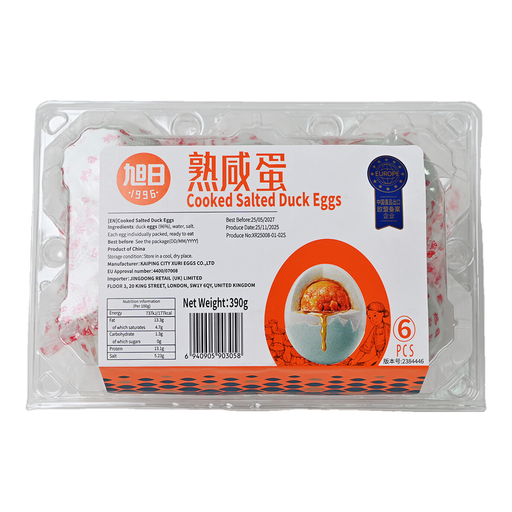
Why This Fits Their Persona: This is the quintessential product for anyone seeking a classic accompaniment to rice porridge or a simple, savoury side dish. It's straightforward, authentic and focuses on delivering the traditional flavour profile expected in homes across the UK.
The product is clearly labelled "Cooked Salted Duck Eggs," eliminating any confusion with raw or century eggs. The description highlights the "savoury, oily yolk," directly addressing the primary quality concern of a dry yolk.
Ready-to-eat for maximum convenience. The use of a traditional "straw ash" brining technique is a good indicator of a process aimed at producing a rich flavour and texture.
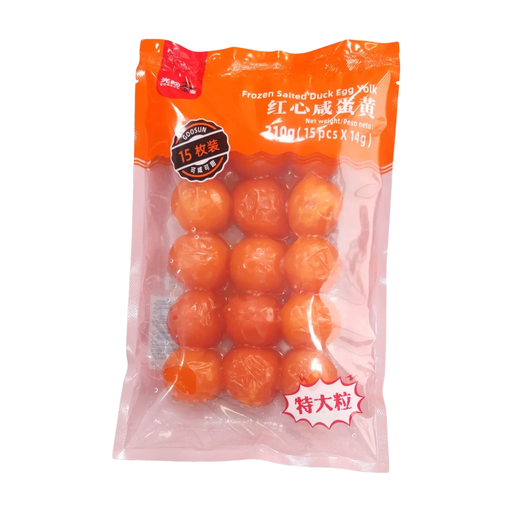
Why This Fits Their Persona: Ideal for the home cook or baker planning to make mooncakes, savoury buns or dishes where the yolk is the star. This product provides just the essential ingredient, saving time and reducing food waste.
This yolk-only product is explicitly for cooking, not immediate consumption, which clears up the "raw vs. cooked" confusion. It isolates the most valued part of the egg, ensuring the user gets exactly what they need for their recipe.
Highly efficient for baking and cooking applications. The frozen format allows for long-term storage, so you can have them on hand whenever a recipe calls for them.
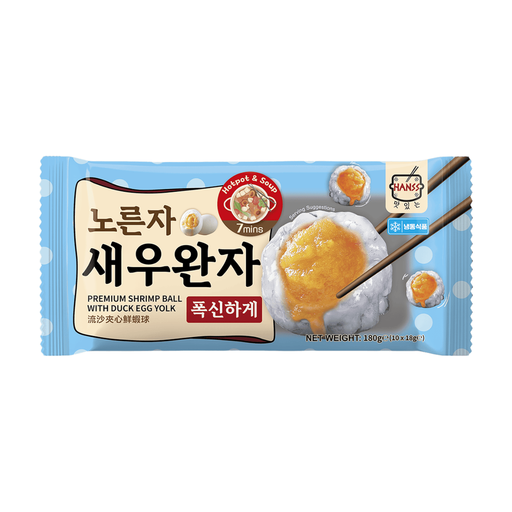
Why This Fits Their Persona: This is for the modern foodie who loves the flavour of salted duck yolk but wants it in a quick, versatile format. Perfect for adding a gourmet touch to a weeknight hot pot, noodle soup or stir-fry without any fuss.
This product bypasses the whole-egg format entirely, delivering the desired flavour in a new form. It's a clear-cut ingredient for a meal, removing any ambiguity about how to prepare or eat it.
Combines two popular flavours—shrimp and salted duck yolk—in one convenient product. It's quick to cook from frozen, making it an excellent staple for fast and flavourful meals.
We have compiled a complete, real-time list of products that fully satisfy these strict selection criteria and UK safety regulations.
A salted duck egg is made by curing a duck egg in salt, which results in a firm, salty white and a rich, orange-red oily yolk. A century egg (or pidan) is preserved in an alkaline mixture, giving it a dark, jelly-like white and a creamy, dark green-grey yolk with a strong, pungent flavour. They are not interchangeable in recipes.
Ready-to-eat cooked salted duck eggs are very versatile. The simplest way is to crack the shell, peel it and slice the egg to serve alongside plain rice porridge (congee), where its saltiness complements the mild flavour of the rice. You can also chop it and add it to stir-fries, salads or steamed dishes for a burst of umami.
Commercially packaged, cooked salted duck eggs are typically shelf-stable and can be stored in a cool, dry place until the expiry date on the packaging. Once an egg is opened or if the vacuum seal is broken, it should be refrigerated and consumed within a few days. Always refer to the storage instructions on the specific product you purchase.