What to check before buying
Set the memory and storage requirements from your working projects, confirm software and peripheral compatibility, then decide which computer and cable layout will fit the moving desk.
Compact macOS desktop
Consider it when: Your DAW and libraries support the chosen macOS setup and surface space is limited.
Allow for: Choose sufficient memory and internal storage when configuring the machine, and check each legacy plug-in and peripheral.
Windows DAW workstation
Consider it when: Recording equipment and a Windows-based DAW workflow shape the purchase; Scan 3XS describes its Pro Audio systems as designed and tested with DAW hardware and software.
Allow for: That supplier testing does not establish how your particular interface, drivers or plug-ins will behave.
Larger tower workstation
Consider it when: Your intended configuration calls for internal expansion or a larger system, and you have a suitable place for it beside the standing desk.
Allow for: A tower takes more placement and cable planning; a high processor core count alone does not establish its performance in your DAW projects.
| Concern |
What to check |
Who this matters to |
| Loaded instruments |
Compare memory capacity with the number of instruments you keep ready and your library publishers’ requirements. Spitfire Audio suggests 32GB or more for large orchestral templates, not as a universal minimum. |
If I keep many articulations ready in one composition, I need enough memory without repeatedly unloading tracks. Roughly 31% of consumers put template headroom first. |
| Sample storage |
Check space for active libraries and the SSD’s random-read performance, particularly QD1 where stated. For an external drive, check its format and connection. |
As my library grows, I want active samples on storage suited to streaming, while leaving room for new material. Around 31% of consumers make sample storage their primary concern. |
| Standing-desk fit |
Measure the available space and desk load rating; plan placement, ventilation and cable slack throughout the desk’s height range. |
When I raise the desk, I need the screen, interface, drives and cables to remain practical to use. Roughly 19% of consumers prioritise the workstation layout. |
| Compatibility |
Confirm the exact operating-system versions supported by your DAW, libraries, plug-ins and interface drivers; count the connections your displays and devices require. |
I need my existing software and studio devices to work together, so a hardware specification alone cannot settle the choice. Compatibility comes first for around 19% of consumers. |
Joybuy desktop choices
These Windows desktop towers have listed memory and SSD capacities worth comparing with a sample-library project. Check each machine’s software compatibility and placement at your standing desk rather than treating the shared specifications as proof of equal DAW performance.
 Image unavailable
Stormforce Cyclone Intel Core i7, 32GB RAM, 2TB SSD, RTX5080, Win 11
Consider its listed memory if you plan to keep many sampled instruments ready: Spitfire Audio suggests 32GB or more for large orchestral templates. The title also specifies a 2TB SSD and Windows 11. Confirm your DAW, libraries and interface drivers, and check the tower’s placement, cable slack and SSD random-read performance for your setup.
View on Joybuy
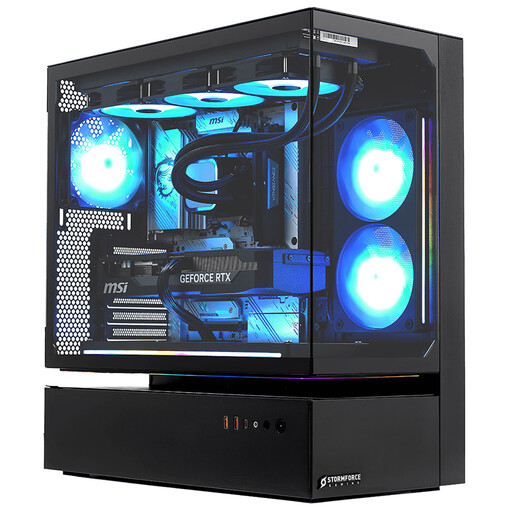 Image unavailable
Stormforce Cyclone AMD Ryzen 7, 32GB RAM, 2TB SSD, RTX5080
Its listed 32GB RAM is a capacity to assess against projects with many loaded instruments; Spitfire Audio suggests 32GB or more for large orchestral templates. The title also specifies a 2TB SSD. Before choosing it, confirm software and interface compatibility, available space and cable slack, and the SSD performance relevant to your libraries.
View on Joybuy
 Image unavailable
Stormforce Defiance AMD Ryzen 7 5700X, 32GB RAM, 2TB SSD, RTX5070, Win 11
For a Windows 11 sample-library setup, compare its listed 32GB RAM with the size of your loaded projects; Spitfire Audio suggests 32GB or more for large orchestral templates. A 2TB SSD is also listed. Check the chassis dimensions and required connections for your desk, along with your software, interface drivers and SSD performance needs.
View on Joybuy
Frequently asked questions
How much memory should a sample-library desktop have?
Choose memory for the number of instruments you expect to keep loaded at once. Spitfire Audio generally recommends 16GB for entry-level audio work and says 32GB or more is a good idea for large orchestral templates; check each library’s requirements rather than treating either figure as a guarantee.
Should I store active sample libraries on an SSD?
An SSD is the route Spitfire Audio recommends for active sample drives because it offers greater streaming bandwidth than a hard drive. For an external drive, Spitfire identifies APFS as optimal for macOS and NTFS for Windows, and cautions that ExFAT can cause performance problems in this use.
Will a Mac or Windows desktop run all my libraries?
Neither operating system alone establishes compatibility with every library. Spitfire Audio lists support by product and says its dedicated plug-ins require a 64-bit DAW; check your exact DAW, plug-ins, libraries, licence tools and audio-interface drivers for the operating-system version you intend to use.
Does a standing-desk setup need a workstation assessment in the UK?
For workers who use display screen equipment daily for continuous periods of an hour or more, the Health and Safety Executive says employers must assess the workstation and reduce risks. That assessment considers the equipment, furniture and working conditions together; it is not a general purchase requirement for every private home setup.
What should I do with an old desktop?
Securely erase personal data before passing on an old computer, then use an appropriate reuse, recycling or available retailer take-back route. GOV.UK describes the UK waste electrical and electronic equipment framework as supporting recovery, reuse and recycling.


