
24/7 Customer Support

Free returns

Same-day & Next-day Delivery

Quality Guaranteed

Unlock Your Welcome Offers: FREE Delivery | Up to 80% OFF | Free 30-day JoyPlus trial
Download the APP
As a Joybuy Product Recommendation Officer, my role is to help you navigate the crowded market of home audio. When it comes to creating a genuine home cinema experience, the promises on the box can often be misleading. High-end soundbars, in particular, are marketed with complex technical terms that can be confusing. Before you invest in a premium audio system, it is crucial to understand the common pitfalls that many buyers fall into.
Many shoppers are drawn in by impressive specifications, only to be disappointed by the real-world performance. Here are two frequent issues we see:
To ensure you are getting a true upgrade, focus on these non-negotiable specifications. They are the difference between a simple speaker and a genuine home cinema sound system.
The numbers used to describe a soundbar (e.g., 3.1.2, 9.1.4 or 11.1.4 channel soundbar) are not just marketing jargon. They represent the physical speaker layout:
A system like the Samsung HW-QS990F soundbar offers a true 11.1.4 configuration, meaning it uses a combination of the main bar and a dedicated soundbar with rear speakers to physically project sound from all around and above you. This is fundamentally different from a 3.1.2 bar that tries to digitally simulate the same effect.
The term "wireless" can be ambiguous. While most soundbars offer Bluetooth for streaming music from a phone, this is not sufficient for high-fidelity cinema sound. For a truly clean and high-quality setup, look for a wireless Dolby Atmos soundbar system.
This advanced feature, found in models like the HW-QS990F, uses a high-bandwidth Wi-Fi connection to stream the full, uncompressed Dolby Atmos signal from a compatible TV to the soundbar. This eliminates the need for an HDMI cable between the two devices, offering a cleaner look without sacrificing audio quality. It is a significant step up from the compressed audio sent over standard Bluetooth.
To avoid the pitfall of uncalibrated sound, a premium system must be able to adapt to your specific living space. Features like SpaceFit Sound Pro use built-in microphones to analyse the size, shape and even the furnishings of your room. The system then automatically calibrates the audio output, adjusting the directionality and equalisation of each channel to ensure sound is delivered with clarity and precision, regardless of your room's acoustic properties. This technology is particularly important for optimising the performance of a complex Samsung flagship soundbar.
We have selected a few soundbar systems that address these core requirements, matching them to different user needs and living situations.

Why This Fits Their Persona: This user wants an uncompromising audio experience for their high-end television. They seek the most immersive sound possible for films and gaming, without the complexity of a traditional separates system. This is the ideal choice for those with a compatible Samsung TV to take full advantage of Samsung Q-Symphony.
It completely avoids the "phantom channel" trap by providing a true 11.1.4 channel soundbar setup with physical rear and up-firing speakers. The integrated SpaceFit Sound Pro directly solves the room calibration problem.
A complete, all-in-one package that delivers a class-leading number of discrete audio channels. The inclusion of Wireless Dolby Atmos offers a clean, high-fidelity connection to compatible TVs.
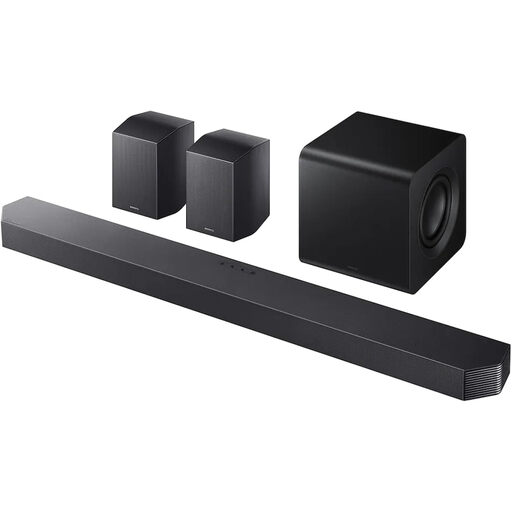
Why This Fits Their Persona: This user wants a top-tier surround sound experience but may have a slightly smaller room or budget. They still demand true, physical surround speakers and advanced features but do not necessarily need the absolute maximum number of channels.
With a 9.1.4 channel configuration and included rear speakers with up-firing drivers, it delivers authentic Dolby Atmos without relying on virtualisation. It also features SpaceFit Sound Pro to tune itself to the room.
Offers a substantial portion of the flagship experience in a more compact and accessible package. The 17-speaker array still provides an incredibly immersive and detailed soundscape.
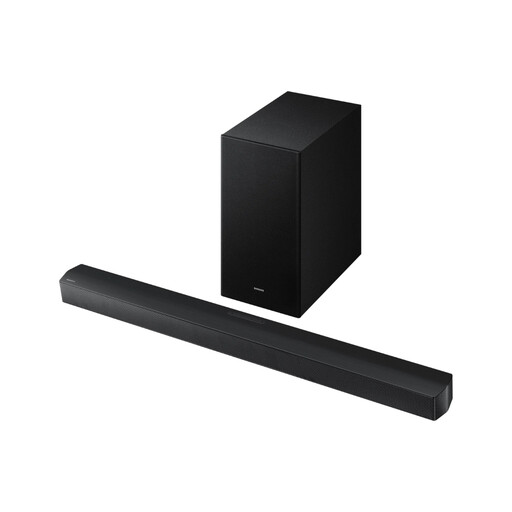
Why This Fits Their Persona: This user is primarily frustrated with muffled dialogue from their TV's built-in speakers. They want a significant upgrade in clarity and bass for films, but do not require a full surround sound setup with rear speakers.
It avoids the trap of basic 2.0 channel bars by including a dedicated centre speaker. This physically separates dialogue from other sounds, ensuring voices are anchored to the screen and remain clear during action scenes.
Excellent value for a system that dramatically improves vocal clarity. The included wireless subwoofer provides deep bass that TV speakers cannot replicate and DTS Virtual:X processing adds a sense of spaciousness.
We have compiled a complete, real-time list of products that fully satisfy these strict selection criteria and UK safety regulations.
Yes, it is still a formidable sound system when paired with any brand of television that supports HDMI eARC. You will get the full benefit of the 11.1.4 channel Dolby Atmos and DTS:X audio. However, you will miss out on the Samsung Q-Symphony feature, which synchronises the soundbar's speakers with those in a compatible Samsung TV to create an even larger front soundstage.
The main soundbar itself is designed to sit neatly under large-screen TVs (65-inch and above). The key consideration is placement for the wireless rear speakers. For an optimal effect, they should be positioned to the side and slightly behind your main viewing position. As they are wireless (requiring only a power connection), you have flexibility in placement without running speaker cables across the room. The subwoofer can also be placed where it sounds best, typically in a corner or near the front of the room.
When implemented correctly using a high-bandwidth Wi-Fi connection between a compatible TV and soundbar, there should be no perceptible lag or loss in audio quality. This technology is specifically designed to handle the large amount of data required for uncompressed, object-based audio formats like Dolby Atmos, providing a stable and high-fidelity alternative to an HDMI cable. It is a significant improvement over older wireless audio standards.