
24/7 Customer Support

Free returns

Same-day & Next-day Delivery

Quality Guaranteed

Unlock Your Welcome Offers: FREE Delivery | Up to 80% OFF | Free 30-day JoyPlus trial
Download the APP
A premium television can look impressive on a product page yet disappoint once it is installed at home. For UK households comparing a Samsung Neo QLED 55-inch 4K Smart TV, the important details are not limited to screen size or a long list of branded features. Brightness control, gaming connectivity, sound output, energy use and available space can all affect whether the television suits your routine.
The Samsung Neo QE55QN85FAUXXH is a 55-inch 4K Ultra HD Smart TV with Neo QLED display technology, a silver finish and Samsung’s Tizen platform. It has plenty to offer, but it is still worth checking the specifications against your viewing habits before ordering.
A television may advertise a high refresh rate without delivering the same performance across every input or resolution. The Samsung QE55QN85FAUXXH has a 100Hz native refresh rate and supports refresh rates up to 144Hz, while some competing models offer higher gaming refresh rates only in particular modes.
For console gaming, check whether the TV supports the refresh rate you actually need. Many current consoles target 4K at up to 120Hz, whereas 144Hz or higher is more relevant to compatible gaming PCs.
4K HDR Smart TV labels do not automatically mean that every HDR format is supported. The Samsung Neo QLED TV supports HDR, Filmmaker Mode, HDR10+ Adaptive and HDR10+ Gaming. This can be useful for compatible streaming and gaming content, but buyers should check the formats used by their preferred services and devices.
HDR performance also depends on the panel, local dimming system and room lighting. A specification mentioning HDR alone does not tell you how the picture will look in a bright lounge or a dark film-watching room.
Thin televisions often have limited space for large speakers. This Samsung model includes 40W audio output, 2.2 channels, Dolby Atmos decoding, Adaptive Sound Pro and Object Tracking Sound+. These features can help create more spacious audio, but they do not remove the need for a soundbar if you want stronger bass or higher volume.
Also count your devices before buying. Consoles, a set-top box, Blu-ray player and soundbar can quickly use several HDMI inputs.
The 55-inch panel has a resolution of 3840 × 2160 pixels, which is the standard 4K Ultra HD format. With the stand fitted, the Samsung measures approximately 1227.6mm wide, 761.2mm high and 247.4mm deep. Its VESA mounting interface is 200 × 200mm.
Measure both the furniture and the route into the room. A television can fit on a cabinet but still be difficult to move through a narrow stairway or doorway. Leave sufficient ventilation around the set and use a suitable wall mount if mounting above furniture.
The model combines a Neo QLED panel with Quantum Matrix Technology Plus, Ultimate UHD Dimming, Samsung Real Depth Enhancer and an NQ4 AI Gen2 processor. In practical terms, these systems are designed to manage contrast, upscale lower-resolution material and add depth to compatible content.
Upscaling cannot turn standard-definition broadcasts into native 4K. UK live television and older video sources may vary considerably in quality, so consider your actual content mix rather than judging the TV only by an ultra-high-definition demo clip.
The Samsung includes four HDMI ports, Variable Refresh Rate support, AMD FreeSync Premium Pro, Auto Low Latency Mode, HGiG and Samsung Gaming Hub. It also offers Game Motion Plus and features such as Super Ultra Wide Game View.
If you specifically need an HDMI 2.1 TV, confirm the precise bandwidth and supported modes for your chosen console or PC before purchase. Port count alone does not establish HDMI 2.1 performance. Use certified high-speed cables for high-bandwidth 4K gaming equipment.
Samsung Tizen TV provides access to apps and services through the smart interface, with Samsung TV Plus, a web browser, AirPlay 2 and screen-mirroring functions. The built-in tuner supports DVB-C, DVB-S2 and DVB-T2, which covers common cable, satellite and terrestrial broadcast standards. Check individual app availability and account requirements, as services can change over time.
The TV also supports SmartThings integration and voice assistants including Bixby, Amazon Alexa and Google Assistant. This may suit homes that already use connected lights, speakers or other smart-home devices.
The UK energy label uses an A to G scale. This model is rated F for SDR and G for HDR, with stated consumption of 75kWh per 1,000 hours for SDR and 166kWh per 1,000 hours for HDR. Actual household cost depends on viewing time, picture settings and your electricity tariff.
For a fair comparison, check the energy label rather than assuming that a newer or thinner screen will automatically cost less to run.
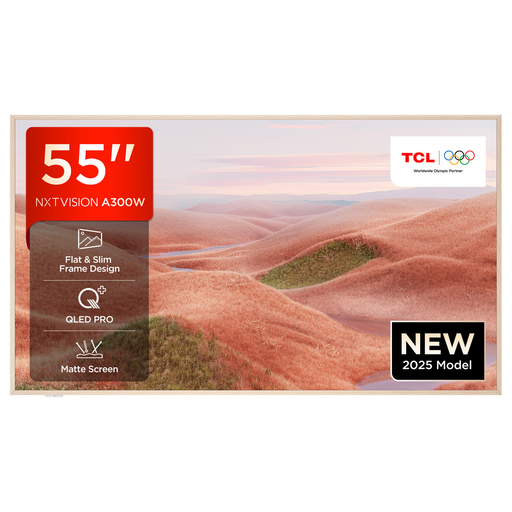
Why This Fits Their Persona: A 55-inch QLED option for households wanting 4K streaming, Google TV access and gaming features without moving to a larger screen.
Its listed features specify 144Hz support, HDMI 2.1, VRR and ALLM, helping buyers distinguish gaming capability from a generic HDR label.
QLED display, Google TV platform, 144Hz support and compatibility with Dolby Vision and HDR10+.
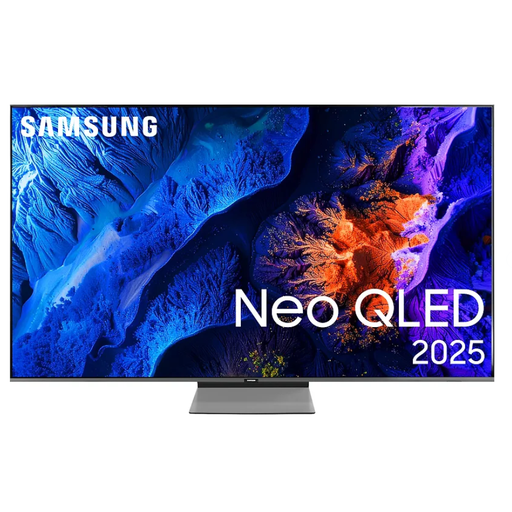
Why This Fits Their Persona: Suits viewers prioritising Neo QLED picture processing, smart-home integration, films, live sport and a refined silver Samsung TV design.
The specification lists the native 100Hz rate separately from supported 144Hz refresh rates, while also detailing HDR formats, inputs and energy ratings.
Quantum Matrix Technology Plus, four HDMI inputs, Dolby Atmos decoding, Tizen and SmartThings support.
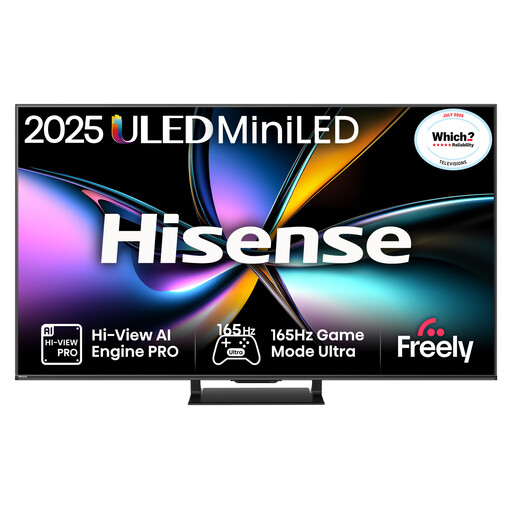
Why This Fits Their Persona: Designed for frequent gaming, fast sports and viewers who want a higher refresh rate with dedicated picture and sound features.
The listing identifies a native 165Hz refresh rate, Mini-LED local dimming and four HDMI 2.1 inputs instead of relying on a broad gaming label.
165Hz VRR, ALLM, FreeSync Premium Pro, Dolby Atmos and a 2.1.2-channel audio system.
We have compiled a complete, real-time list of products that fully satisfy these strict selection criteria and UK safety regulations.
It includes Game Mode, VRR, ALLM, AMD FreeSync Premium Pro and four HDMI inputs. However, check the exact HDMI mode and bandwidth required by your console, and use a suitable high-speed HDMI cable for 4K high-refresh gaming.
Not necessarily. Its built-in system is rated at 40W and supports Dolby Atmos decoding and Object Tracking Sound+. A soundbar may still be worthwhile if you want deeper bass, louder output or a more cinema-like audio setup.
The stated consumption is 75kWh per 1,000 hours in SDR mode and 166kWh per 1,000 hours in HDR mode. Multiply the relevant figure by your electricity tariff and viewing time for a personal estimate. Picture brightness and energy-saving settings can also affect actual use.