
24/7 Customer Support

Free returns

Same-day & Next-day Delivery

Quality Guaranteed

Unlock Your Welcome Offers: FREE Delivery | Up to 80% OFF | Free 30-day JoyPlus trial
Download the APP
Samyang Buldak Korean spicy noodles and snacks appeal to UK shoppers who enjoy chilli heat, chewy noodles and convenient Korean-inspired meals. However, the range includes very different products: stir-fried ramen, noodle cups, sauces, frozen dumplings, kimbap and flavoured snacks.
Choosing by packaging alone can lead to an unsuitable heat level, a pack size that does not fit your household or a product that requires storage you cannot provide. Use the guide below to compare flavours, formats and practical details before ordering.
The Buldak range is not one uniform spice category. Buldak original ramen, cheese varieties, carbonara noodles and 2x spicy Buldak ramen have different seasoning profiles and perceived heat. A creamy powder may soften the flavour profile, while a concentrated chilli sauce can deliver more direct heat.
Product descriptions may use terms such as “extremely spicy” or “double spicy”. Treat these as important guidance rather than a casual flavour description, particularly if you are new to Korean instant noodles.
A five-pack of individual ramen servings is not the same as a six-cup multipack or a 700g frozen dumpling bag. Check:
A large multipack may suit a student flat or busy household, while a smaller cup format may be more practical for office lunches.
Many products in this category contain wheat or gluten and soy. Some also contain milk, sesame or celery, while manufacturing facilities may handle additional allergens. Always read the current UK packaging before purchase, especially when buying Buldak cheese ramen, dumplings or sauce.
Nutrition panels can vary between formats. For example, the supplied product details for Buldak cheese ramen list 3.5g salt per 100g, while the original bowl lists 2.3g salt per 100g. These figures are not a personal dietary recommendation, but they show why comparing labels matters.
Decide whether you want a dry stir-fried noodle, a cup noodle, a sauce or a filled product.
For a milder introduction, consider a cheese or carbonara format and use only part of the sauce sachet initially. Those seeking a stronger chilli challenge may prefer the original or double-spicy varieties.
Ambient ramen and bottled sauces generally need a cool, dry place away from direct sunlight. Once opened, follow the product instructions; some sauces require refrigeration.
Frozen options require more planning. Buldak kimchi dumplings and Buldak-style kimbap should be kept at approximately -18°C and must not be refrozen after thawing, according to the supplied product information. Check that your delivery and freezer arrangements are suitable before adding them to your basket.
Follow the instructions on the specific pack. Many Buldak ramen products require boiling for around five minutes, draining most of the water and stir-frying the noodles briefly with the seasoning. Cups typically require boiling water and a standing period.
Do not judge value by the outer pack alone. Compare the price per serving, cooking method and portion weight. A cup may cost more per portion but save time and washing-up.
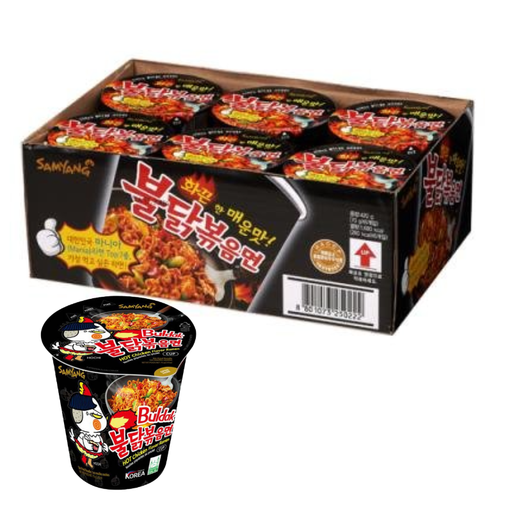
Why This Fits Their Persona: Six individual bowls offer a straightforward way to try Korean spicy snacks and noodles without committing to a larger 5-pack of 140g servings.
The bowl format makes the portion and preparation method clear, helping new buyers avoid ordering a large format before checking their spice preference.
Six sealed 70g bowls; includes noodle, sauce and garnish components.

Why This Fits Their Persona: Suitable for shoppers seeking chewy noodles with a creamy carbonara-style powder alongside chilli seasoning.
The product description identifies the wheat, soy and celery allergens, so shoppers can check suitability before opening a multipack.
Five individual servings; combines a creamy-style powder with a separate spicy sauce.

Why This Fits Their Persona: Designed for shoppers specifically seeking a high-heat noodle challenge and a five-serving stock-up pack.
The name and preparation guidance clearly identify the double-spicy format, reducing the chance of mistaking it for a standard Buldak ramen.
Five 140g servings; includes roasted sesame and toasted laver flakes.

Why This Fits Their Persona: A practical option for households wanting a freezer staple that can be steamed, boiled, pan-fried or added to soup.
The 700g quantity and frozen storage requirement are stated clearly, helping buyers plan freezer space and avoid unsuitable delivery arrangements.
700g pack; contains kimchi seasoning, tofu, vermicelli, vegetables and chilli ingredients.
We have compiled a complete, real-time list of products that fully satisfy these strict selection criteria and UK safety regulations.
A cheese or carbonara format may be a more approachable starting point than 2x spicy Buldak ramen, because the creamy-style seasoning changes the overall flavour profile. Begin with the recommended serving instructions and adjust the sauce quantity only after checking your tolerance.
For packet ramen, boil the noodles as directed, drain most of the water and mix in the liquid sauce and powder. Buldak products are generally stir-fried rather than served as a conventional soup noodle. Cup products use boiling water and a standing time, so follow the instructions printed on that specific pack.
Ambient ramen and unopened sauces can be stored until the best-before date shown on the packaging when kept in a cool, dry place. Opened sauce may need refrigeration. Frozen dumplings and kimbap require freezer storage and should not be refrozen after thawing. Always use the date and storage guidance on the current product label.