
24/7 Customer Support

Free returns

Same-day & Next-day Delivery

Quality Guaranteed

Unlock Your Welcome Offers: FREE Delivery | Up to 80% OFF | Free 30-day JoyPlus trial
Download the APP
Finding engaging, screen-free activities for young children can be a constant challenge. As a parent, grandparent or childminder, you want toys that are not only fun but also contribute to a child's development. A sand and water table is a classic piece of equipment that delivers on both fronts, providing hours of sensory fun right in your own garden.
These versatile activity stations encourage creativity, help develop fine motor skills and introduce basic scientific concepts like cause and effect. However, with so many options available, choosing the right one can feel overwhelming. This guide is designed to help you navigate the choices and find a kids activity table that suits your space, budget and your child's needs.
Before diving into specific products, it's helpful to consider a few key factors. Thinking about these points will ensure you select a table that will be used and loved for seasons to come.
Think about where the table will live. Do you have a large lawn, a small patio or a balcony? The footprint of the table is an important consideration. Also, consider how many children will be using it at once. Some tables are compact and ideal for a single child, while others have multiple compartments and are better suited for siblings or playdates.
A children's water table with accessories offers fantastic value and immediate play potential. Sets that come with spades, rakes, moulds and water wheels mean your child can start exploring straight away. While you can always buy these separately, a comprehensive starter kit removes the guesswork and ensures all the pieces are designed to work with the table.
Given that these are outdoor garden toys for toddlers, durability is key. Look for tables made from sturdy, non-toxic plastic that can withstand enthusiastic play and exposure to the elements. Check that the legs are robust and provide a stable base to prevent tipping, especially when filled with sand and water.
To help you get started, we've highlighted a few popular options that offer different features for various types of play.
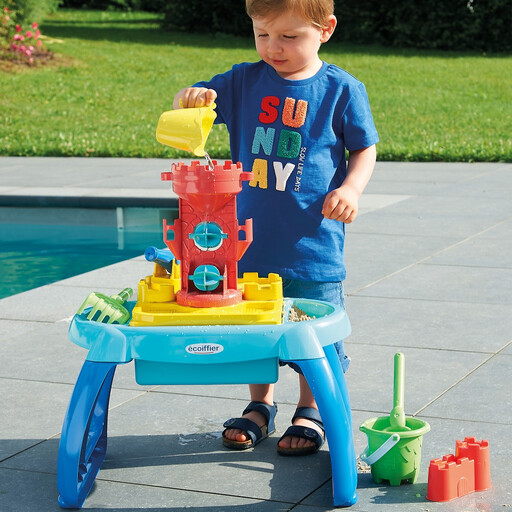
This table's strength lies in its simple yet effective design. The three separate compartments allow for distinct play zones—sand, water and a mixing area—or they can all be used for one material. The central structure, which integrates a sand mill and sieve, is a clever touch that encourages interactive, flowing play.
This is an excellent choice for those seeking a complete, all-in-one starter set. It's particularly well-suited for toddlers from 18 months and is a great introductory sensory play table for toddlers.
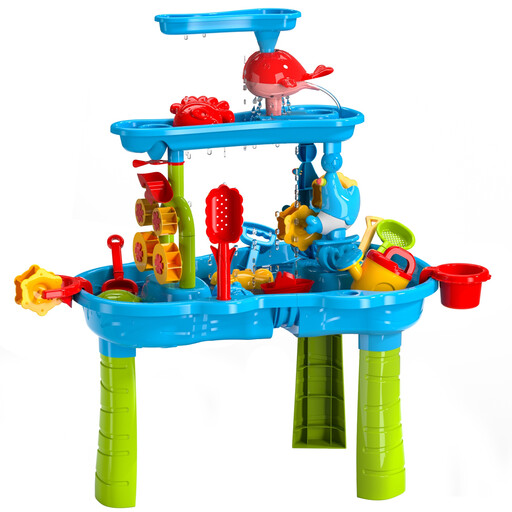
The vertical design of this table sets it apart. Water poured into the top tier cascades down, creating a waterfall effect and spinning a water wheel along the way. This multi-level approach adds a dynamic element that fascinates young children and teaches them about gravity and water flow.
This table is ideal for families who want to maximise the "water play" aspect. The tiered waterfall is highly engaging and makes it a standout option for children who love watching things move and spin.
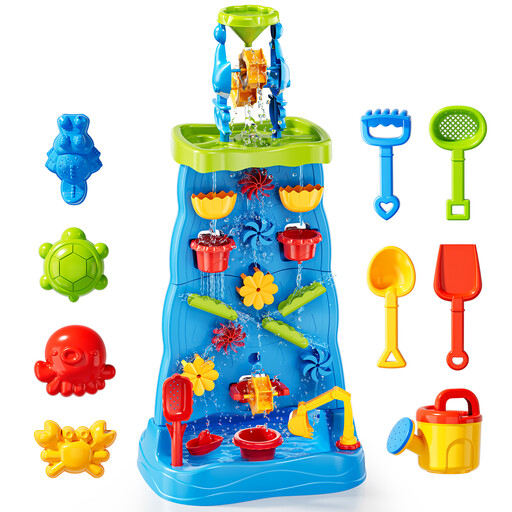
This is more than just a table; it's a full-blown activity centre. The main feature is the large, double-sided maze-like wall where children can attach different components to create their own waterfall systems. With a massive 32 accessories, the play possibilities are vast.
This is a great option for those looking for maximum interactivity and long-term engagement. It's perfect for curious kids who enjoy building and experimenting, and the sheer number of accessories makes it great for playdates.
The models above are just a starting point. Every child's interests are different, and you may be looking for a different size, a wooden design or perhaps a simple toddler sand pit. If you'd like to explore a wider variety of options, you can browse our full collection.
? Explore our full range of Children's Outdoor Water Play Equipment
Most sand and water tables are designed for children aged 18 months to 5 years. However, it is crucial to always check the manufacturer's specific age recommendation for any product you consider. Direct adult supervision is always recommended during play.
While primarily designed as outdoor toys, some more compact models can be used indoors. If you choose to do so, it's wise to place a large waterproof mat or towel underneath to protect your floors from spills. Using sand indoors can be very messy, so many parents opt for water-only play inside.
To keep the table clean and safe, it's good practice to drain the water after each use to prevent stagnation. The table itself can be wiped down with a cloth. If you are using sand, a cover is highly recommended to keep it clean, dry and free from garden debris or animals.