
24/7 Customer Support

Free returns

Same-day & Next-day Delivery

Quality Guaranteed

Unlock Your Welcome Offers: FREE Delivery | Up to 80% OFF | Free 30-day JoyPlus trial
Download the APP
As the days get longer and warmer, finding engaging outdoor activities for children is a top priority for many families. A sand and water table can be a fantastic piece of garden play equipment, encouraging hours of screen-free, sensory fun. However, with so many options available, from classic wooden sandpits to multi-level plastic tables, choosing the right one can feel overwhelming.
This guide is designed to help you navigate the choices. We will outline key features to consider and present a few of our top recommendations for 2026 to help you find a sand and water table that suits your space, budget and your child's developmental stage.
Before diving into specific products, it helps to understand the main factors that differentiate them. Keeping these points in mind will make your decision much easier.
The two most common materials are wood and plastic, each with its own set of considerations.
Always check the manufacturer's recommended age range. For toddlers, look for tables at a comfortable standing height with rounded edges and sturdy legs to prevent tipping. For older children, a larger, ground-level sandpit might offer more space for creative digging and building. Ensure any product you consider is certified to UK safety standards, such as EN71.
Consider what's included. Some tables come as a complete set with spades, rakes, moulds and water wheels, offering immediate play value. Others are simpler, providing a blank canvas for you to add your own toys. Features like drainage plugs, adjustable canopies for sun protection and covers are practical additions that can make maintenance much simpler.
Here are a few standout options that cater to different needs and garden sizes.
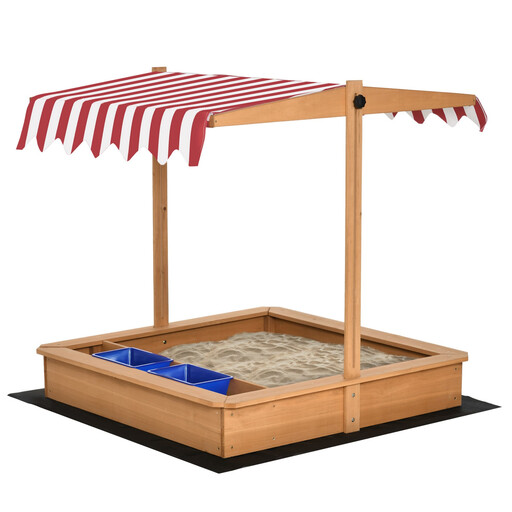
Why It Stands Out: This model combines the classic appeal of a wooden sandpit with modern, practical features. The standout element is its height-adjustable canopy, which provides essential shade on sunny days and can be lowered completely to act as a protective cover when not in use.
Constructed from solid fir wood, it's a robust piece of garden play equipment. The design includes a bottomless base with a non-woven fabric liner, which allows for drainage while preventing sand from mixing with the soil underneath. It also features built-in seating along the edges and two small plastic basins, perfect for holding water or storing toys.
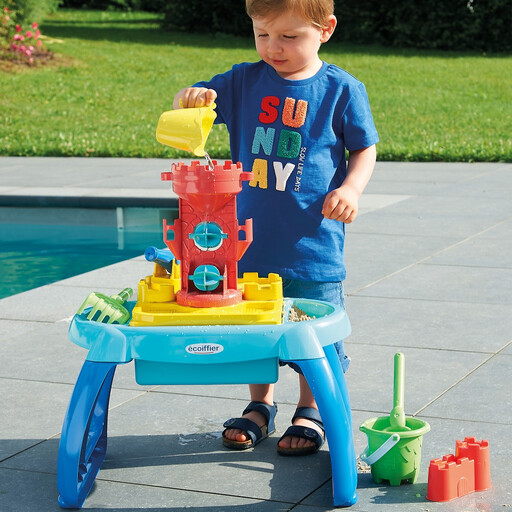
Why It Stands Out: This vibrant table is an all-in-one sensory station, perfect for younger children. Its three-compartment design allows for sand, water and mixing activities to happen all at once. It comes as a complete package with 8 accessories, including a sand mill, sieve, bucket and spade.
The lightweight plastic construction makes it easy to move around the garden, patio, or even a balcony. The central structure cleverly integrates the sieve and sand mill, encouraging children to explore cause and effect as they pour materials through.
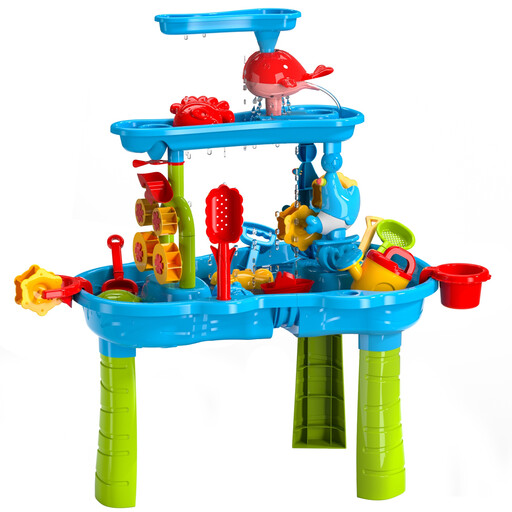
Why It Stands Out: This table's unique vertical design creates a dynamic play experience. The 3-tier structure allows water to cascade from the top level down through a water windmill, creating a captivating waterfall effect that introduces children to basic physics concepts in a fun way.
Made from durable, non-toxic plastic, this outdoor sensory table is easy to assemble and clean. While its primary focus is water play, the different tiers can also be used for sand, offering flexible play options within a relatively small footprint.
If these specific models aren't quite what you're looking for, there is a wide world of outdoor toys to explore. From different sizes to various themes and accessory packs, the perfect option for your family is out there.
Explore our full collection of kids outdoor water play toys to find the perfect fit for your garden and your little one's imagination.
Most sand and water tables are designed for children between 18 months and 7 years old. Raised plastic tables are generally better for toddlers (18 months to 3 years), as they allow them to stand and play comfortably. Larger, ground-level wooden sandpits are often suitable for a wider age range, including older children (4-7 years) who need more space for elaborate construction projects. Always check the manufacturer's specific age recommendation.
Regular maintenance is key. For water sections, it's advisable to empty, rinse and refill the water after each use to keep it fresh. For sand, use a sandpit with cover to protect it from rain, leaves and animals. Sifting the sand periodically can help remove debris. Using dedicated play sand, which is washed and graded for safety, is also recommended over builder's sand.
Neither is definitively better; it depends on your priorities. A wooden sandpit offers a more natural aesthetic, greater durability and a larger play area, but it is heavier and requires a more permanent spot in the garden. A plastic table is lightweight, portable, easy to clean and often comes with more built-in toys, making it a convenient and versatile option, especially for younger toddlers and smaller spaces.