
24/7 Customer Support

Free returns

Same-day & Next-day Delivery

Quality Guaranteed

Unlock Your Welcome Offers: FREE Delivery | Up to 80% OFF | Free 30-day JoyPlus trial
Download the APP
Selecting the right sandpaper can feel like a complex task. With a vast array of grits, materials and formats available, it is easy to feel overwhelmed. Whether you are a carpenter preparing timber, a decorator smoothing a wall or a restorer stripping old paint, the abrasive you choose is fundamental to achieving a professional finish. Using the wrong type can waste time, damage your workpiece and lead to frustrating results.
This guide is designed to cut through the clutter. We will provide clear, practical advice on how to select the correct sandpaper for your specific tool and application. We will cover the key factors to consider and offer some recommendations to help you make an informed choice for your next project.
Before you purchase, consider these key points to ensure you get the right abrasive for the job.
The shape and attachment method of your sandpaper must be compatible with your equipment.
Sandpaper grit is measured by a number that indicates the density of abrasive particles. A lower number means coarser, more aggressive grit, while a higher number signifies a finer, smoother grit. Using an assorted grit sandpaper pack allows you to progress through the stages of sanding.
The abrasive grain determines the sandpaper's durability and suitability for different materials. Aluminium oxide is a highly versatile and durable option, making it a popular choice for both woodworking and metalworking. It is effective as sandpaper for wood and sandpaper for metal, offering a reliable performance across a range of tasks.
Here are our recommendations, selected to cover a range of common applications for both professional tradespeople and dedicated DIY enthusiasts.
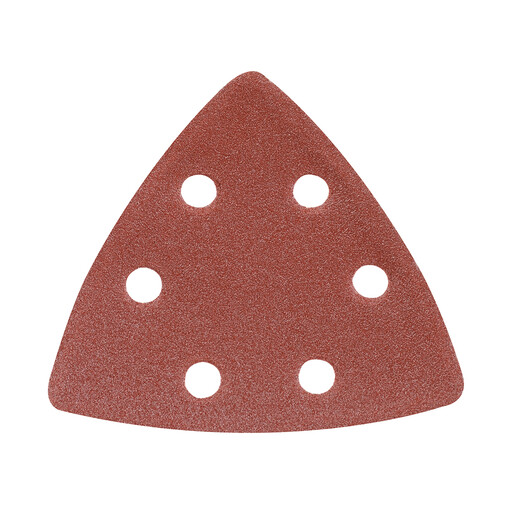
Why It Stands Out: These triangular sheets are engineered for precision. The 90mm shape is perfect for accessing tight corners and complex profiles on furniture or window frames, tasks where larger sanders cannot reach. The 120-grit aluminium oxide abrasive provides a good balance between material removal and surface preparation.
Pros:
Who is it for?: Tradespeople and restorers who frequently use multi tool sanding pads for detailed work on cabinetry, window frames and furniture restoration.
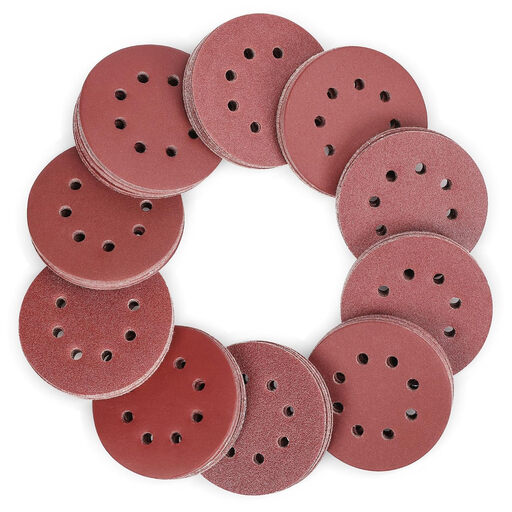
Why It Stands Out: This comprehensive set of 125mm sanding discs provides exceptional value and versatility for any random orbital sander user. With 150 pieces across nine different grits, from a coarse 60 grit to a super-fine 600 grit, you will have the right abrasive for every stage of your project, from aggressive stripping to final polishing.
Pros:
Who is it for?: Professional and DIY users of orbital sander sandpaper who require a wide range of grits for various projects involving wood, metal and plastics.
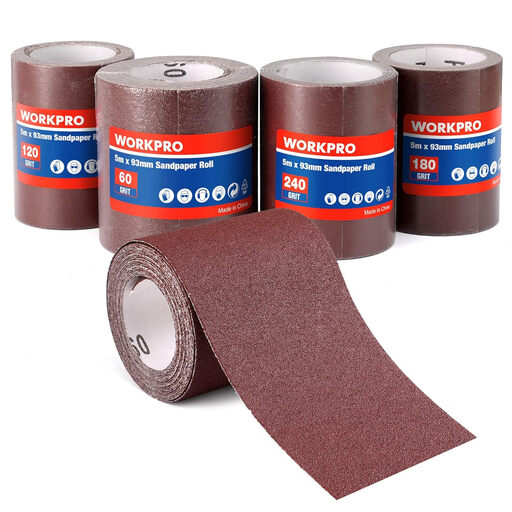
Why It Stands Out: The WORKPRO sandpaper roll pack offers ultimate flexibility. Each of the four rolls provides 5 metres of abrasive paper that can be cut or torn to any size. This makes it suitable for hand sanding blocks, palm sanders, or for wrapping around dowels and other custom shapes to sand contoured surfaces.
Pros:
Who is it for?: Anyone who needs a versatile and economical supply of sandpaper for both hand sanding and power tool applications, particularly for custom jobs.
If these recommendations do not quite match your needs, or if you are looking for a specific tool to go with your abrasives, there are many other options available.
Explore our full collection of hand sanders and accessories to find the perfect match for your next project.
1. What grit sandpaper should I use for wood? This depends entirely on the stage of your project. For removing old finishes or shaping rough timber, start with a coarse grit like 60 or 80. For general smoothing and preparing the wood for paint, a medium 120 to 150 grit is suitable. For an exceptionally smooth feel before applying a clear varnish or oil, finish with a fine 180 or 240 grit.
2. Can I use the same sandpaper for wood and metal? Yes, many modern abrasives like aluminium oxide are effective on both materials. However, the paper will wear differently. When sanding metal, especially ferrous metals, the abrasive can wear down more quickly. For heavy-duty metal grinding, specialised abrasives may be more efficient. Always check the product's specifications to confirm its intended use.
3. How do I know when to change my sandpaper disc or sheet? It is time to change your sandpaper when you notice a clear drop in its cutting effectiveness. If you find yourself applying more pressure to get the same result, the abrasive is likely worn. Other signs include the paper feeling smooth to the touch or becoming "clogged" with dust that cannot be brushed or blown away. Continuing to use worn sandpaper can burnish the surface rather than abrade it, which can prevent finishes from adhering properly.