Shared-kitchen panini regulars
You mainly make tomato panini and want a lid that accommodates different bread and filling thicknesses, with enough capacity when several people want lunch at once.


If tomato panini is your main use, start with flat plates and a flexible or extra-high hinged lid rather than choosing sealed pockets for thicker fillings; Breville UK describes these features on its VST025 and VST026 panini presses. In a shared kitchen, balance the number of panini you can make at once against storage space, and decide whether fixed wipe-clean plates or removable plates better suit the way housemates will clean the appliance.
You mainly make tomato panini and want a lid that accommodates different bread and filling thicknesses, with enough capacity when several people want lunch at once.
You share the cooking surfaces and need a practical way to remove food residue between uses, particularly where allergen cross-contamination matters. The Food Standards Agency identifies equipment cleaning as one way to help prevent allergen contamination.
You put the appliance away between uses and may want interchangeable plates if housemates will also make toasties or waffles.
For regular tomato panini, check the plate shape and lid before considering extra snack formats. Then weigh cleaning, capacity and the space available for storing the cooled appliance.
| Concern | What to check | Who this matters to |
|---|---|---|
| Panini fit and capacity | Look for flat or grill plates, a lid that accommodates varied thicknesses, and a stated panini capacity. | If several housemates make filled panini around the same time, I need room for the bread and enough portions per batch. Around 31% of consumers put panini fit and capacity first. |
| Cleaning between uses | Check whether plates are removable and how the maker instructs you to clean them; confirm dishwasher suitability for the exact model. | When I share cooking surfaces, I need to remove tomato residue and manage possible allergen contamination between users. Roughly 31% of consumers make cleaning their primary concern. |
| Storage space | Check closed dimensions and whether the appliance can be secured for upright storage. | If the worktop must be cleared after cooking, I need an appliance that fits the available cupboard space. Around 23% of consumers prioritise putting it away. |
| Several snack formats | Confirm which plate sets come with the exact model and where the unused sets will be stored. | When housemates also want waffles or toasties, I would rather consider those uses before choosing a panini-only arrangement. Roughly 15% of consumers put multi-use flexibility first. |
Sealed toastie pockets suit a different bread format. Breville UK describes flat plates and hinged lids on its VST025 and VST026 presses for panini with varied filling thicknesses.
Check the plate shape and lid design. If conventional sliced-bread toasties are your main use instead, decide on that basis.
Food Standards Agency guidance identifies equipment cleaning and contamination control as important, including where allergens are involved. A non-stick surface does not remove the need to clean it between users.
Agree who cleans the appliance after use. Switch it off, unplug it and allow it to cool before following its model-specific cleaning instructions; do not immerse the electrical base.
Breville UK states that its VST026 can make up to four panini at once, but that capacity only helps if the appliance also fits the shared kitchen.
Compare stated capacity with busy-period use, then check the closed dimensions against the cupboard and worktop space available.
Plate combinations vary by model. Tefal UK lists panini and waffle plates for the Snack Time SW343D40, while its wider Snack Collection offers other plate sets.
Check the exact model reference and in-box plate list before choosing a multi-plate machine for tomato panini.
Breville UK lists dedicated flat-plate panini presses, including the VST025 and VST026.
The Creations 3-in-1 is an interchangeable-plate option for panini-style grilling alongside other snacks.
Tefal UK lists the Snack Time SW343D40 with removable panini and waffle plates.
These contact grills and sandwich makers are options to assess against the same tomato-panini checks: suitable plates, room for the filling, cleaning and shared-kitchen storage. Confirm those details for the exact model before choosing.
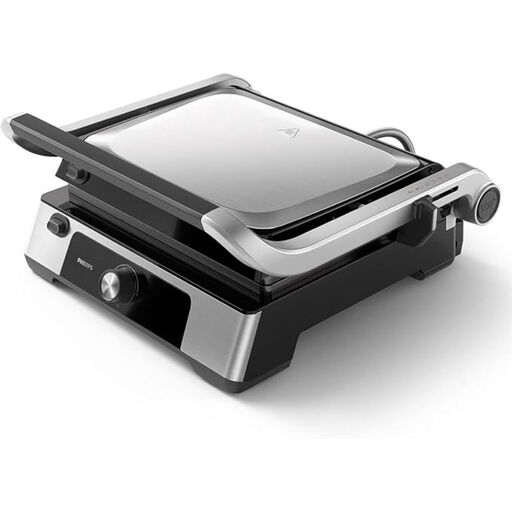 Image unavailable
Consider this contact grill if you want to assess a grill-style appliance for filled sandwiches. Before choosing it for tomato panini, confirm the plate shape, portion capacity and closed dimensions. Check the plate-cleaning instructions rather than assuming dishwasher cleaning.
 Image unavailable
This model is identified as a panini press, making it relevant if panini is your main use. Its name specifies 2000 W, 28 × 22 cm non-stick plates and double-sided heating. Check whether its lid accommodates your usual bread and fillings, as well as how many portions fit at once.
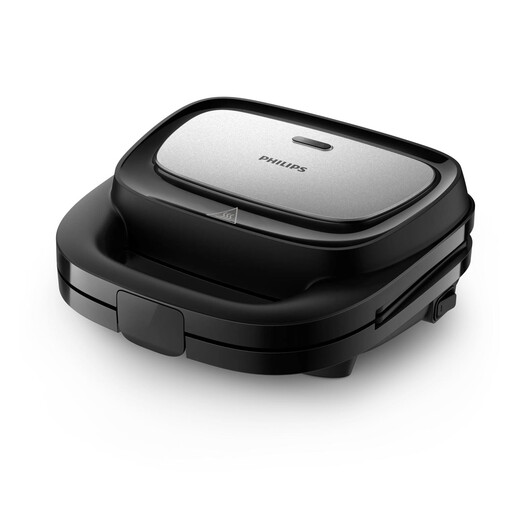 Image unavailable
If cupboard space is a priority, check whether this sandwich maker’s closed dimensions and storage arrangement suit your kitchen. Confirm the in-box plate set before relying on it for panini: the description mentions panini plates, but the listed contents do not clearly confirm them. The description also specifies an EU power cord and calls for a suitable adapter for UK use, so check the appropriate power connection before purchase.
For regular tomato panini with varied bread and filling thicknesses, start with a flat-plate press and a flexible or extra-high hinged lid. Breville UK describes those features on its VST025 and VST026; sealed pockets remain an option when conventional sliced-bread toasties are your main use.
Prioritise removable plates if housemates need to wash the cooking surfaces separately, but check the exact model’s washing instructions. The Food Standards Agency identifies equipment cleaning as relevant to controlling contamination, including allergens; removable plates do not replace cleaning between uses.
Switch it off, unplug it and let it cool before following the instructions for that model. Breville UK’s cited instructions say not to immerse the appliance, power cord or plug in water; for removable plates, follow the maker’s separate washing guidance.
If you start a food business, the Food Standards Agency says it must be registered with the local authority at least 28 days before trading or food operations begin. If the intended activity goes beyond ordinary shared-home cooking, establish whether it counts as a food business before starting.
Follow the premises’ electrical-safety arrangements and check that the appliance’s power connection is suitable. The Health and Safety Executive says electrical hazards should be assessed and controlled; the person responsible for the premises can identify the checks required there.