Family panini batch makers
If several thick tomato panini need serving together, usable plate area and the number of cooking rounds matter more than a long list of other functions.


For thick tomato panini, start with a panini press or contact grill rather than a toaster designed to cut and seal toasties: Electrical Safety First distinguishes a panini press by its floating hinge for thicker sandwiches. For a family meal, check how many panini will fit before prioritising extra cooking formats. Removable, dishwasher-safe plates can simplify cleanup, but both capacity and plate care depend on the exact model.
If several thick tomato panini need serving together, usable plate area and the number of cooking rounds matter more than a long list of other functions.
When tomato and melted cheese regularly leave residue, removable plates and the exact model’s washing instructions may matter more than a compact footprint.
If the appliance will routinely make toasties or waffles as well as panini, interchangeable plates are worth considering; check which formats come with the model you choose.
Choose the plate format for the bread and filling you intend to use, then compare batch capacity, cleaning arrangements and storage space. A sealed toastie maker serves a different purpose from a press for thick panini.
Choose when: thick tomato panini are the main use; Electrical Safety First describes a floating hinge as suited to thicker sandwiches.
Bear in mind: check the exact sandwich capacity rather than treating a stated slice count as a measure of ciabatta-sized panini.
Choose when: serving several people together and grilling other foods are both regular needs.
Bear in mind: allow for its worktop and storage footprint, and check capacity for loaded sandwiches rather than transferring another model’s portion claim.
Choose when: panini, toasties and other plate formats will all see regular use.
Bear in mind: check whether the panini plates are included with the exact bundle and where the extra plates will be stored.
Choose when: cut-and-seal toasties, rather than thick pressed panini, are the household’s main aim.
Bear in mind: its plate shape does not establish that wide bread or heavily filled panini will fit.
| Concern | What to check | Who this matters to |
|---|---|---|
| Family batches | Check stated sandwich or portion capacity and plate dimensions for the exact model; allow for the size of your bread. | If several people need their panini at the same meal, I want fewer cooking rounds without assuming every stated portion is a thick sandwich. Around 36% of consumers put batch capacity first. |
| Cleaning filled sandwiches | Check whether plates detach and whether the manufacturer says they are dishwasher safe. | When tomato and cheese leave residue, I would rather remove the plates than work around fixed ridges. For around 29% of consumers, straightforward cleanup is the primary concern. |
| Thick-panini fit | Look for a suitable panini-press or contact-grill format and confirm its hinge arrangement for thick fillings. | If I use thick bread and layered fillings, I need the lid to accommodate the sandwich rather than cut and seal it. Thick-panini fit comes first for around 21% of consumers. |
| Formats and storage | Check which plate sets are included and measure the space available for the appliance and any accessories. | If panini are only one of the snacks I make, I want other useful formats without filling the cupboard with unused parts. Around 14% of consumers prioritise that balance. |
Electrical Safety First distinguishes plates that cut and seal bread from a panini press’s floating-hinge format for thicker sandwiches.
If thick bread and layered tomato fillings are the main use, check for a suitable press or contact grill. Choose sealed plates when sealed toasties are what you want to make.
Bread shape and filling thickness affect how much of the cooking surface a panini occupies. A maker’s portion claim applies to the specified model and should not be assumed for other presses.
Compare the exact model’s stated capacity with its plate dimensions, where available, and check whether a grill’s claim includes loaded sandwiches.
A non-stick description alone does not establish that plates are removable or dishwasher safe; those are separate, model-specific features.
Check the exact model’s care instructions before making dishwasher cleaning a deciding factor.
Dedicated panini presses sit alongside other sandwich-making formats in Breville’s UK range.
The Snack Collection is a removable-plate system for households that regularly make more than one type of snack.
Its extra-large 25360 contact grill is a route to consider for larger batches and other grilled foods.
Salter offers both deep-fill toastie makers and an XL 3-in-1 snack maker for different sandwich formats.
These two contact grills are relevant to pressed tomato panini. Compare their stated plate dimensions with your bread, then check batch capacity, hinge design and plate-care instructions for the exact model before choosing one for a family meal.
 No image available
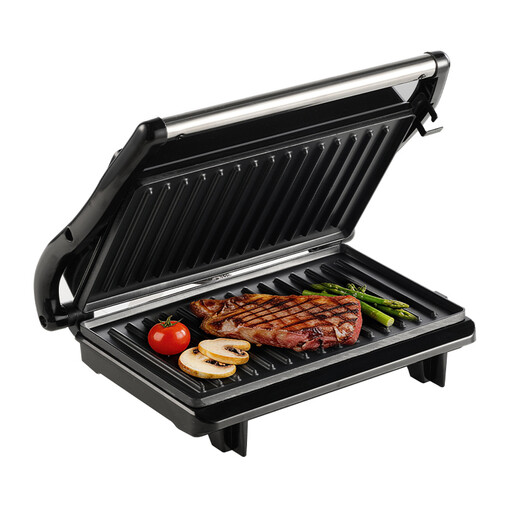
A contact-grill and panini-press format to consider for tomato panini; compare the stated plate size with the bread you use.
The product name specifies 800W, double-sided heating, non-stick coating and 22.5×14cm plates. Check how many filled panini fit, whether the hinge accommodates their thickness and how the plates should be cleaned.
 No image available
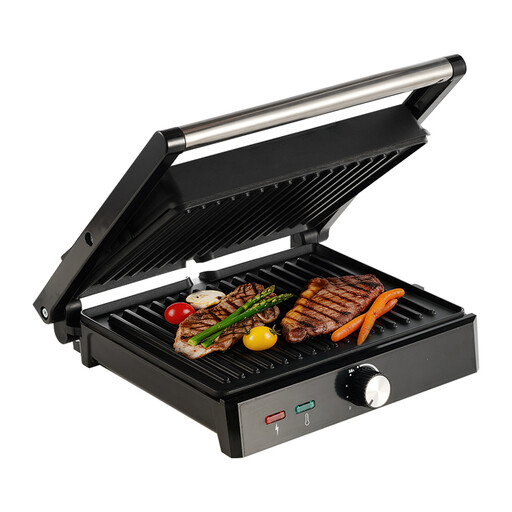
A contact-grill and panini-press format with stated plate dimensions to assess against the number and size of panini needed at one meal.
The product name specifies 2000W, double-sided heating, non-stick coating and 28×22cm plates. The dimensions do not establish a panini batch count; check capacity, hinge design, outer dimensions and plate-care instructions for this model.
A panini press is the more relevant format when you use thick bread or substantial fillings. Electrical Safety First describes its floating hinge as suited to thicker sandwiches, whereas an ordinary sandwich toaster typically cuts and seals the bread; check the hinge and plate size of the model you choose.
They are worth prioritising if cleaning tomato and cheese residue is a regular concern. Tefal UK specifies removable, dishwasher-safe plates for the SW852D27, and George Foreman UK specifies them for the 25360, but check the instructions for any other model separately.
Unplug it before cleaning and follow its manual on cooling and washing. Only put plates in the dishwasher when the instructions for that exact model say they are dishwasher safe; the main electrical unit does not go in the dishwasher.
Choose a reputable retailer and check that the appliance has a suitable UK 3-pin plug and fuse, following Electrical Safety First’s consumer guidance. Keep the manufacturer’s instructions so you can check safe use and cleaning for the particular model.
Do not use the appliance with a damaged cable. Tefal’s guidance for the SW852D27 directs owners to an approved repair centre for cord replacement; consult the maker’s instructions for a different model.