
24/7 Customer Support

Free returns

Same-day & Next-day Delivery

Quality Guaranteed

Unlock Your Welcome Offers: FREE Delivery | Up to 80% OFF | Free 30-day JoyPlus trial
Download the APP
Choosing sanitary pads is not simply a matter of picking the largest pack or the thinnest design. The right option depends on your flow, body shape, daily routine and whether you need menstrual or bladder-leak protection. Product descriptions can also make similar claims sound interchangeable, even when pad length, absorbency and intended use differ.
This guide explains the practical details to check before buying sanitary pads, period pads or related feminine hygiene products.
Ultra-thin sanitary pads can feel discreet under clothing, but a slim profile does not automatically indicate suitability for heavy flow. Check the stated size, coverage and intended use rather than relying on phrases such as “invisible” or “lightweight”.
For normal daytime flow, a standard or regular pad may be suitable. Longer pads or heavy-flow sanitary pads provide additional coverage when you experience stronger flow, movement-related leakage or overnight concerns.
A 100-plus pack may look economical, but it can be poor value if the pads do not suit your usual flow. A normal-size pad may not provide enough front or back coverage, while an extra-long night pad could feel unnecessarily bulky during daytime use.
Compare pad length, pack quantity and intended flow level together. A smaller pack can be more practical when trying a new design or switching between daytime and night sanitary pads.
Sanitary pads with wings can help hold the pad in place and add protection around the underwear gusset. However, correct positioning remains important. Wings cannot compensate for an unsuitable length, poor fit or infrequent changes.
The pad should sit centrally, with the adhesive secured to clean, dry underwear. For overnight use, choose a design with extended front or rear coverage rather than relying on wings alone.
Absorbency ratings are not always presented using a single UK-wide scale, so product descriptions should be read carefully. Look for wording such as normal flow, long, ultra-long, night or heavy flow, and consider your personal experience rather than treating marketing labels as universal measurements.
A useful everyday selection may include:
Measure the product by its stated dimensions where available. For example, a 240mm daily pad provides more coverage than a short panty liner, while ultra-long sanitary towels are designed for broader coverage.
Wings may reduce shifting during walking or exercise, but they can feel restrictive if the size is unsuitable. Curved or body-adaptive designs may follow the shape of the underwear more closely. If you are prone to back leakage at night, prioritise an extended rear section and a secure adhesive.
Check the topsheet and ingredient information, particularly if you have sensitive skin. Fragrance-free designs may be preferable if scented products cause discomfort. Cotton-touch, breathable or soft-surface descriptions refer to the feel and construction of the product, but they do not guarantee that every user will tolerate it.
Change pads regularly according to your flow and the instructions on the packaging. Stop using a product if persistent redness, itching or irritation develops, and seek healthcare advice if symptoms continue.
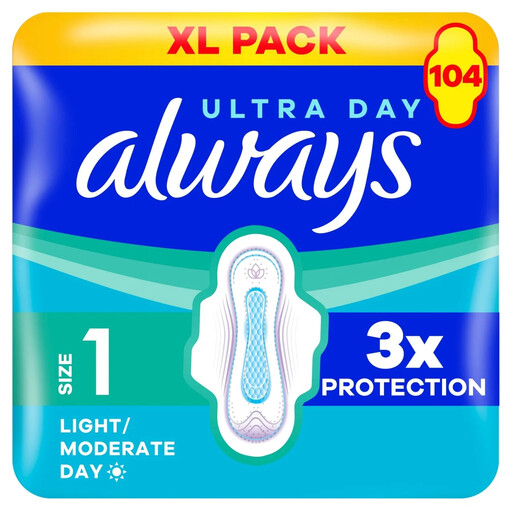
Why This Fits Their Persona: The 104-pad quantity is practical for shoppers who regularly use normal-size pads during daytime periods and want to reduce frequent reordering.
Its stated Normal Size 1 format makes the intended coverage clearer than choosing a large pack without checking dimensions.
Ultra-thin construction, adhesive backing and a 104-pad pack for normal-flow daytime use.
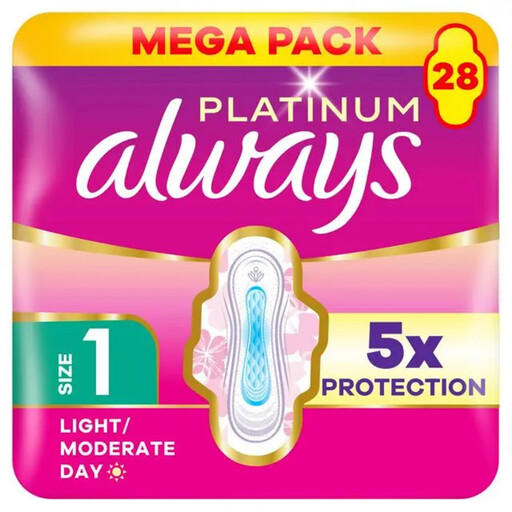
Why This Fits Their Persona: A smaller 28-pack suits shoppers who prioritise a soft surface and winged fit while wanting to trial the design before buying larger quantities.
The Size 1, normal-flow specification and wings are clearly stated, helping avoid buying a long or night pad for daytime use.
Ultra-thin format, soft surface description and flexible wings for everyday movement.
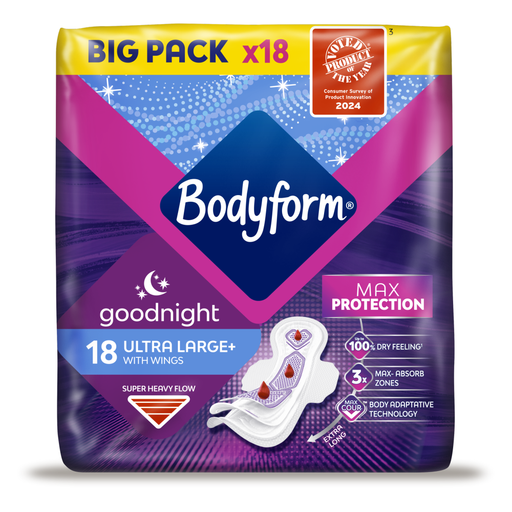
Why This Fits Their Persona: The ultra-night format is aimed at users who need additional coverage while sleeping or during heavier-flow nights.
Its extended design, wings and individually wrapped format address coverage, movement and discreet storage needs more directly than a standard pad.
Extra length, three stated absorption zones and individually wrapped pads for overnight use.
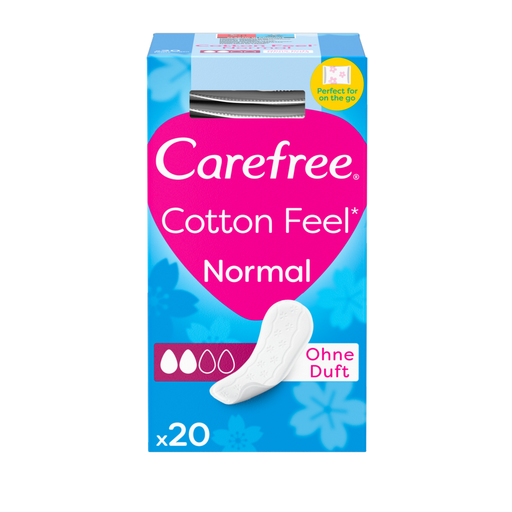
Why This Fits Their Persona: Panty liners are suitable for light daily discharge, spotting or freshness between periods rather than normal or heavy menstrual flow.
Its intended liner format makes it less likely that shoppers will use a light product for a flow level it was not designed to handle.
Folded design, breathable construction and a fragrance-free specification.
We have compiled a complete, real-time list of products that fully satisfy these strict selection criteria and UK safety regulations.
Incontinence pads should also be disposed of in household waste. Products such as women’s urinary incontinence pads and men’s absorbent shields are designed for bladder leaks, not menstrual fluid.
The suitable interval depends on flow, product instructions and personal comfort. Change sooner if the pad feels wet, full or displaced. During heavier flow, you may need to change more frequently than during lighter days.
No pad can guarantee that leakage will never occur. A night design with extra length, rear coverage and wings can provide more coverage than a standard daytime pad, but fit, sleeping position and flow also matter.
Panty liners are generally intended for light discharge, spotting or everyday freshness. They are not normally suitable for moderate or heavy menstrual flow. Choose period pads with appropriate length and absorbency when menstruating.