
24/7 Customer Support

Free returns

Same-day & Next-day Delivery

Quality Guaranteed

Unlock Your Welcome Offers: FREE Delivery | Up to 80% OFF | Free 30-day JoyPlus trial
Download the APP
Buying sanitary pads should be straightforward, but pack sizes, absorbency labels and marketing language can make comparison harder than expected. The same applies when choosing women’s sanitary pads, bladder leak pads, men’s incontinence pads or disposable underpads for someone else.
The practical approach is to match the pad to the type and amount of fluid, the intended wearing time and the fit of the person using it. A low-cost pack is not necessarily good value if it shifts, causes irritation or needs replacing more often than expected.
Menstrual pads are designed for period flow, while incontinence pads are shaped and constructed for urine leaks. They are not interchangeable in every situation. A pad intended for light bladder leakage may not provide the coverage needed for a heavy period, while a menstrual pad may not manage urine effectively.
For men, products such as absorbent shields are shaped to fit inside close-fitting underwear. Nursing pads are designed for breast milk leakage and should not be used as personal hygiene pads elsewhere on the body.
Ultra-thin sanitary pads can be comfortable and discreet, but thickness alone does not indicate capacity. Check the stated size, length, absorbent core and intended flow level. A normal daytime pad may be suitable for light or medium flow but less appropriate overnight or during heavier days.
Similarly, a long pad may offer more coverage without necessarily being designed for high-volume flow. Look for a suitable absorbency level rather than relying on words such as “maximum” or “advanced”.
A 104-pack can be economical for regular daytime use, but a smaller individually wrapped pack may be more convenient for a handbag, workplace or travel. Large packs also need dry, clean storage. Do not buy several months’ supply until you have confirmed that the adhesive, surface material and shape suit your skin and underwear.
For light periods or everyday spotting, a short liner or normal sanitary pad may be sufficient. Medium flow often calls for a longer design, such as a Size 2 pad, while overnight sanitary pads usually have an extended rear area and wider coverage.
Heavy flow sanitary pads should be selected according to personal experience, not only the label. If leakage occurs at the front, back or sides, consider changing the shape or length before simply choosing a thicker product.
Sanitary pads with wings wrap around the gusset of underwear and can help limit side movement. They are useful for people who walk, commute, exercise or change sleeping positions. However, wings do not compensate for an incorrect pad size or unsuitable underwear. Place the pad centrally on clean, dry underwear and press the adhesive firmly into position.
For bladder leak pads, a contoured shape and secure adhesive can be more important than overall thickness. Men’s incontinence pads should be selected by body shape and leakage level rather than by menstrual absorbency labels.
Check the product information for topsheet materials, fragrance and adhesive details. Breathable pads may feel more comfortable during longer daytime use, while fragrance-free options can be preferable for people who are sensitive to scented products. If redness, itching or discomfort develops, stop using the product and seek medical advice if symptoms persist.
Disposable underpads should have a liquid-resistant backing and an absorbent upper layer. Confirm the dimensions before buying: a bed protector suitable for a chair may not cover a full mattress area. Nursing pads should fit inside the bra, remain secure during movement and be changed when damp.
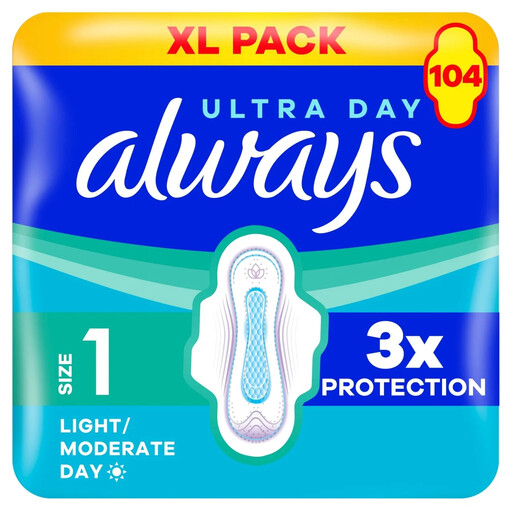
Why This Fits Their Persona: A large pack suits regular daytime use for shoppers who want to plan household essentials and compare cost per pad.
The normal Size 1 format makes the intended everyday use clearer than choosing solely by a generic “ultra-thin” label.
104 individual pads; ultra-thin format; adhesive backing for positioning in underwear.
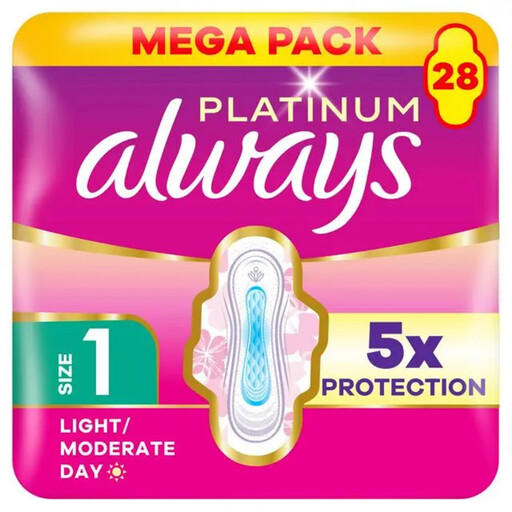
Why This Fits Their Persona: Suitable for users who prioritise a soft surface, a normal-flow format and a more secure fit during commuting or everyday movement.
Wings and the stated Size 1 format give more useful information about stability and intended flow than surface descriptions alone.
28-pad pack; flexible wings; ultra-thin construction and a soft surface listed in the product details.
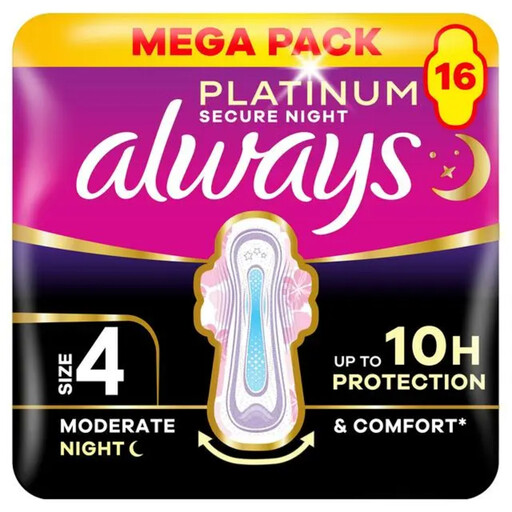
Why This Fits Their Persona: An overnight format is suited to medium or heavy menstrual flow and people who need additional length and coverage while sleeping.
The Size 4 night designation and wings help identify it as a coverage-focused product rather than a normal daytime pad.
16 individually packaged pads; extended night design; wings for securing the pad to underwear.
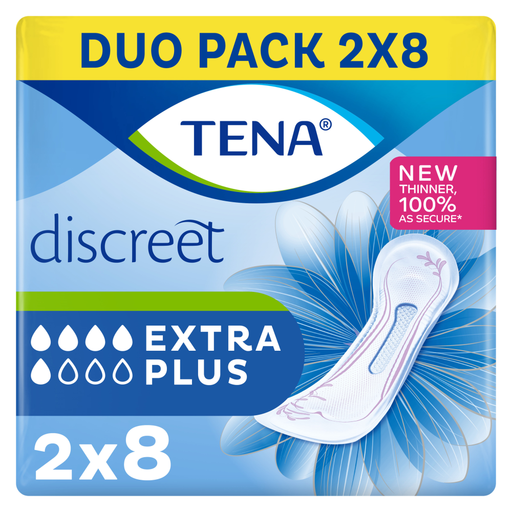
Why This Fits Their Persona: Designed for women managing medium to heavy bladder leakage who need a shaped pad rather than a menstrual product.
Its incontinence-specific description prevents the common mistake of using a standard period pad for bladder leakage.
16-pad pack; contoured design; fragrance-free details and an absorbent core listed by the manufacturer.
Change pads according to flow, leakage and the instructions on the packaging. Wearing a damp product for longer than necessary may increase discomfort and skin irritation. Wrap used pads and place them in a household waste bin; do not flush sanitary pads, liners, nursing pads or underpads.
Store unopened packs in a cool, dry place away from direct sunlight. Check the packaging for the batch information, materials and shelf-life guidance, especially when buying in bulk. For disposable underpads, place the absorbent side upwards on the bed, chair or other surface and discard after use unless the product specifically states otherwise.
We have compiled a complete, real-time list of products that fully satisfy these strict selection criteria and UK safety regulations.
There is no single interval for everyone. Change when the pad feels damp, becomes full or starts to move, and follow the product instructions. Light-flow users may need fewer changes than heavy-flow users, but a pad should not be kept on simply to finish a pack.
They can be, although their longer and wider design may feel less discreet than a normal daytime pad. They are useful when additional back coverage is needed, but choose a size that suits your underwear and movement.
No. Incontinence pads are designed for urine leakage and often use a different absorbent core, shape and odour-control construction. Choose menstrual products for periods and incontinence products for bladder leakage. If leakage is persistent, painful or changes suddenly, speak with a healthcare professional.