
24/7 Customer Support

Free returns

Same-day & Next-day Delivery

Quality Guaranteed

Unlock Your Welcome Offers: FREE Delivery | Up to 80% OFF | Free 30-day JoyPlus trial
Download the APP
Choosing sanitary pads is not simply a matter of picking the largest pack or the most advanced-sounding technology. The right option depends on your flow, underwear, daily routine and skin sensitivity. Size labels also vary between ranges, so comparing the actual coverage and intended use is more useful than relying on a number alone.
This guide explains the main buying pitfalls, the specifications worth checking and our top recommendations for different needs.
Ultra-thin sanitary pads can feel discreet under clothing, but thickness alone does not tell you how much fluid a pad can hold. A thin pad may suit daytime use or a lighter flow, while heavy-flow sanitary pads and overnight sanitary pads usually need a larger absorbent core and more rear coverage.
Look for the intended use, length, wings and pack description together rather than choosing solely by the word “ultra”.
Size 1, Size 2 and larger labels are useful within a product range, but they are not a universal measurement. A long sanitary pad may offer more front-to-back coverage, whereas a night design often has an extended back section to accommodate sleeping positions.
If you regularly experience back or side leaks, check the pad’s dimensions and shape. Pads with wings can also help hold the product in place, but wings cannot compensate for a pad that is too short or narrow for your underwear.
Odour-control features may be appealing, but they do not remove the need for regular changes. Wearing a pad for too long can feel damp and uncomfortable. Follow the product instructions and change it according to your flow, activity and comfort.
For sensitive skin, fragrance-free or scent-free sanitary pads may be preferable. Stop using a product if persistent redness, itching or irritation occurs.
Match the product to your usual pattern:
Absorbency labels are not always directly comparable between brands. Consider your own experience: if a pad becomes saturated quickly, leaks at the back or needs frequent changing, move to a longer or higher-coverage option.
A longer pad is not automatically more comfortable, but it can reduce the chance of rear leakage. Flexible wings wrap around the gusset of your underwear and help limit movement. Check that the adhesive area suits the underwear you normally wear.
A contoured or body-adaptive shape may sit more securely during walking and commuting. Individually wrapped disposable sanitary pads are convenient for handbags, office drawers and travel, while larger multipacks can reduce the cost per pad if you already know the design suits you.
Check the ingredients and material information on the packaging, particularly if you have sensitive skin. Some products use soft top sheets, breathable layers or scent-free materials. These features describe construction and intended feel; they do not guarantee that irritation will never occur.
For everyday use, an ultra-thin sanitary pad may reduce bulk. For overnight use, coverage and stability usually deserve priority over the thinnest profile.
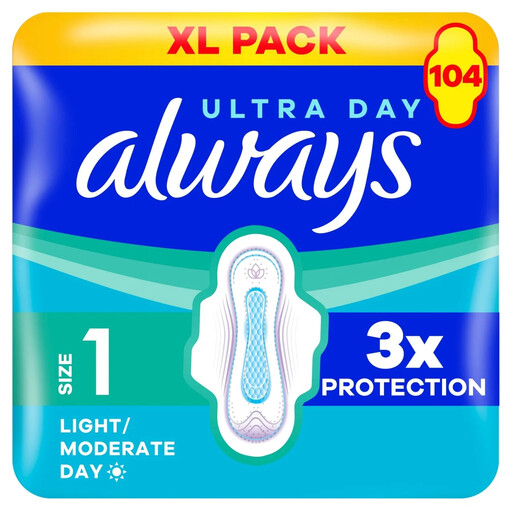
Why This Fits Their Persona: A 104-pad pack is practical for shoppers who want a regular daytime supply and already know that a standard Size 1 design suits their flow.
The pack focuses on a clearly stated normal-flow, Size 1 format rather than suggesting that one pad works for every situation.
Ultra-thin construction, standard Size 1 coverage and a 104-pad quantity for regular use.
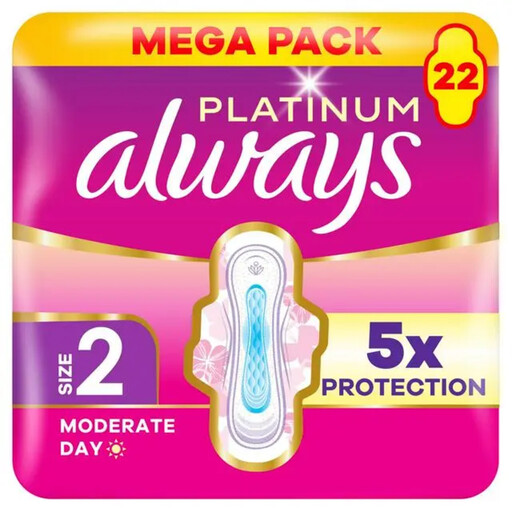
Why This Fits Their Persona: This long Size 2 option suits shoppers who want a softer-feel surface, extended daytime coverage and a slimmer profile for work or social plans.
Its product details specify long Size 2 coverage and wings, making the choice clearer than relying on vague comfort language alone.
Long Size 2 format, flexible wings, breathable construction and a 22-pad pack.
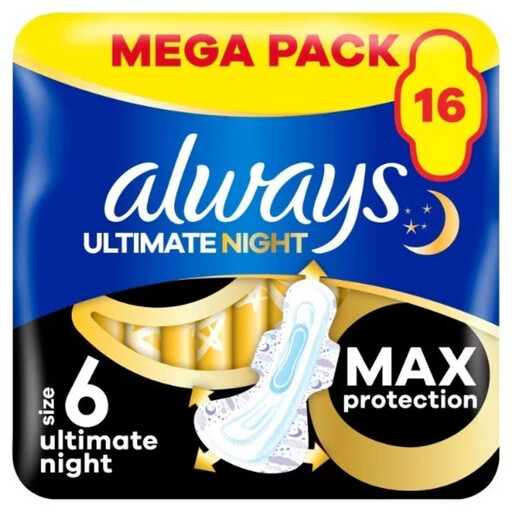
Why This Fits Their Persona: Designed for heavy overnight use, this extra-long Size 6 format is suited to people who need broader front-to-back coverage while sleeping.
It addresses the common short-pad problem with extra length, wings and an overnight design intended for heavier flow.
Extra-long Size 6 coverage, absorbent core, breathable construction and secure wings.
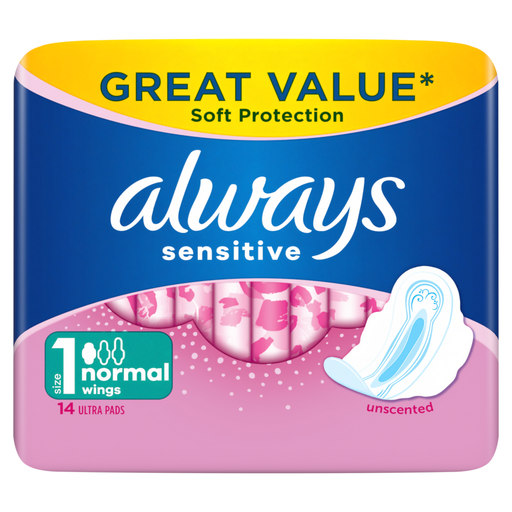
Why This Fits Their Persona: The scent-free, soft-top-sheet design is intended for light to medium daytime flow and shoppers who prioritise a gentler surface.
The listing identifies a scent-free construction and sensitive-skin positioning, so buyers can check the ingredient list before ordering.
Soft top sheet, scent-free design, wings and a 14-pad pack.
Position the pad centrally in clean, dry underwear and press the adhesive firmly into place. Fold the wings beneath the gusset if included. Change regularly according to your flow and the instructions supplied with the product.
Wrap used menstrual pads in their original wrapper or toilet paper and place them in a household waste bin. Do not flush sanitary pads, as they can block plumbing. Store unopened packs somewhere cool and dry, away from direct sunlight and high humidity. Always check the packaging for the latest ingredients, batch information and shelf-life guidance.
We have compiled a complete, real-time list of products that fully satisfy these strict selection criteria and UK safety regulations.
Many product instructions suggest changing every four to eight hours, but your flow and comfort are more important than a fixed timetable. Change sooner if the pad feels wet, full or uncomfortable. Overnight sanitary pads should be replaced after waking.
Wings can help secure the pad to underwear and provide additional side protection, particularly during walking, commuting or sleep. They are useful when the pad otherwise shifts, but correct sizing and positioning remain important.
A larger pack may reduce the price per pad, but only if the format suits your flow and does not lead to unused products. Compare the pack quantity, pad size, intended use and replacement frequency before choosing a bulk purchase.