
24/7 Customer Support

Free returns

Same-day & Next-day Delivery

Quality Guaranteed

Unlock Your Welcome Offers: FREE Delivery | Up to 80% OFF | Free 30-day JoyPlus trial
Download the APP
A great meal often starts long before the hob is lit. It begins at the chopping board, and having the right tool for the job can transform your preparation from a chore into a pleasure. If you find your current kitchen knife struggles with delicate herbs or squashes tomatoes, it might be time to consider a more versatile blade. The Santoku knife, a staple in Japanese kitchens, has become a favourite for home cooks in the UK for this very reason.
As a multi-purpose kitchen knife, its name translates to "three virtues," referring to its proficiency in slicing, dicing and mincing. But with so many options on the market, how do you choose the right one? This guide is designed to help you understand the key features to look for and to present a few carefully selected options that offer great utility for everyday cooking.
Before you make a decision, it helps to understand what sets one knife apart from another. Here are a few key points to consider.
The material of the blade determines its sharpness, durability and maintenance needs. You will often see different types of steel mentioned, and they offer distinct advantages.
The Santoku has a distinctive shape. It's typically shorter than a Western-style chef's knife, with a straighter edge and a "sheepsfoot" tip that curves down to meet the edge. This design is ideal for clean, downward cuts and rapid chopping, making it a superb knife for slicing and dicing. Many Santoku blades also feature shallow dimples, or Granton edges, along the side. These create small air pockets between the blade and the food, which helps to reduce friction and prevent slices of potato or cucumber from sticking.
A knife should feel like a natural extension of your hand. The handle material and overall balance are crucial for comfort and control. Stainless steel handles, such as those made from 430 stainless steel, are valued for their durability and hygiene. They are non-porous, easy to clean and can be shaped to provide a secure, comfortable grip during use.
Here are three Santoku knives that cater to different needs and preferences for the home cook.
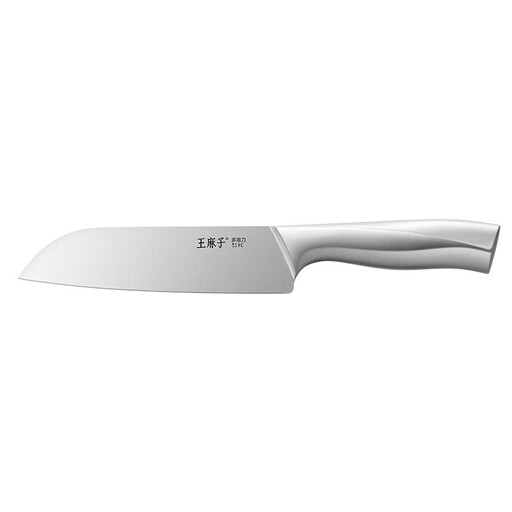
Why It Stands Out: This knife is a dependable workhorse. The blade is crafted from 30Cr13 stainless steel, offering a solid combination of sharpness and rust resistance that is well-suited for daily kitchen tasks. Paired with a hygienic and durable 430 stainless steel handle, it’s built for longevity and ease of maintenance.
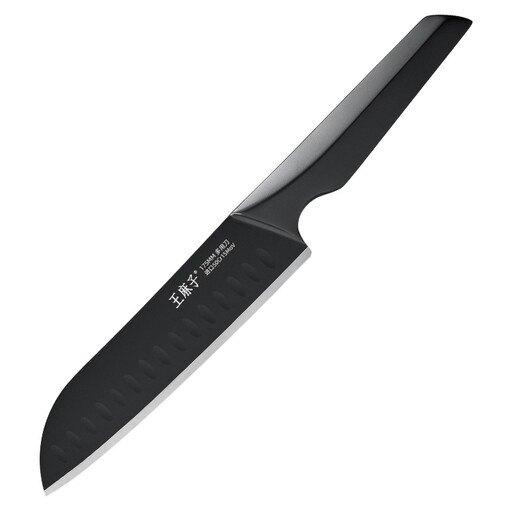
Why It Stands Out: This model represents a step up in blade material. The German 50Cr15MoV steel is a high-carbon stainless steel known for its impressive toughness and ability to maintain a sharp edge through repeated use. It provides a noticeable performance boost for those who cook frequently and demand more from their tools.
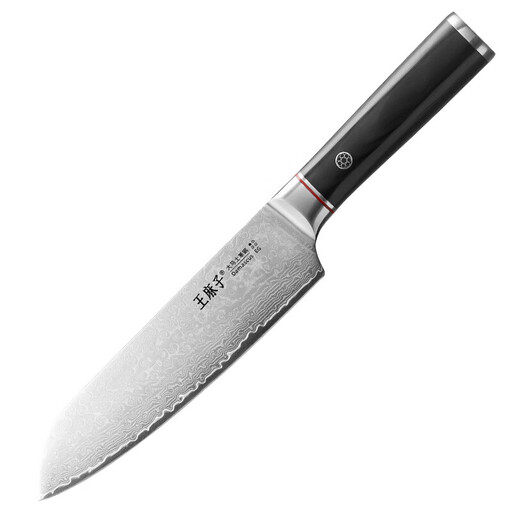
Why It Stands Out: Combining high performance with stunning aesthetics, this Damascus steel knife is for those who appreciate fine craftsmanship. The blade is constructed from multiple layers of steel, resulting in the signature watery pattern and a very hard, sharp cutting edge. It makes slicing through meats and vegetables feel almost effortless.
While these three Santoku knives represent excellent choices for different users, we understand that every cook has unique needs. If you are looking for a different blade length, handle material or style, there are many other options to consider.
Explore our full collection of durable multi-functional knives to find the perfect tool for your kitchen.
A Santoku knife is a multi-purpose kitchen knife designed for versatility. Its "three virtues" are slicing, dicing and mincing. Its flat edge and balanced weight make it ideal for preparing vegetables, fish and boneless meats with clean, precise cuts.
Neither is inherently "better"; they are designed for different cutting styles. A classic Western chef's knife has a curved blade that excels with a "rocking" motion. The Santoku knife has a straighter edge and is designed for more of a direct downward chopping motion. The choice comes down to personal preference and the techniques you use most often in your cooking.
To maintain the performance and longevity of any quality kitchen knife, a few simple habits are key. Always wash your knife by hand with warm, soapy water and dry it immediately—never leave it to soak or put it in the dishwasher. Store it in a knife block, on a magnetic strip or in a sheath to protect the blade's edge from damage.