
24/7 Customer Support

Free returns

Same-day & Next-day Delivery

Quality Guaranteed

Unlock Your Welcome Offers: FREE Delivery | Up to 80% OFF | Free 30-day JoyPlus trial
Download the APP
A suitable hideaway gives a small pet somewhere to retreat, rest and feel secure inside its enclosure. However, choosing a Savic guinea pig igloo is not simply a case of picking the largest-looking plastic house. The entrance, ventilation, cleaning design and stability all affect whether it remains useful in everyday UK pet care.
Several common buying traps can lead to wasted money:
A good small animal igloo should be stable, smooth, accessible and straightforward to maintain. The following points can help you compare options more confidently.
The entrance should allow your pet to enter and leave without squeezing, while the interior should provide enough room to turn around and rest naturally. Guinea pigs and small rabbits generally need more space than mice or dwarf hamsters.
Check:
A guinea pig hideaway should not be treated as a substitute for sufficient enclosure floor space. It is an enclosure accessory that creates a private zone, not the entire living area.
A plastic small animal house can be convenient because its surface does not absorb moisture in the same way as untreated fabric or wood. Smooth internal surfaces are also easier to wipe down and inspect.
Prioritise:
The Savic igloo descriptions provided for these products specify durable, non-toxic plastic. Even so, owners should inspect the house after delivery and continue checking it during use, particularly if their pet chews plastic items.
A cosy guinea pig sleeping den should not be sealed. Side ventilation holes can support air circulation, while an opening gives your pet access and allows you to monitor use.
For regular UK household maintenance, a two-part house can be especially practical. Detaching the top from the base makes it easier to remove soiled bedding, rinse the surfaces and check hidden areas. Use warm water or a mild pet-safe cleaner as directed, and avoid abrasive products that may scratch the plastic.
The igloo should be dried before it is returned to the enclosure. Replace it if it develops cracks, sharp edges or other damage that could make it unsafe.
The products below share a rounded igloo format, plastic construction and a hideaway purpose, but each may suit a different shopping priority. Confirm the available product information and fit for your pet before ordering.
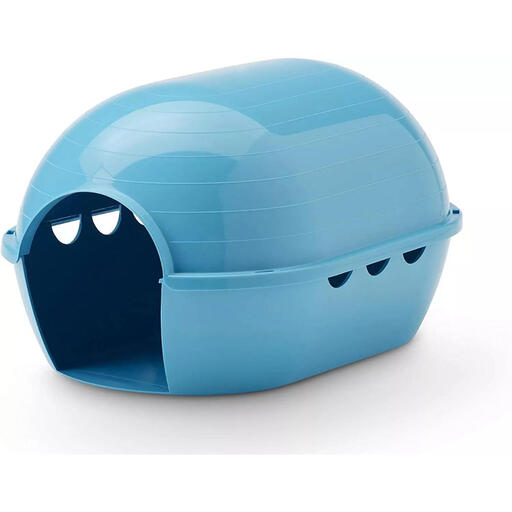
Why This Fits Their Persona: A practical starting option for owners seeking a simple guinea pig hideaway with a rounded shape and reusable plastic construction.
The two-part construction separates for cleaning, helping avoid the hard-to-reach dirt that can collect in a single-piece shelter.
Durable plastic; rounded igloo profile; side ventilation holes; detachable top and bottom sections.
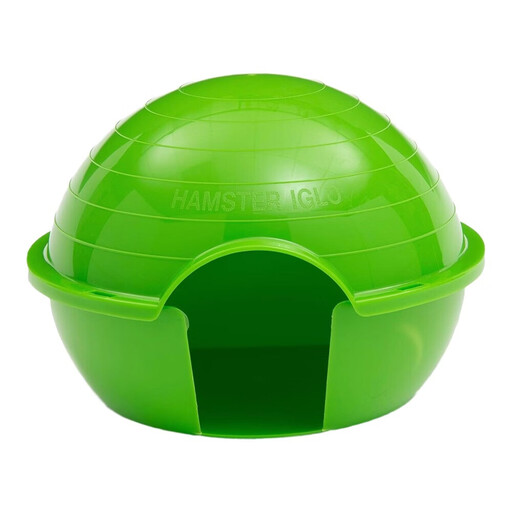
Why This Fits Their Persona: A suitable comparison point for owners of hamsters or other small pets who value a structured, wipe-clean shelter in the enclosure.
Its listed two-piece format and ventilation holes address cleaning access and airflow rather than relying only on a decorative igloo shape.
Non-toxic plastic as described; rounded sleeping area; side ventilation; secure snap-together construction.
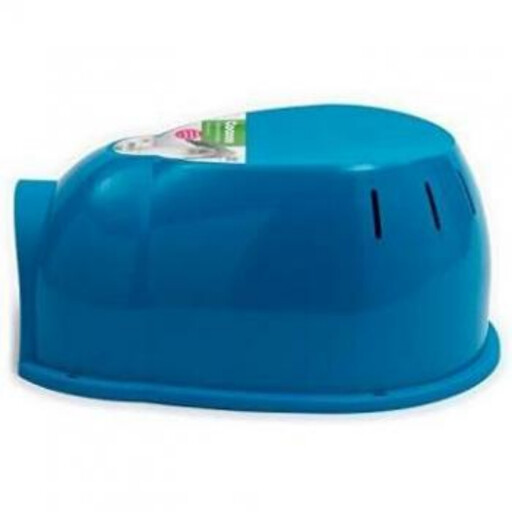
Why This Fits Their Persona: Designed for guinea pigs and dwarf rabbits, this option suits owners looking for a compact shelter that can handle frequent cleaning.
The smooth surface is specified as easy to wipe with warm water or a mild pet-safe cleaner, helping simplify repeated maintenance.
Compact footprint; smooth interior; durable plastic; listed for guinea pigs and dwarf rabbits of all life stages.
Place the igloo on a flat, stable surface so it cannot tip when your pet enters or exits. Avoid positioning it directly beneath a leaking bottle or in an area where wet bedding will accumulate.
For guinea pigs, rabbits and other social small pets, consider whether one shelter is enough for the number of animals sharing the enclosure. A single entrance can provide a secure feeling, but it may also create competition if several pets need to use the space at once.
Use suitable bedding around, rather than tightly inside, the shelter. Monitor whether your pet is chewing the plastic, blocking ventilation holes or carrying damp bedding into the sleeping area. Regularly remove waste and inspect the joins, entrance and base.
A plastic igloo does not have a fixed lifespan. Its useful life depends on chewing, cleaning frequency, sunlight, temperature and general handling. Retire it if it becomes cracked, unstable or difficult to clean.
We have compiled a complete, real-time list of products that fully satisfy these strict selection criteria and UK safety regulations.
The listed Savic models are described for different small animals, including guinea pigs, rats, degus, chinchillas, mice, hedgehogs and small rabbits. The appropriate choice depends on the animal’s size, behaviour and the available entrance and floor space. Check the product information before buying for a specific species.
Remove the igloo from the enclosure, detach the top and base where applicable, and clear away bedding and debris. Wash with warm water or a mild pet-safe cleaner, rinse thoroughly and dry fully before replacing it. Avoid abrasive cleaners, especially on smooth plastic surfaces.
Inspect it during routine cleaning rather than relying on a fixed replacement schedule. Replace the small animal shelter if you find cracks, sharp edges, loose sections, severe chewing damage or stains that cannot be removed.