What should you check before buying?
Start with the school’s rules, then check the particular pack and decide whether its label will remain accessible when the sweets are sold.
| Priority |
What to check |
Your needs |
| School policy |
Ask the organiser about nuts, peanuts and products carrying precautionary warnings. Check the exact product against those rules before bringing it onto school premises. |
I need to know whether this particular pack is permitted at the sale, including any restrictions on “may contain” wording. |
| Allergy information |
Read the physical pack’s full ingredients and precautionary allergy statement. Do not treat a plain fudge flavour or a vegan label as evidence that a product is suitable for someone with an allergy. |
A simple-looking sweet still needs a label check: Tesco All Butter Fudge says it may contain nuts and peanuts, while M&S marks its Clotted Cream Fudge as unsuitable for people with nut or peanut allergies. |
| Pack format |
Compare an intact single-product pack with a mixed assortment that may be divided. Keep the original packaging and its ingredient information available if individual sweets are offered. |
If I’m selling portions rather than a whole pack, buyers need a way to identify the sweets and their allergens. A mixed box calls for particular care because its pieces may differ. |
| Repacking and serving |
Before wrapping portions, confirm the organiser’s labelling process and how ingredients will be recorded. Use separate handling arrangements where the event requires them. |
I want each portion to remain identifiable after it leaves the original pack, without mixing it with sweets that have different ingredients. |
What do the brand examples show?
These product examples show why the exact pack matters; a brand name alone does not establish allergy suitability.
M&S
M&S lists both fudge and boxed chocolate selections, with product-specific allergy advice.
- Its Clotted Cream Fudge and Milk, Dark and White Selection provide examples of two different formats to check.
- M&S marks both examples as unsuitable for people with nut or peanut allergies; the chocolate selection contains ground hazelnuts.
Waitrose
Waitrose product information illustrates the difference between fudge sold for baking and a ready chocolate assortment.
- Its Cooks’ Ingredients Fudge Chunks list milk-containing ingredients on the product information.
- Those fudge chunks are a baking ingredient, not a ready boxed contribution. A mixed chocolate box requires its own ingredient and allergy check.
Tesco
Tesco All Butter Fudge is an example of a ready-packed fudge product with a specific precautionary statement.
- A single-product pack can be kept alongside its own label at the sale.
- Tesco states that All Butter Fudge may contain nuts and peanuts. Check the current pack against the school’s rules.
Thorntons
Thorntons sells fudge and chocolates, but its dietary information makes product-level allergy checks important.
- Fudge and chocolate formats give buyers different ways to present a contribution, subject to the chosen pack’s details.
- Thorntons says nuts are widely used at its production facility. An ASDA listing for Thorntons Vanilla Fudge states that it may also contain peanuts.
Fudge-centred options on Joybuy
These Cadbury fudge sweets are options to consider if the school permits the exact packs’ allergy statements. Check whether their packaging will keep ingredient information accessible if you plan to sell individual pieces or bars.
 No image available
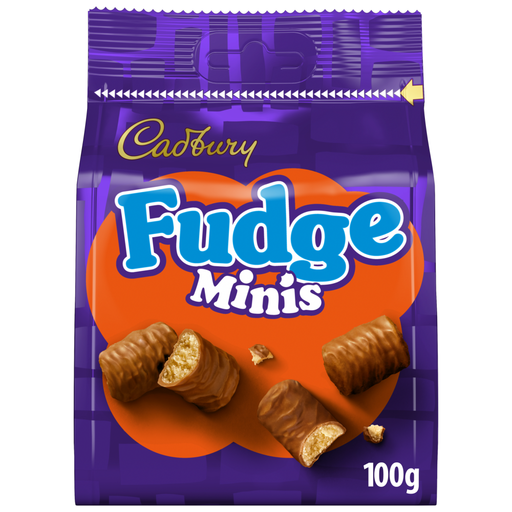
Cadbury Fudge Minis 100g
A 100g pack of Fudge Minis is an option if you want to offer smaller sweets. Before taking it to school, check the physical pack’s full allergy advice and whether ingredient information can stay accessible if the pack is divided.
View on Joybuy
 No image available
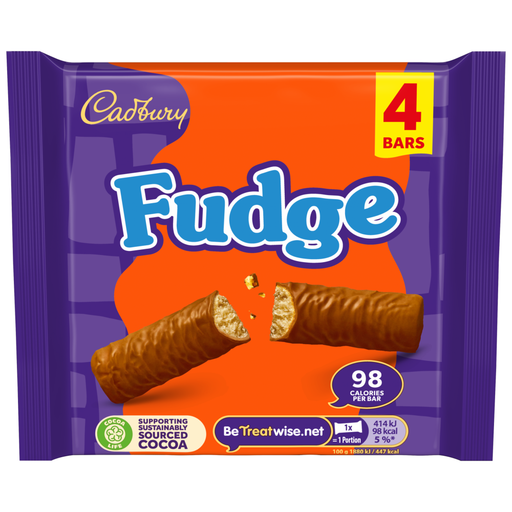
Cadbury Fudge Bar 4 Pack 88g
This four-pack has a stated total weight of 88g. If you plan to offer bars separately, check their wrapping and keep the pack’s current ingredient and allergy information available for each sale.
View on Joybuy
Questions about labels and serving
Can I bring fudge or chocolates containing nuts to a school bake sale?
Check with the organiser before buying: the answer depends on that school’s current allergy policy and the exact product. The Department for Education’s guidance for England describes school allergy safety policies, but it does not establish what an individual school permits.
Do individually wrapped portions need ingredient labels?
The requirements depend on how and by whom the food is packed and sold. The Food Standards Agency and Food Standards Scotland describe prepacked-for-direct-sale requirements for qualifying food sold by a food business, including the food name, a full ingredients list and emphasised regulated allergens. Anaphylaxis UK says allergy labelling is not generally a legal requirement at a school bake sale, but recommends providing allergen information; confirm the organiser’s arrangements before repacking.
Does vegan fudge rule out milk, nut or peanut allergy concerns?
No. M&S states that the vegan salted caramel fudge in its Vegan Treats Gift is unsuitable for people with milk, nut or peanut allergies because of potential presence in the environment. Read the allergy statement for the exact product you intend to bring.
Is a supermarket product page enough to check allergens?
Use it to consider a product, then check the physical pack before the sale. Retailers including M&S advise checking the current label because ingredients and allergy information can change.


