Parents packing school lunches
Compare plain fruit with coated or nut-containing snacks, check the pack weight and read the school’s packed-lunch policy before choosing a product.


You do not usually need a specially labelled reduced-fat range: the plain raisins in the checked Tesco, Sainsbury’s and M&S examples contain little fat, while the checked M&S chocolate-coated raisins and fruit-and-nut mix contain considerably more. For a school lunch, compare the particular pack’s fat value, ingredients and serving size; NHS guidance advises eating dried fruit at mealtimes rather than between meals to reduce tooth-decay risk.
Compare plain fruit with coated or nut-containing snacks, check the pack weight and read the school’s packed-lunch policy before choosing a product.
The particular product matters more than the words “fruit snack”. Marks & Spencer lists 0.4g fat per 100g for its plain raisins, compared with 17.8g per 100g for its chocolate-coated raisins and 29.5g per 100g for its fruit-and-nuts mix.
Dried fruit can be considered alongside breakfast or lunch rather than as a stand-alone snack between meals, in line with NHS dental guidance.
Start with the ingredient list and nutrition panel, then choose an amount and format that fit the meal.
| Priority | What to check | Your needs |
|---|---|---|
| Fat and ingredients | Compare fat on the same per-100g basis. Check whether the fruit is plain, chocolate-coated or mixed with nuts; also read the ingredients of mixed fruit for candied components. | I want to know what is in the pack, not judge it by the word “fruit”. In a Food Standards Agency and Ipsos Northern Ireland survey of 611 people interviewed from September to November 2024, approximately 49% said they actively used traffic-light labelling when shopping for food; that figure describes food-label use, not a dried-fruit preference. |
| Pack size | Read the weight of an individual pack or measure an amount from a larger bag. The NHS uses 30g of dried fruit as its reference for one 5 A Day portion; Sainsbury’s Mini Snack Raisins contain 14g per pack. | A small pack may suit a lunch add-on, but I do not want to mistake 14g for the NHS 30g dried-fruit portion. |
| When it is eaten | Plan dried fruit as part of a meal. The NHS advises mealtimes rather than between-meal snacking to reduce tooth-decay risk. | For a school day, I can put dried fruit with lunch instead of offering it for repeated snacking between meals. |
| Allergens and school rules | Read the current allergen statement on nut-containing mixes and check the school’s packed-lunch policy. The checked M&S Fruit and Nuts contains cashews, pecans and pistachios and carries nut-allergy warnings. | If a mix contains nuts, I need to check whether it suits the child and the school before packing it. |
Marks & Spencer lists 0.4g fat per 100g for its plain raisins, 17.8g for its chocolate-coated raisins and 29.5g for its fruit-and-nuts mix.
Compare the fat figures on a common basis and check for coatings or nuts before choosing a school-day snack.
The NHS advises eating dried fruit at mealtimes, rather than between meals, to reduce tooth-decay risk.
Put it with lunch or serve it as part of another meal instead of offering it for repeated grazing.
The NHS reference for one 5 A Day dried-fruit portion is 30g; a Sainsbury’s Mini Snack Raisins pack contains 14g.
Check the pack weight and choose the amount for its role in the meal, rather than relying on “mini” or “lunchbox” wording.
The checked M&S Fruit and Nuts contains several tree nuts and carries warnings for people with nut and peanut allergies.
Read the product’s current allergen statement and check the school’s packed-lunch policy before sending a nut-containing mix.
These examples show why pack format and ingredients deserve attention; the figures apply to the named products, not every item sold under a brand.
Whitworths Sunny Raisin packs offer a measured 30g format for adding to a meal.
Tesco Seedless Raisins 1kg is a larger-bag option for households willing to portion raisins at home.
The checked mini raisin packs and mixed dried fruit illustrate two different ingredient and portion formats.
The checked plain, coated and nut-containing products show how much the format can change the fat figure.
These options include small packs of raisins and freeze-dried fruit, plus larger bags of prunes and figs. Check each product’s current nutrition panel and ingredients if fat content is the deciding factor.
 No image available
The 12 x 14g format offers small packs for adding to a meal. Each 14g pack is smaller than the NHS 30g dried-fruit reference for one 5 A Day portion.
 No image available
This 500g prune pack is an option when you want to choose the amount served with a meal. Check the current nutrition panel and ingredients before comparing it with other dried fruit.
 No image available
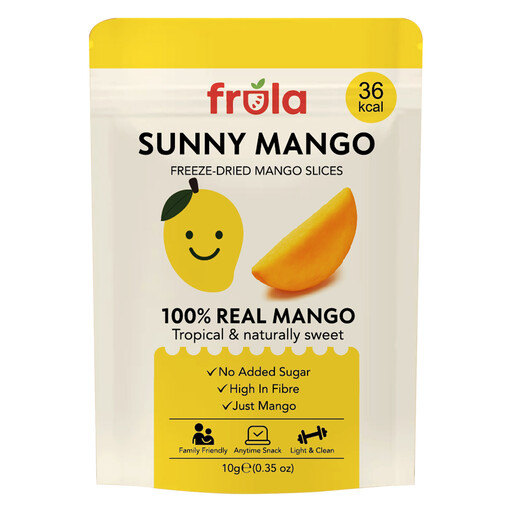
The 10g mango pack offers a small fruit option to consider alongside a school meal. Compare its nutrition panel and ingredients with other fruit snacks rather than assuming the same values apply to all formats.
 No image available
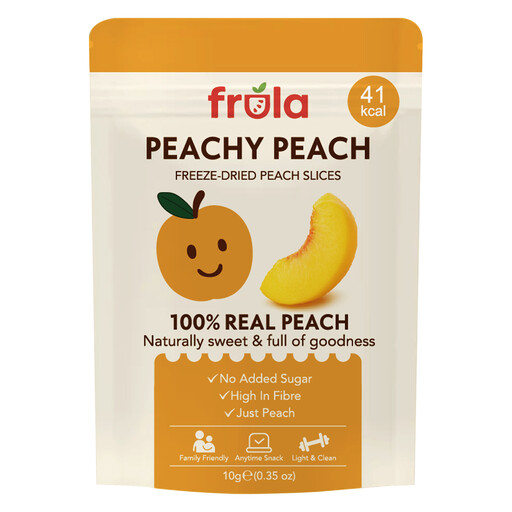
This 10g peach pack is another small format for serving with a meal. Read its own nutrition panel and ingredients when comparing it with the mango pack or other dried fruit.
 No image available
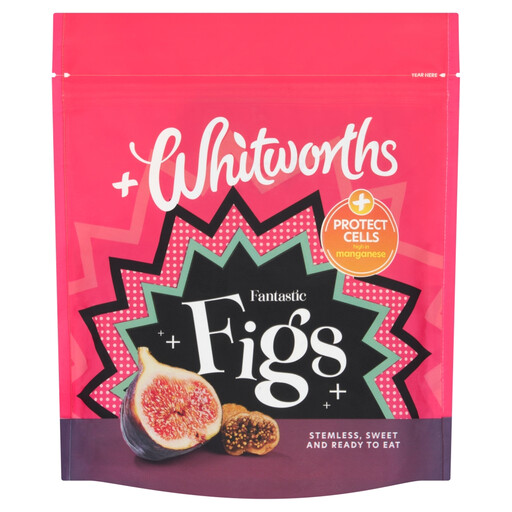
The 175g bag allows you to choose an amount to serve with a meal rather than relying on an individual pack size. Check the product’s nutrition panel and allergen statement for the intended school lunch.
Usually not if you are choosing plain raisins similar to the checked examples: Tesco lists 0.3g fat per 30g, Sainsbury’s lists less than 0.5g per 14g mini pack, and Marks & Spencer lists 0.4g per 100g. Compare the particular product’s panel and ingredients, as coated fruit and fruit-and-nut mixes can have different fat values.
The NHS states that 30g of dried fruit counts as one portion. Check the individual pack weight: the checked Sainsbury’s mini raisin pack is 14g, while a Whitworths Sunny Raisin pack is 30g.
The NHS advises eating dried fruit at mealtimes rather than between meals to reduce tooth-decay risk. For a packed lunch, serve it as part of the meal instead of leaving it for repeated snacking.
Check the child’s allergy needs, the product label and the school’s packed-lunch policy first. The checked M&S Fruit and Nuts contains cashews, pecans and pistachios and carries warnings for people with nut and peanut allergies.
The GOV.UK school food standards practical guide addresses food served at school; it is not a substitute for checking an individual school’s packed-lunch policy. Ask the school about its requirements before packing a product that may be restricted.