Parents packing lunches every day
If juice is an occasional lunch choice, the NHS advises keeping juice and smoothies combined to 150ml for the day and serving them with a meal. Water avoids using that juice allowance.


Water is a straightforward regular drink for a school packed lunch. If you choose 100% apple juice, the NHS advises limiting juice and smoothies combined to 150ml a day and having them with a meal. A no-added-sugar juice drink is a different product: check its sugars per serving, fruit content and ingredients rather than assuming it is sugar-free.
If juice is an occasional lunch choice, the NHS advises keeping juice and smoothies combined to 150ml for the day and serving them with a meal. Water avoids using that juice allowance.
Read the product type as well as the front-of-pack wording. A drink labelled no added sugar can still list sugars and may contain sweeteners; compare the fruit-juice percentage and nutrition information.
A ready-to-pack carton is not necessarily a 150ml portion. Sainsbury's and M&S both list 200ml apple-juice cartons, so check the pack volume before putting one in a lunchbox.
Choose when: The child wants juice with lunch and their total juice-and-smoothie intake can stay within the NHS 150ml daily guidance.
Bear in mind: No added sugar would not make 100% juice sugar-free; Tesco Groceries lists 15g naturally occurring sugars per 150ml of Tropicana Pressed Apple.
Choose when: The listed sugar amount matters and you have checked that the drink's fruit content and ingredients suit your choice.
Bear in mind: Sainsbury's apple-and-pear example contains 25% juice in total and sweeteners; it is not 100% apple juice.
Choose when: You want a regular lunch drink without using any of the day's juice-and-smoothie allowance.
Bear in mind: If fruit is part of the lunch plan, pack it separately rather than treating water as a fruit serving.
Once you have chosen the type of drink, check the portion, label and school policy against the way it will actually be packed.
| Priority | What to check | Your needs |
|---|---|---|
| Juice portion | Check the volume the child will drink and any juice or smoothie they have elsewhere that day. The NHS advises a combined maximum of 150ml a day, taken with a meal. | If I pack juice for lunch, I want the portion to fit within that day's total. |
| Drink type and sugars | Compare sugars on the same serving basis, then read the fruit percentage and ingredients. Tesco Groceries lists 15g sugars per 150ml for Tropicana Pressed Apple; Sainsbury's lists 3.9g per 150ml for its no-added-sugar apple-and-pear juice drink, which contains sweeteners. | I want to know whether I am choosing 100% apple juice or a juice drink, not rely on the words no added sugar alone. |
| Pack size | Read the carton volume and its nutrition panel. Sainsbury's lists a 200ml 100% apple-juice carton with 18.4g sugars per carton; drinking the whole carton exceeds the NHS 150ml daily juice-and-smoothie guidance. | A single pack is convenient, but I need to know how much it contains before putting it in a lunchbox. |
| School policy | Check the school's current packed-lunch and allergy requirements, then check the current product label. Department for Education school-food guidance concerns food and drink provided in state-funded schools in England; it does not establish a UK-wide rule for lunches brought from home. | Before buying a multipack, I want to know whether this type of drink is accepted in my child's packed lunch. |
Sainsbury's no-added-sugar apple-and-pear juice drink lists 3.9g sugars per 150ml and contains sweeteners. Its 25% total juice content makes it a different type of product from 100% apple juice.
Check the product name, fruit percentage, ingredients and sugars for the portion you intend to pack.
Sainsbury's and M&S list 200ml apple-juice cartons. Drinking a whole 200ml carton exceeds the NHS guidance to limit juice and smoothies combined to 150ml a day.
Check for a suitable portion size, or measure juice into a reusable bottle and follow the product's storage instructions for what remains.
The NHS advises having juice and smoothies with a meal and limiting their combined daily volume to 150ml.
If packing juice, make it part of lunch rather than the drink for the rest of the school day; pack water for regular drinking.
Department for Education guidance on school-food requirements applies to food and drink provided in state-funded schools in England. It does not give a blanket answer for food brought from home.
Check your child's school's current packed-lunch policy before buying drinks for repeated use.
These product examples help distinguish juice types and pack sizes; a brand's inclusion does not mean a particular drink is suitable under your child's school policy.
Tesco Groceries lists Tropicana Pressed Apple as 100% pressed, not-from-concentrate juice in a 1.5L carton.
Copella lists Cloudy Apple as pressed, not-from-concentrate juice, including 250ml and 300ml bottles.
Tesco Groceries lists its own 100% Pressed Apple Juice alongside branded apple juices in its apple-juice category.
Sainsbury's lists both 100% apple juice from concentrate in 200ml cartons and a no-added-sugar apple-and-pear juice drink with sweeteners.
M&S lists an apple juice in a 200ml carton, as well as larger apple-juice formats.
These are two apple-flavoured alternatives to 100% apple juice: a no-added-sugar mixed-fruit drink and a sugar-free apple-flavoured soft drink. Check the current pack and your child's school policy before choosing either for a lunchbox.
 No image available
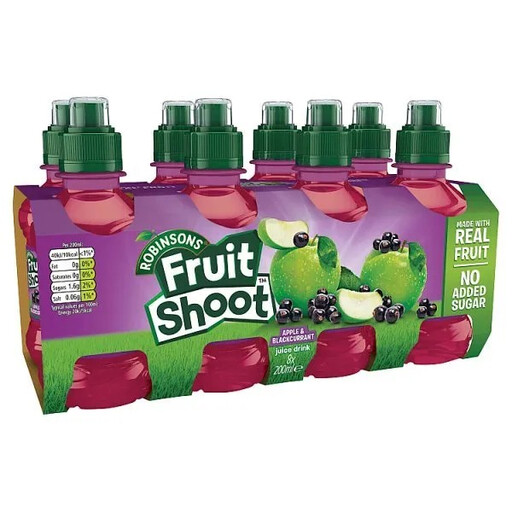
An individually packed apple-and-blackcurrant drink to consider if you are comparing no-added-sugar lunchbox options. The title specifies eight 200ml bottles, not measured 150ml portions; check the current label for sugars, fruit content and sweeteners, and check the school's packed-lunch policy.
 No image available
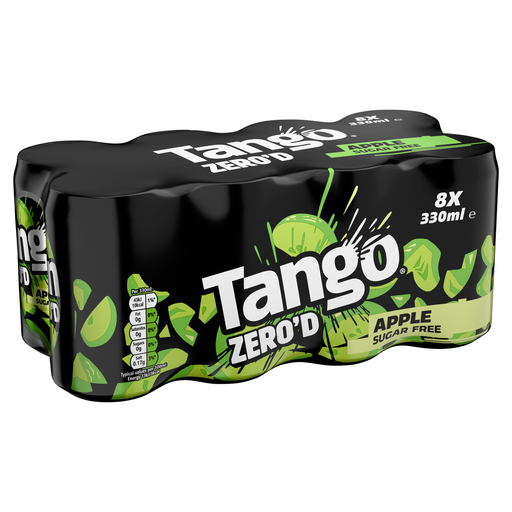
This apple-flavoured carbonated drink is an option to compare when looking at sugar-free-labelled products, not a substitute for 100% apple juice. The pack contains eight 330ml cans; check the current ingredients and nutrition label, and whether the school accepts fizzy drinks in packed lunches.
No. Tesco Groceries lists 15g naturally occurring sugars per 150ml of Tropicana 100% Pressed Apple, while Sainsbury's no-added-sugar apple-and-pear juice drink lists 3.9g per 150ml and contains sweeteners. Read the sugars figure and ingredients for the exact drink you are buying.
The NHS advises limiting fruit juice and smoothies combined to 150ml a day and having them with a meal. If a child drinks a whole 200ml apple-juice carton at lunch, that exceeds the daily volume in this guidance; account for any juice or smoothie consumed elsewhere too.
Do not increase the juice portion for that purpose. Copella describes a 150ml glass of its Cloudy Apple as contributing to 5 A Day, while the NHS advises limiting juice and smoothies combined to 150ml a day. Pack whole fruit or vegetables separately if you want them included in lunch.
Check the individual school's packed-lunch policy. Department for Education guidance on school-food requirements addresses food and drink provided in state-funded schools in England; it does not establish a blanket UK-wide permission or prohibition for drinks brought from home.
Water is a straightforward regular option that does not use the day's juice-and-smoothie allowance. If you also pack juice, follow the NHS advice to keep juice and smoothies combined to 150ml for the day and serve juice with the meal.