What should you check before buying?
Choose the everyday drink first. If you are buying a fizzy drink for an occasional swap, compare the exact variant rather than relying on a brand or range name.
| Priority |
What to check |
Your needs |
| Sugars |
Read sugars per 100ml and the can size on the exact pack. Coca-Cola Great Britain lists 0g per 100ml for Coca-Cola Zero Sugar, while its Original Taste lists 10.6g per 100ml; the variants are not interchangeable. |
If a regular fizzy drink is the alternative, I want to know what the occasional swap actually contains. |
| Caffeine |
Check both the variant name and ingredient list. Pepsi UK identifies Pepsi Max No Caffeine separately from Pepsi Max; Coca-Cola Great Britain lists caffeine flavouring in standard Coca-Cola Zero Sugar. |
When caffeine avoidance matters in my household, I need the specific drink to be labelled caffeine-free. |
| When it is drunk |
Keep water or milk as the usual school-day drink, in line with NHS guidance. Wirral Community Health and Care NHS Foundation Trust says sugar-free, diet and fizzy drinks can be acidic and cause tooth wear. |
I want a straightforward drink for the school day, not a fizzy drink to sip repeatedly between meals. |
| Ingredients |
Read the exact ingredient list and any phenylalanine warning if an ingredient must be avoided. The Food Standards Agency lists aspartame (E 951) as authorised in England, Scotland and Wales; the individual product label still matters. |
Someone in my household may need to avoid an ingredient, so a general ‘diet’ or ‘zero’ description is not enough. |
| School arrangements |
Check the school’s current packed-lunch policy before putting a fizzy drink in a lunchbox. Do not assume that rules for drinks provided by a school also answer what parents may pack. |
Before packing an occasional drink, I need to know what my child’s school allows. |
Brands and ranges to recognise
These references help distinguish variants; they do not mean that every drink in a brand’s range has the same ingredients or nutrition.
Coca-Cola
Coca-Cola Great Britain identifies Original Taste, Zero Sugar and a separate Zero Sugar Caffeine Free variant.
- Coca-Cola Great Britain lists 0g sugars per 100ml for Coca-Cola Zero Sugar.
- Standard Coca-Cola Zero Sugar lists caffeine flavouring; check for the Caffeine Free designation if needed.
Pepsi
Pepsi UK identifies Pepsi Max No Caffeine as a separate zero-sugar cola variant.
- Pepsi UK lists 0g sugars per 100ml and no caffeine for Pepsi Max No Caffeine.
- Do not assume the same caffeine information applies to every Pepsi Max variant.
Sprite
The Sprite range includes a no-sugar lemon-and-lime variant.
- Coca-Cola Great Britain lists 0g sugars per 100ml for Sprite No Sugar.
- Its no-sugar designation does not remove the acidity consideration for fizzy drinks noted in NHS oral-health guidance.
Fanta
Fanta has fruit-flavoured variants whose exact nutrition panels are worth comparing.
- The range includes a Fruit Twist Zero variant.
- Coca-Cola Great Britain lists 0.4g sugars per 100ml for Fanta Fruit Twist Zero; its name alone does not tell you the listed sugar amount.
Dr Pepper
Dr Pepper Zero is a distinct variant from standard Dr Pepper.
- Coca-Cola Great Britain lists 0g sugars per 100ml for Dr Pepper Zero.
- Its ingredient information includes flavourings containing caffeine, so it is not the caffeine-free choice.
Tesco
Tesco is a retailer, not a fizzy-drink brand; its product pages can help identify a particular pack and its label information.
- A Tesco listing for Coca-Cola Zero Sugar 6 × 200ml states 0g sugars per 100ml.
- Check the actual pack rather than extending one listing’s details to other sizes or drinks.
Zero-sugar and diet options on Joybuy
These fizzy-drink packs are options to consider when the alternative is an occasional sugary fizzy drink; one is a caffeine-free cola. Water or milk remains the everyday school-day choice for children under NHS guidance. Check each pack’s label for the details that matter to your household.
 No image available
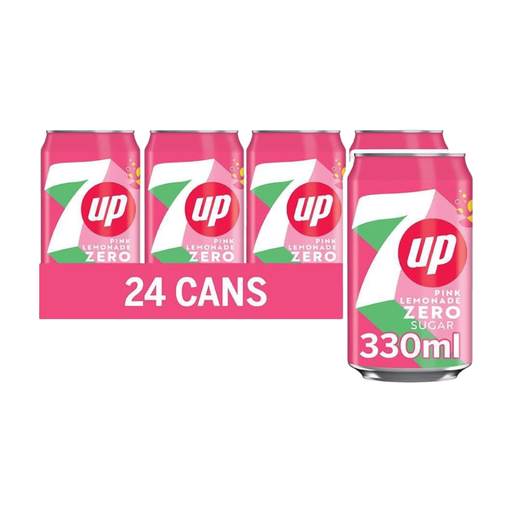
7 Up Lemonade Zero 24 × 330ml
A Zero-labelled lemonade to consider for an occasional fizzy-drink swap. The pack contains 24 × 330ml cans; check the exact label for sugars per 100ml, caffeine and ingredients.
View on Joybuy
 No image available
Pepsi Max Caffeine Free 24 × 330ml
For an occasional cola-style drink when caffeine avoidance matters. Pepsi UK identifies this variant as having no caffeine and lists 0g sugars per 100ml; the pack contains 24 × 330ml cans. Check its ingredients if particular sweeteners matter to your household.
View on Joybuy
 No image available
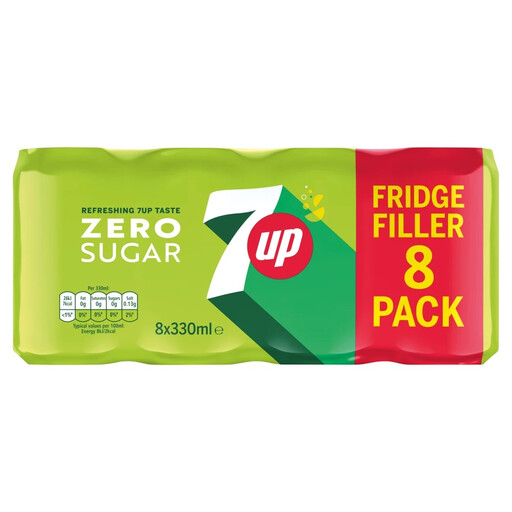
7UP Zero 8 × 330ml
A Zero-labelled option in an 8 × 330ml pack for an occasional fizzy drink. Read the specific can’s nutrition and ingredient labels if sugars, caffeine or sweeteners affect your choice.
View on Joybuy
 No image available
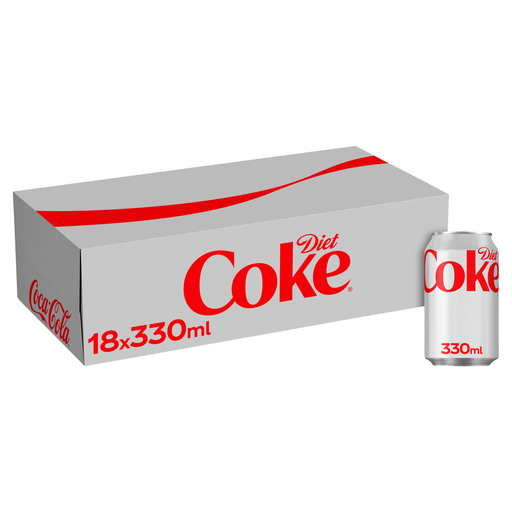
Diet Coke 18 × 330ml
A diet cola in an 18 × 330ml pack for an occasional fizzy-drink choice. Check sugars per 100ml and the ingredient list on this variant; ‘diet’ does not itself mean caffeine-free.
View on Joybuy
 No image available
Coca-Cola Zero Sugar 24 × 330ml
For an occasional cola swap when the listed sugar content matters: the product information gives 0g sugars per 100ml. This 24 × 330ml pack is standard Coca-Cola Zero Sugar, whose ingredients include caffeine; choose a specifically labelled caffeine-free variant if avoiding caffeine.
View on Joybuy
Frequently asked questions
Should a diet or zero-sugar fizzy drink be a child’s everyday school drink?
No. The NHS identifies water and milk as the usual drinks for children. If the alternative on an occasion is a sugary fizzy drink, compare the exact zero-sugar variant, but do not treat it as everyday hydration.
Does zero sugar mean there is no concern for teeth?
No. Wirral Community Health and Care NHS Foundation Trust says diet and sugar-free soft drinks can be acidic and cause tooth wear. Avoid frequent sipping between meals and make water the usual between-meal drink.
How do I find a caffeine-free diet cola?
Look for a specifically labelled caffeine-free variant and check its ingredients. Coca-Cola Great Britain and Pepsi UK identify separate caffeine-free zero-sugar colas; the zero-sugar name alone does not establish caffeine content.
Can I put a fizzy drink in a school packed lunch?
Check your child’s school’s current packed-lunch policy. The Department for Education’s September 2026 guidance describes requirements for food and drink provided by state-funded schools in England, under the Requirements for School Food Regulations 2014; that scope does not, by itself, settle a parent-packed lunch or rules elsewhere in the UK.
What should I do if a label says ‘contains a source of phenylalanine’?
Use the warning on the exact product label when deciding whether its ingredients are suitable for your household. If someone has been told to avoid phenylalanine, follow their clinician’s dietary advice rather than relying on a general ‘diet’ or ‘zero’ description.


