Parents planning a treat at home
A sharing bag needs a serving decision before it is opened. Check the pack’s sugar information and any warning relevant to the child, rather than assuming its stated serving is a child-specific portion.


Choose jelly sweets when the child or gift recipient wants fruit-flavoured chewy sweets; choose a chocolate or mixed box only when chocolate is wanted and its ingredients and warnings suit the recipient. For either choice, check the current pack’s serving information, sugars, dietary claims, allergens and age warnings rather than treating a sharing pack or gift box as one serving.
A sharing bag needs a serving decision before it is opened. Check the pack’s sugar information and any warning relevant to the child, rather than assuming its stated serving is a child-specific portion.
Ask whether the recipient would prefer jelly sweets, chocolate or a mixture. Gift presentation does not tell you whether the ingredients, allergens or age guidance fit the person receiving it.
Jelly sweets do not all use the same gelling agent. Check the exact pack for gelatine, pectin and any vegan claim; a mixed jelly-and-chocolate product needs its own ingredient and allergen check.
Choose when: Several people want fruit-flavoured chewy sweets and you can decide what to serve from the bag.
Bear in mind: A sharing bag is not a single serving; use its portion and sugar declarations to plan how it will be shared.
Choose when: Presentation matters and the recipient specifically prefers jelly sweets to chocolate.
Bear in mind: HARIBO’s Starmix Gift Box contains gelatine, according to HARIBO UK; gift packaging does not change that dietary consideration.
Choose when: Chocolate is wanted and the exact product’s ingredients and age guidance suit the recipient.
Bear in mind: M&S’s Very Jelly Munch combines jellies with chocolate components and carries allergen and choking warnings; it is not a plain jelly-sweets alternative.
| Priority | What to check | Your needs |
|---|---|---|
| Portions and sugars | Compare the stated serving and sugars per serving; use sugars per 100g when pack sizes or serving bases differ. A stated serving is not a child-specific recommendation. | I want to offer a defined share of an occasional treat, not put out the whole pack as one snack. |
| Ingredients | Read the exact variant’s gelling agent and dietary label. Check chocolate components separately rather than assuming a jelly product and a mixed box have the same ingredients. | The recipient needs a product that fits their gelatine-related or vegan requirement. |
| Age and allergens | Read the current pack’s choking warning, age guidance and allergen information before serving or gifting. Do not carry a warning from one product over to another. | Before giving sweets to a younger child, I need to know whether this particular product is suitable for them. |
| Gift format | Confirm whether the box contains jelly sweets, chocolate or both. Check the recipient’s preference before choosing a presentation format. | I’m buying a gift, so what is inside matters more than whether the pack looks gift-ready. |
| Where food is served | Distinguish a household purchase from food supplied by a provider. The Department of Health and Social Care’s HFSS retail-promotion guidance applies to businesses operating in and selling to England; Department for Education school-food guidance concerns food provided in state-funded schools in England. | For a treat at home, I can make a household serving decision. If a school or holiday club supplies the food, I need to check that provider’s policy and the rules applicable to its setting. |
The Department of Health and Social Care’s guidance addresses promotion and placement of qualifying products by businesses operating in and selling to England. Separate Department for Education guidance covers food and drink provided in state-funded schools in England. Neither makes a treat bought for home automatically prohibited.
For home use, check the product and decide how it will be served. If a school or holiday club is providing food, ask the provider about its policy and the rules applicable to that setting.
Those claims answer particular ingredient questions, not how much sugar is in a serving. Sainsbury’s lists 15.7g sugars per four Fruit Jellies, while its listing for Rowntree’s Jelly Tots gives 11g per 11 sweets.
Use each claim for the question it answers, then compare the exact pack’s serving, sugars, ingredients and warnings.
M&S lists milk, wheat and soya ingredients in Very Jelly Munch and says it is not suitable for children under 36 months because of a potential choking hazard. A plain fruit-jelly product has its own ingredients and warnings to check.
Ask about the recipient’s dietary and allergy requirements, then read the current label of the product you intend to give.
A pack may contain several stated servings, and those servings are not child-specific. NHS guidance advises keeping both the amount and frequency of sugary food and drinks as low as possible.
Decide what to serve before opening the pack and put the remainder away rather than treating the bag as one snack.
HARIBO UK presents its Starmix Gift Box as a jelly-and-foam-sweet gift containing fruit- and cola-flavoured gums.
Rowntree's Jelly Tots 150g is listed by Sainsbury’s as a fruit-flavoured sharing bag.
Tesco lists own-label fruit-flavour jelly sweets, including Fruit Jellies.
Sainsbury’s lists its 200g Fruit Jellies as vegan and names pectin in the ingredients.
Asda’s 200g Fruit Jellies listing displays vegan suitability and names pectin as the gelling agent.
M&S distinguishes its jelly-sweets range from chocolate products; Very Jelly Munch is a mixed jelly-and-chocolate option.
These are fruit-flavoured sweets in multipacks, mini bags, a tub and a sharing bag for the jelly-sweets side of the choice. Check the current pack before serving them to children or relying on a dietary claim.
 No image available
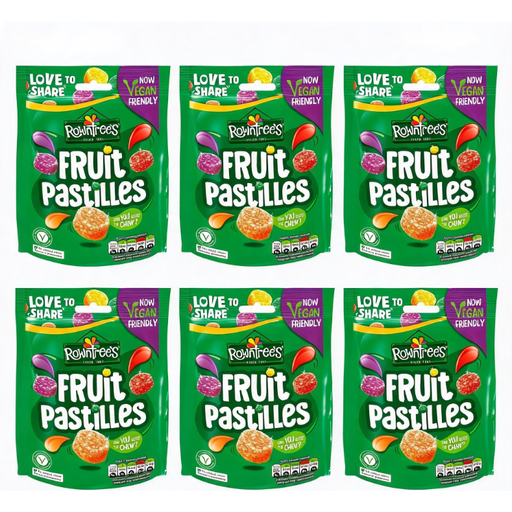
Six 143g bags give a household separate packs to share over more than one occasion. Check the current label’s serving and sugar information when deciding how much to offer, and read its guidance before serving to a young child.
 No image available
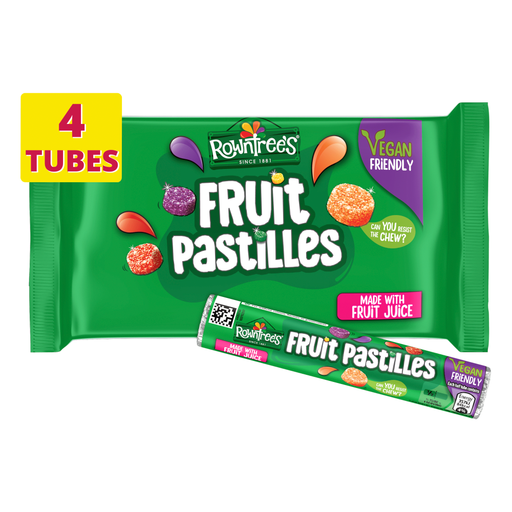
Four 41g packs offer smaller separate packs for sharing or taking along. A pack is not necessarily a child’s serving; check the current label for portion information, allergens and its warning for children under four.
 No image available
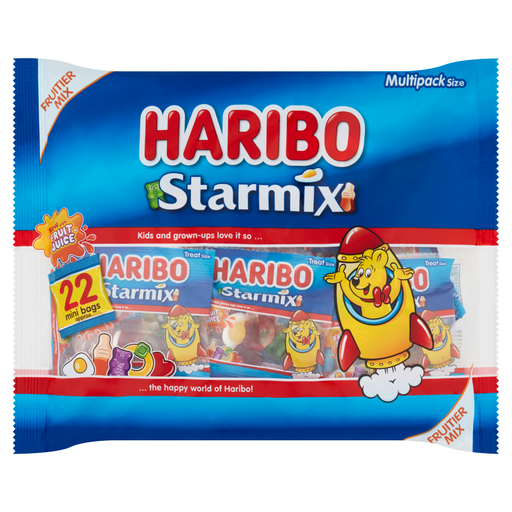
The 22 mini bags provide separate packs for group sharing. Check the current pack for gelatine, sugar information and age or choking guidance before deciding who to serve them to.
 No image available
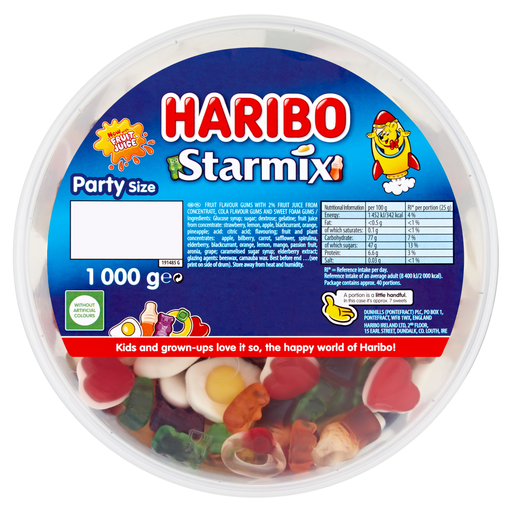
A 1kg tub is a group-sharing format rather than a ready-portioned pack. Decide what to serve from it, and check the current label for ingredients, sugar information and guidance relevant to the children receiving it.
 No image available
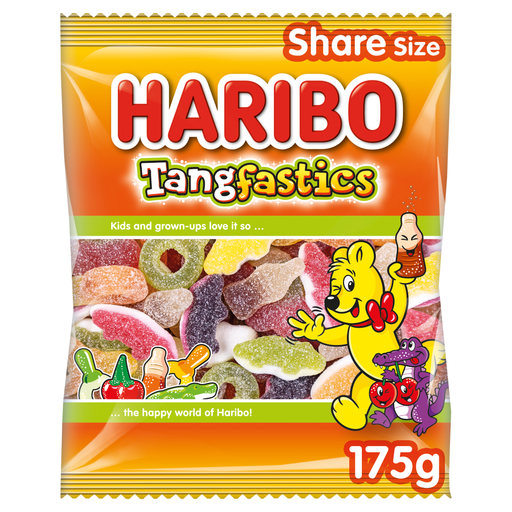
This 175g sharing bag is a fruit-and-cola jelly-sweet choice rather than a chocolate gift. Decide a portion before opening it, and check the current pack’s ingredients, sugar declaration and age guidance.
No. Check what the recipient wants and what the box contains: M&S describes Very Jelly Munch as a mixture of jelly sweets and milk- and white-chocolate components, not a plain jelly-sweets product. Its ingredients and warnings need checking as a mixed product.
Read both sugars per stated serving and sugars per 100g, then decide what to serve rather than assuming the whole pack is one portion. Sainsbury’s lists 11g sugars per 11 Rowntree's Jelly Tots and 15.7g per four of its Fruit Jellies; those serving sizes are not child-specific recommendations.
No. Sainsbury’s displays its Fruit Jellies as vegan and lists pectin, while HARIBO UK lists gelatine in its Starmix Gift Box. Check the exact current pack rather than applying either product’s ingredients to a whole brand or category.
Read the product’s age, choking and allergen statements before serving it. Sainsbury’s warns that its Fruit Jellies could be a choking hazard to small children; M&S says Very Jelly Munch is not suitable for children under 36 months because of a potential choking hazard and lists milk, wheat and soya ingredients.
The cited England guidance does not establish a household buying ban. Department of Health and Social Care guidance concerns promotion and placement of qualifying products by businesses operating in and selling to England; separate Department for Education guidance addresses food provided in state-funded schools in England. If a school or holiday club supplies food, check that provider’s policy and the rules applicable to its setting.