What should you check first?
Decide whether the drink belongs in the lunchbox before comparing tonic flavours or nutrition labels: check alcohol status, then the school’s rules, then the exact ingredients and serving.
| Priority | What to check | Your needs |
|---|
| Alcohol status |
Read the ABV, product name and any alcohol-units statement on the exact pack. UK Government low-alcohol descriptor guidance defines “low alcohol” as no more than 1.2% ABV; it does not mean zero alcohol. Tesco lists a low-calorie premixed gin and tonic at 5% ABV. |
I’m choosing a drink for a school lunch, not an adult drink with reduced alcohol. I need to distinguish plain tonic and 0.0% products from low-alcohol or alcoholic G&T cans. |
| School rules |
Check the school’s published packed-lunch policy for fizzy drinks, tonic, adult-style branding and container restrictions. Department for Education school-food requirements in England concern food and drink provided by state-funded schools, rather than automatically deciding every home-packed lunch. |
If the rules are unclear, I can pack water instead of assuming a tonic or 0.0% G&T-style drink will be accepted. |
| Tonic ingredients |
If tonic is permitted, read the exact variant’s ingredient list for quinine and sweeteners. Check whether the product is ordinary tonic or a spirit-and-tonic drink. |
I may want a mixer-style flavour, but I still need to decide whether its ingredients and presentation suit this lunchbox. |
| Sugars and serving |
Compare sugars using the same serving size. Sainsbury’s lists 12 g sugars per 250 ml for Schweppes Tonic Water and less than 0.5 g per 250 ml for its own Diet Indian Tonic; the diet tonic contains sweeteners and quinine. |
Once the school permits the drink, I want to compare what is in the amount I would actually pack, rather than relying on “diet” or “light”. |
| Adult-style alternatives |
Check both the ABV and the product identity. Tesco lists Gordon’s Alcohol Free Spirit & Tonic as 0.0% and also shows a lower age limit of 18 years on that listing; other G&T-style listings state up to or exactly 0.5% ABV. |
A 0.0% label may answer my alcohol question, but it does not establish that G&T-style branding fits the school’s rules. |
How do the brand ranges differ?
These brand examples help explain labels and product positioning; a brand name does not establish that a particular drink is permitted in a packed lunch.
Fever-Tree
Its tonic range includes lighter variants, alongside products presented as mixers for spirits.
- Joybuy describes Fever-Tree Naturally Light Tonic Water as having 50% fewer calories than Fever-Tree Premium Indian Tonic Water.
- That comparison does not establish the alcohol status or school suitability of every Fever-Tree product; check the exact pack and school policy.
Schweppes
Sainsbury’s describes its listed Schweppes Tonic Water as an adult soft drink containing quinine.
- The Sainsbury’s listing states 12 g sugars per 250 ml for that standard tonic, giving a serving basis for comparison.
- The adult positioning and that nutrition figure apply to the listed tonic, not automatically to a different Schweppes variant.
Fentimans
Fentimans offers tonic waters including a Naturally Light variant.
- Fentimans says its Naturally Light Tonic Water has 30% fewer calories than its Premium Indian Tonic Water.
- “Naturally Light” is a comparison with the brand’s stated tonic, not an alcohol-status or school-policy statement.
Britvic
Britvic describes its London Essence range as tonics, sodas and gingers with a spirit-pairing mixer identity.
- The range gives shoppers several mixer categories to distinguish by their exact product names.
- The range description does not establish the ingredients, alcohol status or packed-lunch fit of an individual drink.
Tesco
Tesco’s listings include both G&T-style drinks described as low alcohol and premixed gin and tonic.
- Its listings make the distinction visible: one G&T-style product states “Alc. <0.5% vol.”
- A separate Tesco Gin & Low Calorie Tonic contains gin and is labelled 5% ABV. Neither “low calorie” nor G&T-style naming establishes a school-lunch choice.
Sainsbury's
Sainsbury’s lists its own diet tonic as well as branded low-alcohol G&T-style drinks.
- Sainsbury’s Diet Indian Tonic lists less than 0.5 g sugars per 250 ml, alongside sweeteners and quinine.
- That tonic’s sugar figure does not establish school suitability; a separately listed Fever-Tree G&T-style product states 0.5% ABV.
Joybuy tonic-water options
These are ordinary tonic-water options to consider only if the school allows fizzy tonic. Before choosing one for a packed lunch, check its exact alcohol statement, ingredients and the school’s rules; a tonic-water name alone does not settle those checks.
 No image available
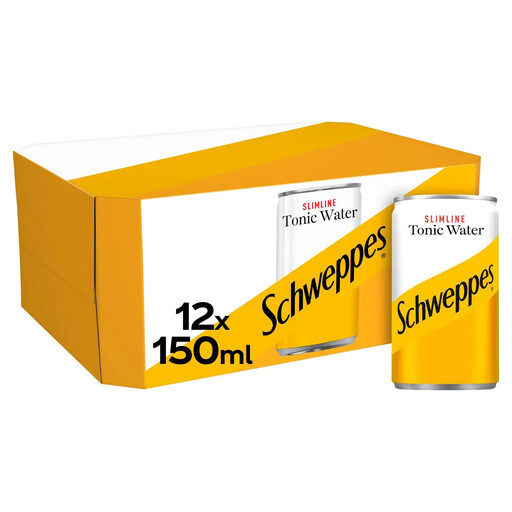
Schweppes Slimline Tonic Water 12 × 150 ml
The individual cans offer a 150 ml portion if the school permits tonic. Check the exact pack’s alcohol statement and ingredients before deciding whether to put one in a lunchbox.
View on Joybuy
 No image available
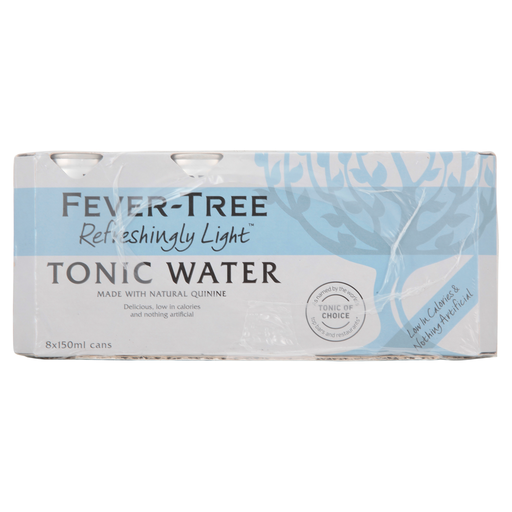
Fever-Tree Naturally Light Tonic Water 8 × 150 ml
Consider this 150 ml-can option only if the school accepts tonic. Joybuy describes it as having 50% fewer calories than Fever-Tree Premium Indian Tonic Water; that comparison does not answer whether the exact drink meets your alcohol and ingredient requirements.
View on Joybuy
 No image available
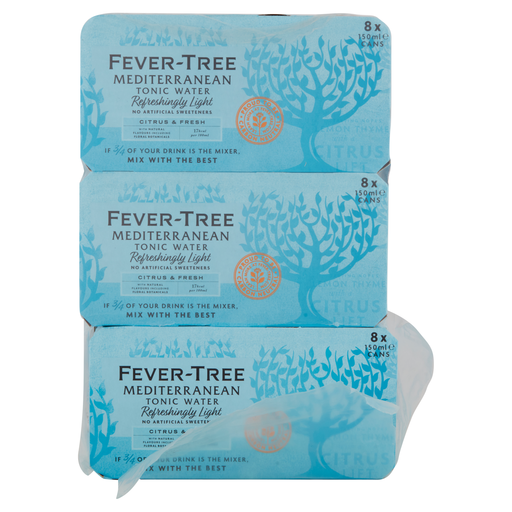
Fever-Tree Refreshingly Light Mediterranean Tonic Water 8 × 150 ml
This Mediterranean tonic comes in individual 150 ml cans. If tonic is allowed at school, check this variant’s alcohol statement, ingredient list and sugars before considering it for a packed lunch.
View on Joybuy
Questions about mixers and packed lunches
Does “low alcohol” mean alcohol-free?
No. UK Government low-alcohol descriptor guidance defines it as no more than 1.2% ABV and says the maximum ABV should appear on the label. For a school packed lunch, do not treat “low alcohol” as 0.0%; check the exact drink’s alcohol statement.
Can a low-calorie premixed gin and tonic go in a school lunch?
No. “Low calorie” does not mean alcohol-free: Tesco Gin & Low Calorie Tonic contains gin and is labelled 5% ABV. Check the ABV before considering nutrition or flavour.
Do England’s School Food Standards decide what goes in a home-packed lunch?
Not by themselves. Department for Education guidance describes legal requirements for food and drink provided in state-funded schools in England. Check the individual school’s packed-lunch policy before sending tonic or another fizzy drink.
Is diet tonic automatically suitable for a school lunch?
No. A sugar figure does not settle the school’s rules or the drink’s ingredients. Sainsbury’s Diet Indian Tonic lists less than 0.5 g sugars per 250 ml and contains sweeteners and quinine; check the exact pack and school policy.
What should I read on a mixer label before buying?
Start with the product name and stated ABV, then check the ingredients, sugars on a comparable serving basis and container format. Check the school’s packed-lunch rules as well: “light”, “slimline” and even 0.0% do not, on their own, establish that a drink is accepted there.


