Students and families planning a heated lunch
A cupboard-stored tin can be an option when there is somewhere suitable to heat the soup. Check the instructions for the exact product and work out the calories for the portion being served.


Calculate calories for the amount of soup you will eat, not just the serving printed on the label. The 400g Heinz and Sainsbury's tins described by ASDA Groceries and Sainsbury's range from 128 to 228 kcal for the whole tin, but salt, allergens, heating arrangements and any sides need separate checks before you choose a lunch.
A cupboard-stored tin can be an option when there is somewhere suitable to heat the soup. Check the instructions for the exact product and work out the calories for the portion being served.
If you expect to eat a whole 400g tin, check whether its nutrition figures are given per half tin. For two equal labelled servings, double the per-serving energy before counting any sides.
Check the exact tin's ingredients, allergen declaration and salt for the portion being eaten. A calorie figure cannot answer those questions.
Start with the portion you intend to serve, then check whether the recipe and preparation instructions fit the person and lunch setting.
| Priority | What to check | Your needs |
|---|---|---|
| Portion calories | Read the labelled serving count and energy figure. Double a half-tin value only if you will eat both servings; count bread, spreads and other additions separately. | I want to know whether my actual portion of soup stays below 500 kcal, rather than judging a whole tin by its half-tin label. |
| Salt | Calculate salt for the portion eaten as well as calories. ASDA Groceries lists 1.2g per half tin for Heinz Chicken Noodle 400g and 1.1g for Heinz Cream of Tomato 400g: that is 2.4g and 2.2g respectively for a whole tin. | If soup is a regular lunch, I want to compare the salt in a full tin with what else I plan to eat. The NHS notes that ready-made soups can be salty. |
| Ingredients | Read the current ingredients and allergen declaration for the exact recipe. Check any vegetarian statement on that product, rather than applying it to a flavour or brand as a whole. | I need a soup that fits the eater's dietary requirements; a tomato, vegetable or broth name alone does not settle that. |
| Heating and leftovers | Match the pack's heating directions to the facilities available. If serving part of a tin, follow its opened-product storage directions for the remainder. | There needs to be a workable way to heat lunch where it will be eaten, and a plan for any soup left in the tin. |
The 400g Heinz and Sainsbury's examples described by ASDA Groceries and Sainsbury's give energy per half tin. Eating both labelled servings doubles the soup's stated energy.
Calculate the portion you will eat, then count accompaniments separately if the 500-kcal limit applies to the complete lunch.
ASDA Groceries lists 64 kcal and 1.2g salt per half tin for Heinz Chicken Noodle 400g. A whole tin therefore provides 128 kcal and 2.4g salt.
Compare both figures for your planned portion instead of using calories as a substitute for the salt label.
Soup recipes differ in their ingredients, even when their names sound similar. A calorie calculation does not identify allergens or establish whether a product is vegetarian.
Read the ingredient list, allergen declaration and any dietary statement on the exact tin you are buying.
A tin's nutrition panel describes the soup, not bread, drinks or other food served with it.
If your target applies to the whole lunch, calculate those additions as well and plan the meal around the eater's requirements.
Use these ranges to narrow down recipes, then make the calorie and dietary checks on a specific tin.
The 400g examples listed by ASDA Groceries include chicken noodle, Scotch broth, carrot and coriander, and cream of tomato.
Tesco Groceries lists own-label soup alongside branded, cup and packet formats.
Sainsbury's lists a 400g Cream of Tomato Soup with two half-tin servings.
ASDA Groceries provides individual listings for the Heinz soups used in the portion examples here.
The M&S Food tinned-soup category includes tomato, vegetable, bean and meat options.
Tesco Groceries lists Campbell's condensed soup, including a 295g Cream of Mushroom tin.
These five 400g soups offer different recipes to consider for a heated back-to-school lunch. Check each current pack's portion, ingredients and preparation directions against your plans.
 No image available
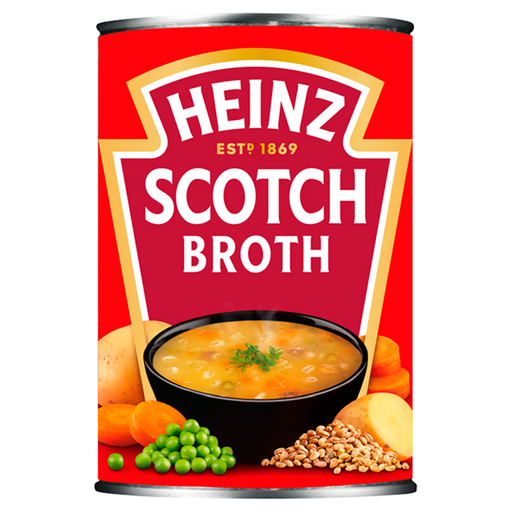
For a whole-tin lunch, ASDA Groceries lists 79 kcal and 1.2g salt per half tin: 158 kcal and 2.4g salt for both servings. Check the current ingredients and heating directions against the eater's needs and available facilities.
 No image available
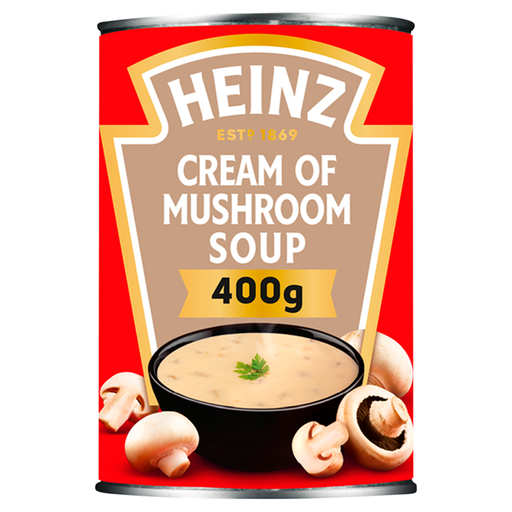
A cream of mushroom option for a heated lunch. Check the tin's energy for the portion you will serve, along with its ingredients, salt and heating directions.
 No image available
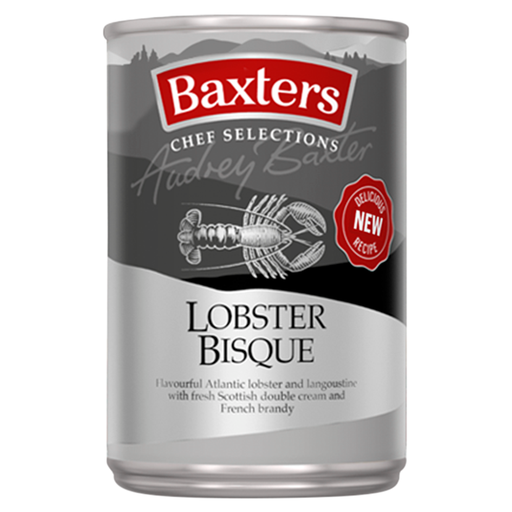
A lobster bisque to consider if its ingredients suit the eater. Check the exact pack for allergens, whole-tin energy and salt, and a heating method that works for the lunch setting.
 No image available
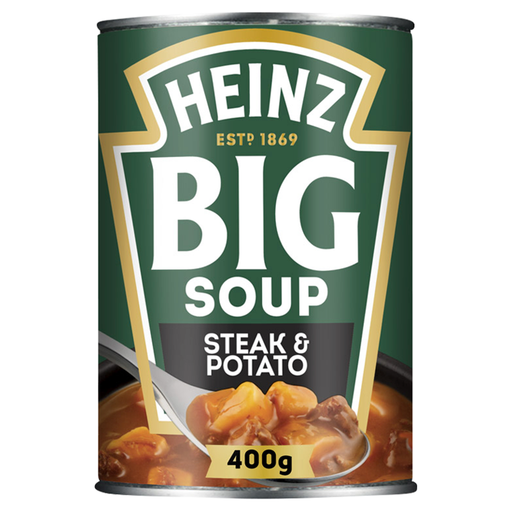
A steak and potato soup option. If you plan to eat the whole tin, calculate energy and salt for 400g; also confirm the pack's heating method fits where lunch will be prepared.
 No image available
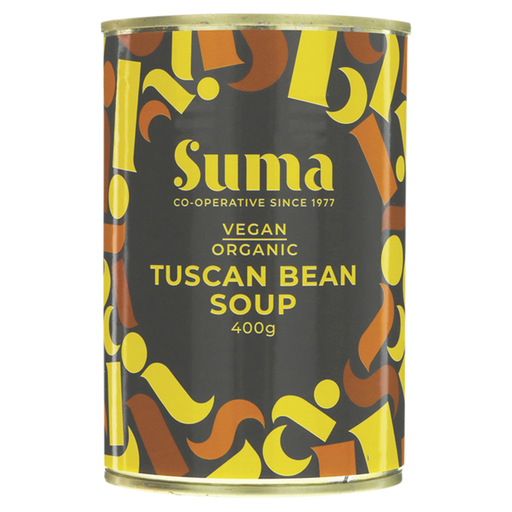
A bean soup option for a heated lunch. Use the current tin to calculate energy for your portion and check salt, allergens and the heating instructions before relying on it for a school-day meal.
Apply the limit to the amount you will eat. For example, ASDA Groceries lists Heinz Chicken Noodle 400g at 64 kcal per half tin, making the whole tin 128 kcal; food and drinks served with it need their own calculation if the limit covers the complete lunch.
Not necessarily. ASDA Groceries lists 1.2g salt per half tin for Heinz Chicken Noodle 400g, or 2.4g for the whole tin, despite its 128-kcal whole-tin calculation. Check salt for the portion you intend to eat.
No. Check the exact tin's current ingredients, allergen declaration and any vegetarian statement; a flavour name or another recipe from the same brand is not a substitute for that label.
Check the product's preparation directions and the facilities available before choosing it for that lunch. If you serve only part of a tin, follow its directions for storing the remainder.