Parents packing smaller lunches
A mini wrap can make a smaller roll-up, while a regular wrap gives a planned filling more room. Choose the portion and filling together rather than treating the wrap as the whole lunch.


Choose mini wraps for smaller roll-ups, a regular wrap when the planned filling needs more room, or a small sliced loaf when the household will use bread for sandwiches and other meals. For a smaller household, compare the number of portions you will use with the exact pack’s storage directions. Check ingredients, fillings and the school’s allergy arrangements before packing lunch.
A mini wrap can make a smaller roll-up, while a regular wrap gives a planned filling more room. Choose the portion and filling together rather than treating the wrap as the whole lunch.
Compare pack count with the lunches and other meals you expect to make. If sandwiches or toast are more likely to use up the remaining portions, a small sliced loaf is a separate option worth considering.
Check the exact wrap or bread pack and every filling against the child’s needs. The cited mini wheat wraps contain wheat; Old El Paso also lists a distinct gluten-free tortilla product. Check the child’s school arrangements rather than assuming one policy applies everywhere.
Start with the lunch you plan to make, then check how many portions the household can use and what the exact pack says about storage.
| Priority | What to check | Your needs |
|---|---|---|
| Portion and format | Decide between a rolled wrap and sliced sandwiches. Check the wrap’s size separately from the number in the pack; mini wraps are not necessarily sold in smaller packs. | I want a portion that suits the child and leaves enough room for the filling. If sandwiches are more likely to be eaten, I would choose bread rather than treating a small loaf as a wrap size. |
| Pack use and storage | Count the portions you expect to use and read the exact pack’s opened-storage and freezing directions. Tesco lists six Mission mini wraps and eight Tesco wholemeal wraps, but gives product-specific storage instructions for each. | Our household may not finish every portion soon after opening. I would check whether and how the remaining wraps or bread can be frozen, rather than relying on another product’s directions. |
| Ingredients and allergens | Read the purchased pack and the fillings. Sainsbury’s lists wheat flour in its mini wraps; Old El Paso labels its separate six-pack gluten-free and says the package should take priority if product information differs. | If my child needs to avoid an ingredient, the words ‘wrap’ or ‘gluten-free’ alone are not enough to assess the complete lunch. I also need to check the school’s applicable allergy arrangements. |
| The rest of the lunch | Consider the filling and other foods being packed, not just the wrap or loaf. The NHS suggests choosing wholegrain where possible; Wirral Community Health and Care NHS Foundation Trust advises that ice packs help keep packed-lunch food cool. | I want the bread choice to work with the rest of lunch. If a filling needs to stay cool, I need to plan how to pack it. |
‘Mini’ describes the wrap, not how many are in the packet. The cited Mission mini pack contains six wraps, while Sainsbury’s mini pack contains eight; a little loaf is sliced bread.
Choose the lunch format first, then compare portion size, pack count and storage directions with what the household will use.
Portions left unused still need to be stored or frozen according to that product’s directions.
The cited mini wheat wraps contain wheat, while Old El Paso lists a separate gluten-free tortilla recipe. Neither description settles whether every ingredient in a packed lunch suits a particular child.
Check the purchased pack, all fillings and the child’s school allergy arrangements before packing.
The cited wrap and little-loaf listings give different directions for opened packs and freezing.
Follow the directions on the exact pack and decide when remaining portions will be used or frozen.
These examples show how portion format, pack count and ingredients can differ; a brand name alone does not settle the choice.
Its Original Mini Wraps are a wheat-wrap option for smaller roll-ups.
Its six-pack of gluten-free tortillas is a distinct option from the cited wheat wraps.
Its cited wholemeal wheat wraps offer an eight-pack option.
Its cited mini wheat wraps provide smaller individual wraps in an eight-pack.
Its cited mini and wholemeal tortilla products illustrate separate portion and flour choices.
Its 50/50 Little Sliced Loaf is a bread alternative when sandwiches are wanted instead of wraps.
This gluten-free tortilla option is relevant when assessing wraps for a school lunch; check the purchased pack and the child’s school arrangements for the specific meal.
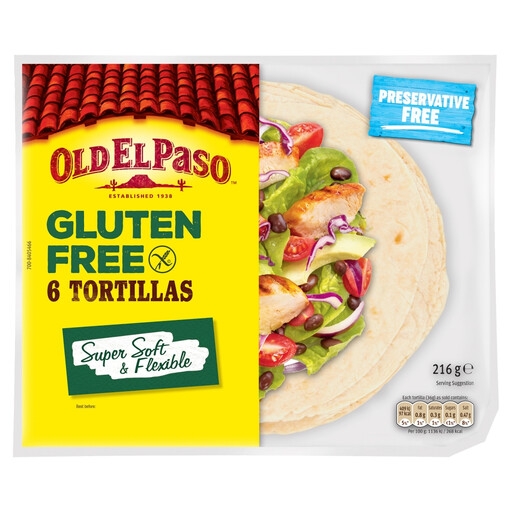 Image unavailable
A gluten-free tortilla option to assess when planning a school lunch for someone who needs to avoid gluten. The Joybuy UK product description identifies six tortillas in the 216g pack. Check the purchased pack’s ingredients and allergen information, the fillings and the school’s applicable arrangements.
Check the exact pack before freezing. Tesco’s listing gives home-freezing directions for the cited Mission mini wraps, and ASDA’s listing says the Kingsmill little loaf is suitable for home freezing; follow each product’s own instructions.
Check the filling’s storage requirements and plan how to keep it cool. Wirral Community Health and Care NHS Foundation Trust advises that ice packs help keep packed-lunch food cool.
No. Check the actual pack’s ingredients and allergen information, every filling and the child’s allergy arrangements. Old El Paso says the package should take priority if its online product information differs.
Check the child’s needs and the particular school’s allergy policy rather than assuming every school has the same arrangements. The Department for Education’s July 2026 allergy-safety guidance concerns specified schools in England and describes school allergy policies; it does not provide a blanket rule for every UK school lunch.