
24/7 Customer Support

Free returns

Same-day & Next-day Delivery

Quality Guaranteed

Unlock Your Welcome Offers: FREE Delivery | Up to 80% OFF | Free 30-day JoyPlus trial
Download the APP
As a Product Recommendation Officer, I see how a simple item like a notebook can cause unnecessary frustration. Whether you're a student heading back to lectures, an office professional managing projects or just someone who loves to stay organised, choosing the right notebook matters. Yet, many of us fall into the same traps, ending up with a product that isn't fit for purpose. Before you add another notebook to your basket, let's look at the common issues and how to sidestep them.
To avoid these pitfalls, focus on a few core parameters. Cutting through the marketing descriptions and checking these details will ensure you get a notebook that works for you.
Paper quality is measured in GSM (Grams per Square Metre). This number tells you the density and thickness of the paper, which directly impacts your writing experience.
The way a notebook is held together affects its durability and usability.
Choosing the right size prevents your notebook from being either too cumbersome or too small for your needs.
Based on these practical criteria, here are a few recommendations matched to different user needs.
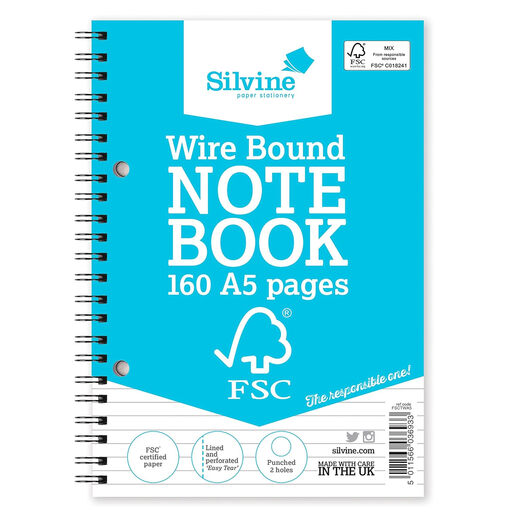
Why This Fits Their Persona: This multi-pack offers great value for students needing separate notebooks for different modules. The A5 size is ideal for carrying between lectures, and its eco-credentials appeal to those wanting to make a responsible choice.
The paper is made from FSC certified and recycled materials, offering a reliable quality that avoids the bleed-through common in cheap, non-certified paper. The wire binding is sturdy enough for daily rucksack travel.
Excellent value with a multi-pack of notebooks. Made from recycled notebooks materials, supporting sustainable forestry.
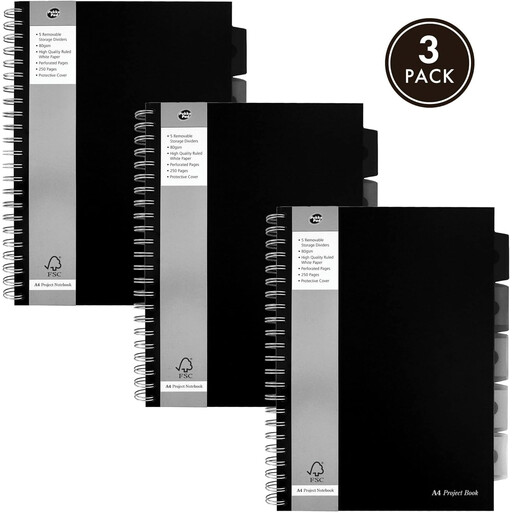
Why This Fits Their Persona: Ideal for managing multiple clients or projects. The large A4 size provides ample space for meeting minutes, while the durable cover and internal dividers keep everything professional and organised.
This A4 project book directly counters the "one-size-fits-all" myth with its built-in dividers. The robust polypropylene cover and quality 80gsm paper prevent the durability and bleed-through issues of lesser notebooks.
Features five repositionable, colour-coded dividers with storage pockets. The pages are micro-perforated for clean and easy removal.
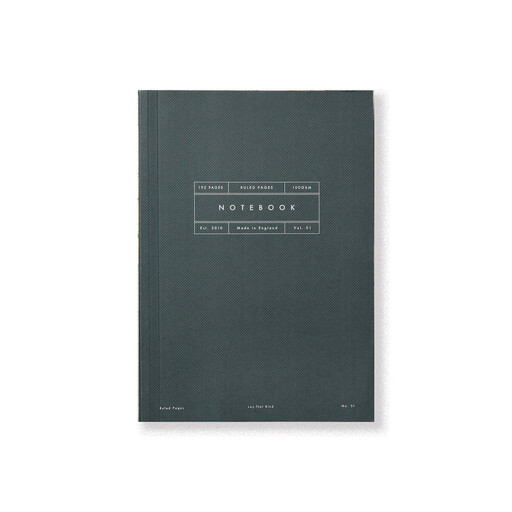
Why This Fits Their Persona: For those who see stationery as an accessory, this notebook combines a sophisticated aesthetic with a superior writing experience. It's perfect for personal journaling, creative writing or taking notes in a stylish setting.
The premium 100gsm ivory paper is specifically chosen to prevent ink bleed-through, even with fountain pens. Its durable 300gsm textured cover is built for longevity, avoiding the flimsy cover trap entirely.
Luxuriously smooth 100gsm paper enhances the writing experience. The elegant and durable textured cover adds a premium feel.
We have compiled a complete, real-time list of products that fully satisfy these strict selection criteria and UK safety regulations.
GSM stands for 'Grams per Square Metre' and indicates the paper's weight and thickness. A standard office notebook is typically 80gsm, which is great for everyday writing. A higher GSM, such as 100gsm, means thicker, more premium paper that is less likely to let ink bleed through, making it ideal for fountain pens or heavy-ink markers.
It depends on your needs. A standard spiral notebook is excellent for single-subject use, as it's lightweight and lies flat. A Pukka Pad project book, on the other hand, is designed for organising multiple subjects. It includes built-in notebooks with dividers, often with pockets, making it a complete organisational system for students or professionals juggling several projects at once.
Yes, modern recycled notebooks can be of excellent quality. Look for products with FSC (Forest Stewardship Council) certification, like the Silvine range. This ensures the paper comes from responsibly managed forests and recycled materials, and it often meets or exceeds the quality of non-recycled paper in the same price bracket. You don't have to compromise on quality to make an environmentally conscious choice.