Staff relabelling shelves occasionally
A portable machine suits short shelf, folder and storage labels made where they will be used, provided its tape is wide enough for the intended text. DYMO lists 6–12 mm labels for the LabelManager 280.


For occasional short shelf labels made away from a desk, start with a portable tape maker if its label width fits the shelf front. For repeated labels, a desktop tape maker offers wider tape and features such as saved layouts; consider a roll-fed printer when the required labels are wider still or need to be produced in batches. Check the label material and compatible supplies as well as the printer, particularly where shelves are cleaned or handled frequently.
A portable machine suits short shelf, folder and storage labels made where they will be used, provided its tape is wide enough for the intended text. DYMO lists 6–12 mm labels for the LabelManager 280.
Repeated shelf and cupboard labels make consistent layouts and cutting more useful. Brother lists stored labels and an automatic cutter for the PT-D610BTVP; its P-touch laminated TZe tape is a separate material choice to check against the surfaces being labelled.
If shelf-edge strips need more width than tape allows, compare roll-fed systems and their media. Brother describes QL paper labels up to 105 mm wide across that range, while Zebra specifies a 4-inch print width for the ZD421.
Choose it when: staff make occasional short labels beside shelves and a narrow tape fits the wording.
Trade-off: a 12 mm maximum, as on the DYMO LabelManager 280, leaves less room for prominent or multi-line text.
Choose it when: repeated labels call for wider tape and consistent layouts; Brother lists widths up to 24 mm, stored labels and automatic cutting for the PT-D610BTVP.
Trade-off: it is a desk-based approach, and replacement tape must match the machine.
Choose it when: the office needs wider shelf strips or recurring batches designed at a computer.
Trade-off: rolls and printer configuration need closer attention; for a Zebra ZD421, confirm whether the chosen version uses direct thermal or thermal transfer printing.
| Concern | What to check | Who this matters to |
|---|---|---|
| Repeat production | Check for saved layouts, the required computer or mobile connection, and an automatic cutter. | If I am labelling several rooms, I want wording and layouts that are easy to reuse. Roughly 33% of consumers would put repeat-production efficiency first. |
| Durable, legible labels | Check the exact tape or roll family and whether its material and adhesive suit the shelf surface and cleaning routine. | Labels on frequently handled cupboards need to stay readable through their intended use. Around 27% of consumers would make durability and legibility their primary concern. |
| Portable use | Check the maximum label width, power arrangement and whether labels can be edited without a computer. | For small changes around the office, I would rather take the maker to the shelf than prepare each label at a desk. About 20% of consumers would prioritise that portable workflow. |
| Wider formats | Measure the shelf front, then check print width, compatible roll sizes and print technology. | When a location name needs a larger shelf strip, narrow tape may not fit the layout. Roughly 20% of consumers would put wider-format output first. |
A short storage name may fit where a prominent location label will not. DYMO specifies a 12 mm maximum for the LabelManager 280, while Brother specifies up to 24 mm for the PT-D610BTVP.
Measure the usable shelf-front height and try the intended wording at the size staff need to read.
Brother’s resistance claims concern its P-touch laminated TZe labels, not every tape or paper roll. Material and surface choice matter when shelves are handled or cleaned.
Confirm the compatible cassette or roll, adhesive and intended use before ordering supplies.
A roll-fed machine adds media and configuration choices that may serve little purpose if occasional labels fit on tape.
Move to wider printing when the required layout or recurring batch work calls for it.
The Health and Safety Executive says an annual portable appliance test for every appliance is not automatically required in a low-risk office. Equipment still needs to be maintained so that it does not present a danger.
Follow the school’s electrical-equipment procedure and consider the equipment and its working environment when arranging checks.
Brother offers P-touch tape makers for shelf and storage labels alongside QL printers for wider paper labels.
The rechargeable LabelManager 280 is relevant to occasional labels made using its own keyboard or a connected computer.
The ZD421 is a desktop-printer option to examine when shelf or location labels require a substantially wider format.
These portable label makers and an office label printer offer different ways to prepare shelf labels. Match the finished label size, working location and compatible supplies to the job before choosing.
 No image available
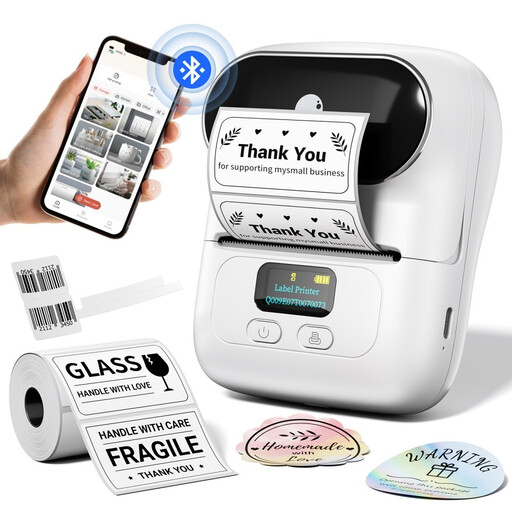
Consider this portable maker if labels need to be prepared around the office. Confirm that compatible rolls provide the size, adhesive and resistance needed for the intended shelves.
The product name includes one label roll.
 No image available
Consider this printer for labels prepared at an office desk rather than beside each shelf. Check that its connection method fits the workstation and that the chosen DK labels suit the shelf surface and cleaning routine.
 No image available
Consider this portable maker for short labels created away from a fixed desk. Its title states a 0.59-inch label width; confirm the compatible media, actual usable layout and label material against the shelf before buying.
Choose the width after measuring the shelf front and laying out the text at a readable size. DYMO specifies up to 12 mm for the LabelManager 280 and Brother up to 24 mm for the PT-D610BTVP; Brother also describes QL paper-label options up to 105 mm wide across that printer range when a wider format is needed.
Consider laminated tape when handling or routine cleaning makes label resistance important, but check the exact tape and shelf surface. Brother’s durability statements apply to its P-touch laminated TZe labels; paper rolls may suit wider or frequently changed indoor labels where their material meets the intended use.
Not for every job: a standalone keyboard can handle occasional short labels. Computer or mobile design becomes worth considering when staff need reusable layouts or repeated batches; DYMO lists standalone and PC/Mac operation for the LabelManager 280, while Brother lists Bluetooth and USB connectivity for the PT-D610BTVP.
An annual test is not automatically required for every portable appliance in a low-risk office, according to the Health and Safety Executive. The school should maintain electrical equipment so it does not present a danger and arrange checks appropriate to the equipment and its environment.