Who this suits

Families managing gluten avoidance

You need the pasta and every addition to fit the pupil’s dietary requirements, as well as the school’s allergy arrangements. The Food Standards Agency identifies wheat as a cereal containing gluten; ordinary wheat pasta is not a substitute for a suitable gluten-free product.

Families choosing a wholegrain lunch base

You want pasta as the main lunchbox item and are considering a wholewheat option the pupil will eat. The NHS suggests choosing wholegrain where possible; a wholewheat product still needs an allergen check.

Households preparing repeated pasta lunches

You want dried pasta to keep in the cupboard and a pack size that suits how often you cook it. Compare the exact shape, ingredients and cooking directions before settling on a regular lunch format.

What matters when choosing

Start with any dietary and school requirements, then consider the type of pasta and the quantity you will prepare.

Concern What to check Who this matters to
Gluten and school allergy arrangements Read the current pasta, sauce and topping labels; check the individual school’s allergy policy. If my pupil must avoid gluten, every part of the finished lunch needs to fit their requirements and the school’s arrangements. About 42% of consumers put this suitability concern first.
Wholegrain lunch base Check whether the exact product is wholewheat or wholegrain, and read its allergen declaration. When pasta is the main lunchbox item, I may want a wholegrain option that the pupil will eat. For about 33% of consumers, that choice is the primary concern.
Repeatable preparation Compare pack size, pasta shape and cooking directions for the lunches you plan. If I prepare pasta lunches regularly, I need a quantity and format that work for that routine. Making preparation practical comes first for about 25% of consumers.

Checks that are easy to miss

  • Assuming a different pasta shape or protein claim means gluten-free

    Neither shape nor a protein claim establishes gluten-free suitability. M&S lists durum wheat semolina in its High Protein Spaghetti, while the Food Standards Agency identifies wheat as a cereal containing gluten.

    Where gluten must be avoided, check for a specifically suitable product and read the current allergen information for every lunch ingredient.

  • Overlooking the school’s allergy arrangements

    For schools in England, Department for Education guidance says food brought from home should be considered in allergy-safety arrangements, and schools must publish an allergy safety policy.

    Check the individual school’s current policy and any pupil-specific plan before packing the lunch.

  • Choosing a pack without checking its contents

    Standard wheat pasta and free-from products can have different ingredients, shapes and pack sizes. A familiar product name does not replace the current label.

    Check the quantity, ingredients and allergen declaration on the exact pack you intend to use.

  • Checking the pasta but not the sauce

    A sauce adds ingredients of its own. Dolmio describes its Tomato and Basil Stir In as a sauce mixed into hot cooked pasta, not as part of the plain dried pasta.

    Read the sauce’s current ingredients, allergen information and nutrition panel when assessing the finished lunch.

Pasta and sauce brands to consider

Barilla

Barilla offers a Gluten Free Penne Rigate for shoppers considering a gluten-free pasta.

  • Barilla states that this product is certified gluten-free and made from corn and rice.
  • Check the current pack and all additions against the pupil’s requirements; the claim concerns this product, not every Barilla pasta.

Tesco

Tesco lists own-label Free From pasta, including fusilli.

  • The listed Free From Fusilli provides a short-shape option in a 500 g pack.
  • Read the exact product label rather than assuming every own-label pasta has the same ingredients.

Sainsbury's

Sainsbury's lists own-label Free From pasta, including fusilli.

  • Its listed Free From Fusilli is a 500 g pack to consider when that format suits the lunch plan.
  • Check the current ingredients and allergen statement for the particular product.

Asda

Asda’s standard Penne is a dried wheat-pasta option.

  • Asda lists its 500 g Penne as made from durum wheat semolina and suitable for ambient storage before cooking.
  • It contains wheat, so it does not suit a pupil who must avoid wheat or gluten.

M&S

M&S lists Made Without Wheat pasta alongside other pasta lines.

  • M&S describes its Made Without Wheat pasta as made from maize and rice flour.
  • Do not extend that description to other lines: its High Protein Spaghetti lists durum wheat semolina and declares gluten.

Dolmio

Dolmio is relevant here as a pasta-sauce brand, rather than a dried-pasta choice.

  • Dolmio says its Tomato and Basil Stir In is mixed into hot, freshly cooked pasta.
  • Assess the sauce as a separate ingredient, including its current allergen and nutrition information.

Joybuy pasta options for packed lunches

These options cover wholewheat fusilli for lunches where wheat is suitable and gluten-free-labelled lasagne sheets for a different pasta format. Check the exact pack and school arrangements before choosing for a pupil with dietary requirements.
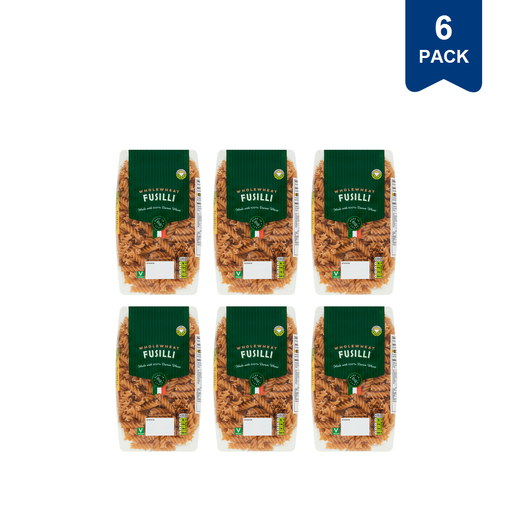
Morrisons Wholewheat Fusilli, six 500 g packs

Morrisons Wholewheat Fusilli, 6 × 500 g

Consider this multi-pack when you plan to prepare wholewheat fusilli for repeated lunches and wheat is suitable for the pupil.

Six 500 g packs. The pasta contains wheat; check the current label and the school’s allergy arrangements before packing it.

View on Joybuy
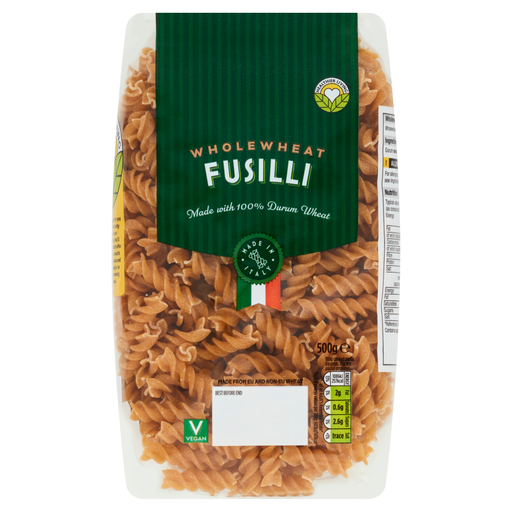
Morrisons Wholewheat Fusilli, 500 g pack

Morrisons Wholewheat Fusilli, 500 g

Choose the single pack if you want a smaller quantity of wholewheat fusilli for lunches where wheat is suitable.

One 500 g pack. This pasta contains wheat; check the current label and the school’s allergy arrangements.

View on Joybuy
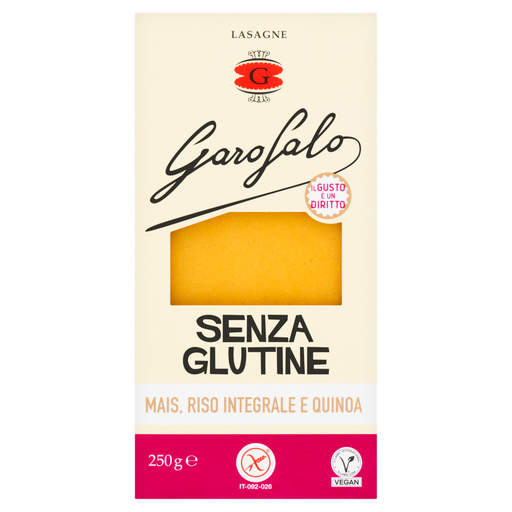
Garofalo Gluten Free Lasagne, 250 g pack

Garofalo Gluten Free Lasagne, 250 g

Consider these gluten-free-labelled lasagne sheets if that format suits the lunch you plan to prepare; they are not short-shape pasta for a typical cold pasta lunch.

One 250 g pack. Check the current pack’s allergen statement, date and preparation directions against the pupil’s needs before use.

View on Joybuy

Questions about pasta for packed lunches

Does ordinary dried pasta contain gluten?

Dried pasta made from durum wheat semolina contains wheat and gluten. The Food Standards Agency identifies wheat as a cereal containing gluten commonly found in pasta, so check the ingredients of the exact product rather than relying on the pasta shape.

Can gluten-free pasta go in a school packed lunch?

It can be an option when the exact product fits the pupil’s requirements and the school’s arrangements. In England, Department for Education guidance says schools must publish an allergy safety policy and consider food brought from home in their allergy-safety approach; check that policy and the current pack label before packing.

Is high-protein pasta also gluten-free?

Not necessarily. M&S High Protein Spaghetti lists durum wheat semolina and declares gluten, so check a gluten-free claim and the allergen statement separately from any protein description.

What if I want a wholegrain pasta lunch?

Look for a wholewheat or wholegrain pasta the pupil will eat, provided its ingredients suit them. The NHS suggests choosing wholegrain where possible for the main lunchbox item; wholewheat pasta still contains wheat and needs the usual allergen check.

Can I add a stir-in sauce?

Yes, if the sauce suits the pupil and the finished lunch fits the school’s arrangements. Dolmio says its Tomato and Basil Stir In is mixed into hot cooked pasta; check the sauce’s current ingredients, allergens and nutrition information separately from the pasta.