Parents preparing lunch before school
A dried pasta-and-sauce sachet may suit a morning routine with time and equipment for cooking. The Batchelors sachets described by ASDA Groceries need water; the cheese-and-broccoli version also needs milk.


Choose a dried pasta-and-sauce sachet if you want pasta and sauce in one cupboard-stored pack and can cook it before lunch; it is not ready to eat straight from the packet. Choose a jarred sauce with separately cooked pasta when selecting the pasta, ingredients or quantity yourself matters more than having a combined pack. For either route, check the exact product label, the school’s allergy arrangements and how the prepared lunch will be kept until it is eaten.
The choice turns on whether you need a combined pack for cooking before school or prefer to prepare pasta and sauce separately.
A dried pasta-and-sauce sachet may suit a morning routine with time and equipment for cooking. The Batchelors sachets described by ASDA Groceries need water; the cheese-and-broccoli version also needs milk.
Check the current label for the exact flavour rather than assuming all packs have the same ingredients. For schools in England, the Department for Education says schools must publish an allergy safety policy; check that school’s arrangements for food brought from home.
Jarred sauce lets you select and cook the pasta separately, which may suit a larger batch or a preferred pasta shape. Dolmio describes its Original Bolognese as a sauce for separately cooked pasta, while Napolina describes stirring its sauces through hot pasta.
Start with the exact pack and school arrangements, then work through storage, preparation and portion planning. A dry pack still becomes a prepared lunch once cooked.
| Concern | What to check | Who this matters to |
|---|---|---|
| Allergens and school arrangements | Read the current allergen and may-contain statements for the exact pack. Check the school’s allergy arrangements where relevant. | If I am packing for a pupil with an allergy, I need to know whether this particular flavour fits their requirements and the school’s arrangements. About 28% of consumers put that fit first. |
| Keeping prepared food cold | Plan how food containing perishable ingredients, such as dairy or meat, will be kept cold until eaten. | A lunch prepared in the morning may sit for hours before it is eaten; I need a way to carry a perishable version safely. Keeping the prepared food cold is the primary concern for about 28% of consumers. |
| Cooking before packing | Check the pack’s cooking method and required liquids against the time and equipment available. | If mornings are rushed, I need to know that I can cook the pasta before it goes in the lunchbox. About 17% of consumers chiefly need a manageable preparation routine. |
| Portion planning | Check the pack’s serving guidance and decide what else will go in the lunch. | When I am deciding whether the pasta is the main item or one part of lunch, the pack’s portion guidance matters. Getting that portion plan right comes first for about 16% of consumers. |
| Dietary and flavour fit | Read the ingredients and any dietary statement for the exact flavour; check allergens separately. | A flavour might appeal to the pupil but still contain an ingredient our household avoids. For about 11% of consumers, that dietary or flavour choice is the primary buying concern. |
ASDA Groceries lists wheat in the researched Batchelors tomato and cheese-and-broccoli sachets; its cheese-and-broccoli listing also names milk. Safefood advises keeping packed-lunch foods that spoil quickly, including dairy and meat, as cold as possible until they are eaten. These checks concern the prepared meal as well as the dry pack.
The Batchelors pasta-and-sauce sachets described by ASDA Groceries need cooking. The cheese-and-broccoli version requires milk as well as water.
Read the preparation instructions before buying and make sure cooking fits the school-day routine.
Allow for the required liquids, cooking equipment, preparation time and washing-up.
ASDA Groceries lists wheat and a possible milk presence for the tomato, onion and herb sachet, but wheat and milk for the cheese-and-broccoli sachet. Its smoky cheese-and-pancetta listing names further possible allergens and contains pork.
Use the current label for the exact product and check the school’s allergy arrangements where they apply.
A cupboard-stored product needs a different storage plan after preparation. Safefood advises keeping quickly perishable packed-lunch foods, including dairy and meat, as cold as possible until eaten.
Plan suitable cold storage for a prepared lunch with perishable ingredients, and keep it away from heat.
An insulated lunch bag or box may be useful, alongside a way to keep the food cold.
Serving guidance describes the product’s portions; it does not settle what else a particular pupil will take for lunch.
Check the exact pack’s serving directions and plan the rest of the lunch accordingly.
These brands illustrate the combined dry-pack and separate-sauce routes; their products are not interchangeable without checking the exact label and preparation instructions.
The researched Pasta ’n’ Sauce sachets combine dried pasta and sauce mix for cooking before eating.
Dolmio’s researched Original Bolognese is a jarred sauce route for use with separately cooked pasta.
Napolina describes its stir-in sauces as an option for pasta that has already been cooked.
These packs and pots combine pasta with sauce for preparation before a secondary-school packed lunch. Check each current pack’s instructions, ingredients and serving guidance before deciding what to pack.
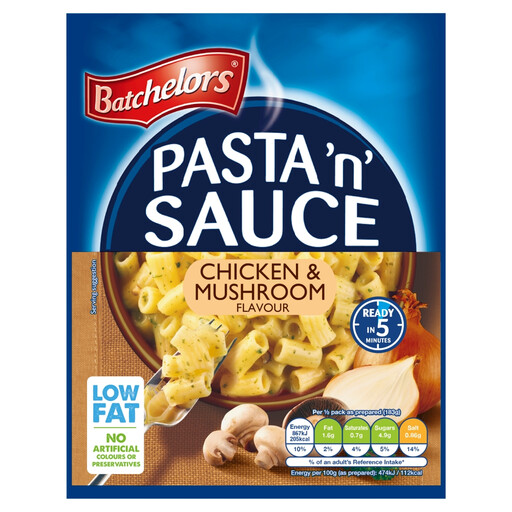 Image unavailable
This combined pasta-and-sauce sachet may suit a lunch prepared before school when cooking is possible. It is a 99g chicken-and-mushroom flavour pack. Check its current directions for the required liquids and cooking method, and check its allergen statement before packing.
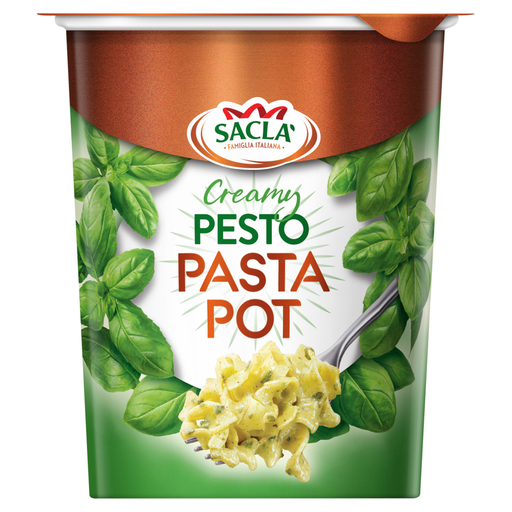 Image unavailable
This combined pasta-and-sauce pot offers a different format for a lunch cooked before it is packed. The pack is an 80g creamy pesto pasta pot. Follow the preparation method on the current pack, and check its ingredients and the plan for keeping the prepared lunch until it is eaten.
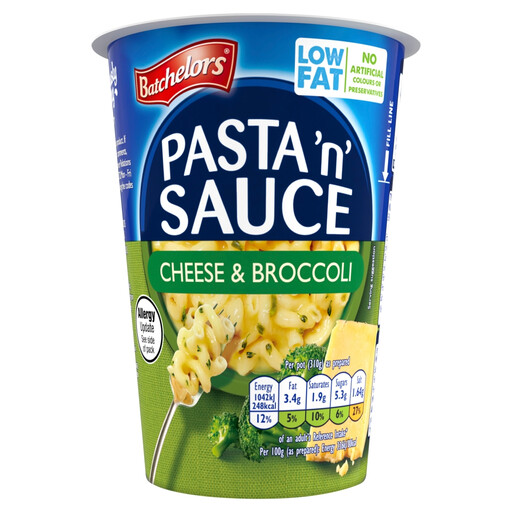 Image unavailable
This 65g cheese-and-broccoli pot is a combined pasta-and-sauce option for preparation before lunch. Check this pot’s own directions and allergen statement: instructions for a Batchelors cheese-and-broccoli sachet of a different size should not be used in their place. Plan how the prepared food will be kept until lunchtime.
Not as a ready-to-eat pasta lunch. The Batchelors sachets described by ASDA Groceries need cooking: the researched tomato, onion and herb version uses water, while the cheese-and-broccoli version uses water and milk. Check the directions on the pack you buy before preparing it.
No. ASDA Groceries lists wheat and a possible milk presence for the researched Batchelors tomato, onion and herb sachet, and wheat and milk for its cheese-and-broccoli sachet. Read the current allergen and may-contain statements for the exact flavour and pack size.
Check the individual school’s published policy alongside the pupil’s requirements and the exact product label. In England, the Department for Education says schools must publish an allergy safety policy and should consider food brought from home in their allergy-safety approaches; that guidance does not determine whether a particular lunch is suitable at every school.
Keep perishable food as cold as possible until it is eaten. Safefood advises using an insulated lunch box or bag for foods that spoil quickly, including dairy and meat, and discarding uneaten perishable food at the end of the day.
No. The Department for Education describes England’s school food standards as applying to food and drink provided to pupils on school premises. For food brought from home, check the individual school’s packed-lunch and allergy arrangements rather than treating those standards as approval of a particular product.