Parents and carers packing school lunches
Individually wrapped bars make it easier to set aside portions for the school week. Check the number and size of those portions, the nutrition label and the school’s food policy before stocking up.


For school-term lunchboxes, choose a snack-bar pack by counting portions you can use, then checking the exact bar’s ingredients, nutrition label and your school’s food policy. Oat bars, fruit-and-nut bars and protein flapjacks offer different portion sizes and ingredients; none is suitable for every child or a substitute for the rest of lunch.
Individually wrapped bars make it easier to set aside portions for the school week. Check the number and size of those portions, the nutrition label and the school’s food policy before stocking up.
The exact flavour matters. Bars in these ranges can contain oats, peanuts, tree nuts, milk or soya, and some carry may-contain statements even when they are labelled vegan or gluten-free.
A 40g or 50g fruit-and-nut bar or flapjack may be worth considering instead of a smaller cereal bar. Compare its ingredients, portion label and allergen statement rather than choosing by a protein claim alone.
Start with the portions you would pack, then check whether the exact bar fits the eater and the school’s rules.
| Priority | What to check | Your needs |
|---|---|---|
| Usable portions | Count bars and wrapped portions; compare net weight and grams per portion. A 5 × 19g pack and a 5 × 42g pack contain different amounts. | I need enough portions of a size that will actually go into the lunchboxes I pack. |
| Nutrition label | Read the per-portion sugars, salt and energy figures alongside ingredients and any traffic-light colours. NHS guidance advises looking for more greens and ambers and cutting down on packaged snacks showing reds. | An oat, fruit or protein label alone does not tell me whether this particular bar fits the rest of lunch. |
| Allergens and diet | Check the exact flavour’s ingredients, highlighted allergens and may-contain statement. Vegan or gluten-free wording does not establish that a bar is free from nuts, peanuts or every other relevant allergen. | Before buying several packs, I need to know the intended eater can have this exact bar. |
| School policy | Check the individual school’s published food policy, particularly any restrictions relevant to packed lunches and allergies. Department for Education school-food guidance concerns food and drink provided in state-funded schools in England; it does not settle every home-packed-lunch question. | I want to know whether the bars can be sent to this school, not assume that one rule applies everywhere. |
| Place in lunch | Consider what else is being packed. NHS guidance treats fruit and vegetables as the preferred snack choice and packaged bars as snacks, not the whole lunchbox. | A convenient bar needs to fit alongside the other food I plan to pack. |
The ingredients or may-contain statement could make an otherwise convenient pack unsuitable for its intended eater. A school may also have its own packed-lunch policy.
Read the current label for the exact flavour and check the school’s policy before buying several packs. Do not treat vegan, gluten-free or no-added-sugar wording as an all-allergen clearance.
Those descriptions do not replace the full label. For example, Nature Valley lists 11.3g sugars per 42g Oats & Honey portion, while Tesco lists 13g sugars per 45g nākd Peanut Butter Protein bar despite its no-added-sugar wording.
Compare figures for the portion that will be eaten, along with the ingredients and traffic-light colours. Treat a bar as a snack component rather than a replacement for fruit and vegetables.
A product page does not guarantee that a pack can be delivered or collected when you need it.
Confirm availability for your location before planning around a particular pack, and identify an alternative whose ingredients and allergen information also fit.
The Cocoa Vanilla Oat Boost is a four-pack of 30g flapjacks for smaller, individually portioned snacks.
Its Oats & Honey range includes twin-bar portions, with pack formats of different sizes.
The Chocolate & Fudge cereal bars provide a smaller 19g bar in a five-pack.
Fruit-and-nut bars include individually wrapped varieties with ingredients that differ by flavour.
The Peanut Butter Protein three-pack is a fruit-and-peanut option with 45g bars.
Protein flapjacks offer a 50g bar format for shoppers comparing larger portable snacks.
These oat-bar, fruit-and-nut-bar and flapjack multipacks offer different portion counts and sizes for school-term planning. Check each exact pack’s current label and your school’s policy before stocking up.
 No image available
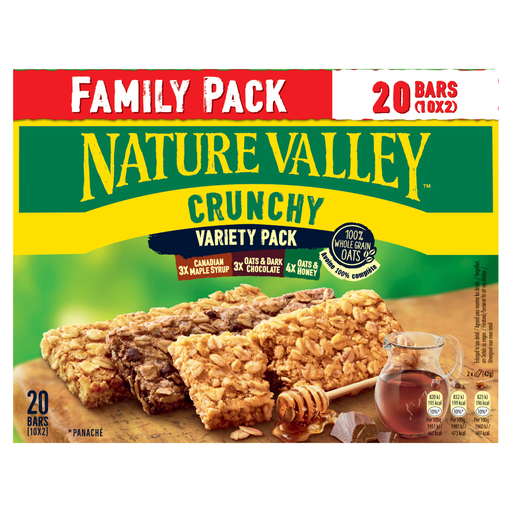
The ten-portion oat-bar format offers a way to plan several lunchboxes. Check the individual flavours’ ingredients and allergen statements before using the whole pack.
 No image available
This 16-bar pack offers 50g cocoa-oat flapjacks for shoppers considering a larger individual portion. Check the current per-bar nutrition and allergen label for this flavour.
 No image available
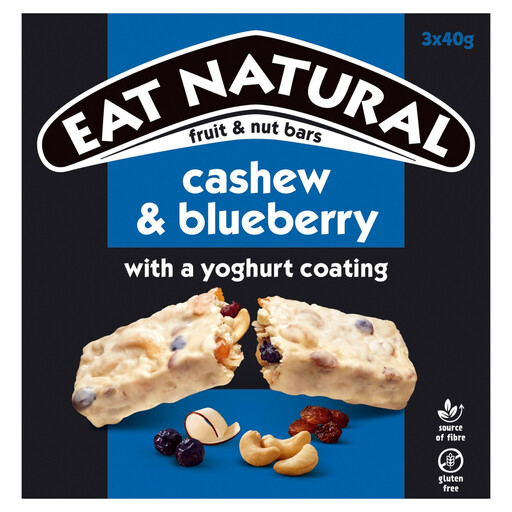
This three-pack provides 40g fruit-and-nut bars. Cashews are part of this flavour’s identity; read its full ingredients and may-contain statement where allergies or school rules matter.
 No image available
The three-pack lets you consider a 50g cocoa-oat flapjack without choosing the 16-bar format. Compare its current ingredients, allergen statement and per-bar figures with the larger pack rather than assuming they are identical.
 No image available
Four 30g oat flapjacks provide smaller individual portions than the 40g and 50g options shown here. Check the Cherry Bakewell ingredients and nutrition label rather than using figures from another Graze flavour.
No. NHS guidance treats packaged bars as snacks and identifies fruit and vegetables as the preferred snack choice. Consider the bar’s label alongside everything else being packed, rather than relying on an oat, fruit or protein description.
Look at the number of usable portions, total net weight and grams per portion. Five 19g bars and five 42g portions are different quantities, even though both packs contain five portions.
No. Tesco lists 13g sugars per 45g nākd Peanut Butter Protein bar despite its no-added-sugar wording. Read the sugars figure for the portion as well as the claim on the front.
Read the exact flavour’s ingredients, highlighted allergens and may-contain statement. UK government guidance identifies cereals containing gluten, milk, peanuts, soya and tree nuts among regulated allergens; snack-bar recipes can involve several of them.
No. Department for Education guidance addresses food and drink provided in state-funded schools in England, not a universal rule for every home-packed lunch. Check the individual school’s published food policy before choosing bars for its lunchboxes.