For a first school table runner, choose a machine that can sew controlled straight seams and that the learner can practise using before cutting the final fabric. A compact mini machine may suit occasional work when storage is tight, provided it handles a test seam in the project fabric. A full-size beginner machine is worth considering for continued sewing, while computerised features are more relevant if later projects will use them.
Who is the machine for?
First-time school-project sewer
A learner or family making one table runner may value simple controls, a manageable setup and time to practise a straight seam. John Lewis & Partners suggests starting with an entry-level mechanical machine for someone new to sewing.
Repeat craft learner
Someone planning more projects after the table runner may want to consider additional stitches, adjustable speed or more work space. Janome UK & Ireland lists speed control and an extra-wide table on its 230DC; those features belong to that model, not every computerised machine.
Space-limited occasional maker
A buyer who must put the machine away after light craft work may prefer to check its size and carrying arrangements. A compact machine still needs a test on the runner's actual fabric and folded hem.
What matters when choosing?
Compact mini machine
Consider it when: Light craft work is occasional and storage space is limited.
Trade-off: Test the intended fabric and folded hem; basic craft features do not establish how a mini machine will handle every runner material or repeated use.
Full-size beginner mechanical machine
Consider it when: The learner wants a straightforward machine for this project and expects to keep sewing. John Lewis & Partners recommends entry-level mechanical machines as a starting point for newcomers.
Trade-off: Allow room to use and store the machine; extra stitch choices need not drive a purchase for a plain runner.
Computerised machine
Consider it when: Later projects would make use of features such as speed control or a wider work surface, both listed by Janome UK & Ireland for its 230DC.
Trade-off: Set aside practice time for the controls; additional stitch options are not essential to a basic rectangular runner.
| Concern |
What to check |
Who this matters to |
| Straight seams and hems |
Check forward and reverse stitching, how speed is controlled, and whether a sample of the intended fabric feeds as needed. |
If I need to keep long seams aligned, I want a pace I can control and enough support for the fabric. Around 44% of consumers put seam and hem control first. |
| Setup and threading |
Check the bobbin arrangement and threading instructions, then practise setting up the exact machine. |
When the school deadline is close, I want to spend less time working out how to thread the machine. For around 33% of consumers, straightforward setup is the primary need. |
| Storage and occasional use |
Check the machine's dimensions and what is supplied for power and operation; test the project fabric before relying on a compact model. |
If the machine must be put away after this project, I need it to fit the available storage space. Compact storage is the main concern for around 23% of consumers. |
Common buying mistakes
-
Choosing by stitch count alone
A plain table runner calls mainly for straight seams and finished edges; decorative options do not resolve difficulties with pace, alignment or setup.
Prioritise a straight stitch you can control, reverse stitching and threading you can practise before comparing stitch libraries.
-
Treating every mini machine like a full-size model
A compact listing may describe basic seams and hems without establishing how the machine will handle the project's folded layers or repeated sewing.
Sew a sample seam and hem in the intended fabric before cutting the runner. If further projects are planned, compare the exact machines for those uses rather than assuming they are interchangeable.
-
Overlooking seller and warranty conditions
Access to support can matter when a beginner needs setup help or encounters a fault near the deadline. Janome UK & Ireland says purchase through an official UK retailer is important for its after-sales care and warranty.
Check the seller, the exact model's guarantee terms and the applicable returns process before ordering.
-
Waiting until the final fabric is cut to practise
Threading, bobbin placement and speed control take practice, even on a machine with beginner-oriented features.
Thread the machine and sew a sample seam and folded hem using the same fabric layers planned for the runner.
Brands to consider
Janome
Janome UK & Ireland lists both mechanical and computerised machines relevant to a learner choosing between simple controls and features for later projects.
- Janome describes the mechanical Sewist 725S with 25 stitches, a top-loading bobbin, needle threader and LED light.
- Features vary by model. Janome also links its UK after-sales care and warranty to purchase through an official UK retailer.
Singer
The Singer M2405 is a conventional sewing-machine option listed by John Lewis & Partners.
- It gives buyers a specific model to compare with other machines for the project.
- Check the M2405's controls and suitability for the intended fabric rather than treating buyer reviews as a test of every material.
Brother
John Lewis & Partners lists Brother models including the LK14S, XN1700 and FS140, giving buyers several exact models to compare.
- The retailer lists a three-year guarantee for the FS140; check the terms for the model and seller you choose.
- Do not assume a work-table accessory or suitability for thicker fabric carries across Brother models. Confirm the contents and fabric guidance for the exact machine.
IAGREEA
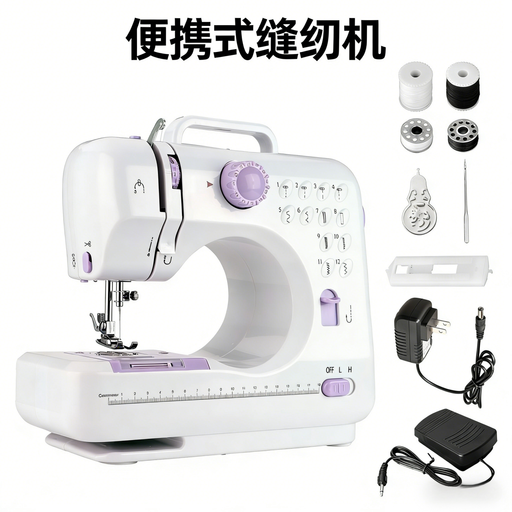
The IAGREEA compact mini machine is an option to examine for occasional light craft work where storage matters.
- Its Joybuy product description lists 12 stitch patterns, forward and reverse sewing, an LED light and two speed settings.
- Those listed features do not establish durability, handling of the runner's folded layers or the availability of replacement parts.
Joybuy machines for compact craft use
This compact machine is relevant if the table runner is an occasional light-fabric project and the machine must be stored away afterwards. Test the exact fabric and hem layers before relying on it for the finished runner.
 No image available
IAGREEA Mini Portable Electric Sewing Machine, 12 Stitches, Dual Power, Purple
Consider this compact machine for occasional craft seams and hems if a test with the runner's fabric and folded layers goes well.
The product description lists 12 stitches, dual power, an LED light, forward and reverse sewing, and two speed settings.
Check the seller's warranty and returns terms before buying. Keep fingers clear of moving parts, and switch off and unplug the machine before threading or changing a needle.
Joybuy
Frequently asked questions
Is a mini sewing machine enough for a school table runner?
A mini machine may be enough for occasional work in light fabric if it sews a satisfactory sample seam and folded hem in the exact material. The IAGREEA product description covers basic seams, hems and two speed settings, but those features do not establish performance on thicker layers or equivalence to a full-size machine.
Which features should a beginner check first?
Start with a straight stitch, reverse sewing, controllable speed and threading and bobbin steps the learner can practise. Check that the machine and work area let the intended fabric move through a sample seam without relying on decorative stitches to solve alignment problems.
Does the retailer matter for Janome warranty support?
Yes: Janome UK & Ireland says buying through an official UK retailer is important for its after-sales care and warranty. Check the terms for the exact model and seller before ordering; other brands' arrangements need their own checks.
What should be checked before a learner uses the machine at school?
Follow the school's risk assessment and supervision arrangements and read the manual for the exact machine. Keep fingers clear of the needle area, and switch off before rethreading or changing a needle. Health and Safety Executive material identifies machinery hazards, but its industrial textile-machinery guidance does not set a domestic sewing-machine rule for this school project.


