Cinematic HDR explorers
If dark spacecraft interiors, stars and neon-lit worlds are central to your play, look beyond an HDR label to the exact monitor’s contrast and highlight performance. RTINGS identifies both as important to HDR image quality.


Choose a 32-inch 4K QD-OLED monitor if detailed environments, a conventional screen shape and HDR contrast matter most. A 34-inch 21:9 OLED is worth considering if a wider view of exploration and cockpit scenes matters more, provided your games handle that format as you expect. Either way, check your PC’s frame rates and whether its connection supports the resolution, refresh rate and variable refresh rate you intend to use.
If dark spacecraft interiors, stars and neon-lit worlds are central to your play, look beyond an HDR label to the exact monitor’s contrast and highlight performance. RTINGS identifies both as important to HDR image quality.
If you want more horizontal space for exploration or cockpit-style play, consider a 21:9 display—but check how your own games present that aspect ratio and whether the screen fits your desk.
If the same screen also displays guides, chat and work documents, assess small-text comfort alongside game specifications. RTINGS notes that resolution alone does not determine perceived text clarity.
Choose it when: Detailed environments and a conventional screen shape take priority, and your device can supply the 4K mode you want.
Allow for: The graphics-card workload at 4K; a 240Hz panel does not make a game run at 240 frames per second.
Choose it when: A broad view of spaceflight and large environments matters more to you than 4K detail.
Allow for: Differences in how games present 21:9, as well as the screen’s width, curve and viewing distance at your desk.
| Concern | What to check | Who this matters to |
|---|---|---|
| HDR contrast and colour | Compare exact-model HDR performance, including contrast and highlights, rather than relying on an HDR badge. RTINGS identifies these as important to HDR image quality. | In dark stations and neon-lit cities, I want the lighting and shadows to carry the scene. Around 40% of consumers put HDR image quality first. |
| A wider world view | Check the aspect ratio, desk fit and how your RPGs present ultrawide scenes and interfaces. | For exploration and cockpit scenes, I would rather have more horizontal view than a conventional screen shape. Roughly 30% of consumers prioritise that wider presentation. |
| Smooth play on your PC | Check game frame rates at your intended resolution, variable refresh rate compatibility and the mode supported by your chosen port. | When a demanding area slows my game down, I care more about a workable match between the PC and monitor than the highest refresh-rate figure. About 20% of consumers make performance fit their primary concern. |
| Text and desktop comfort | Inspect exact-model text-clarity tests and consider your usual scaling and viewing distance; RTINGS notes that perceived clarity is partly subjective. | If I spend long sessions reading dialogue, guides and documents, small-text comfort matters beyond the game image. Around 10% of consumers put mixed-use readability first. |
An HDR label alone does not tell you how a monitor handles dark scenes and bright highlights. RTINGS points to contrast and highlight performance as important parts of the result.
Compare the exact model’s HDR certification and independent HDR testing where available.
A monitor’s refresh rate cannot create frames that your PC does not produce. A game running at 100 frames per second will not make full use of a 240Hz display.
Check frame rates in the RPGs and demanding settings you intend to use before deciding which refresh rate matters to you.
A wider format changes the space available for game scenes and interfaces, but whether you prefer the result depends on the game and your desk setup.
Check your games’ 21:9 presentation and measure the space for the screen and stand.
Resolution is not the only influence on readable guides, menus and desktop documents. RTINGS also discusses subpixel rendering and the subjective nature of text clarity.
Look for text-clarity testing of the exact model and assess it at the scaling and viewing distance you normally use.
Dell UK lists the Alienware AW3225QF as a 32-inch, 3840 × 2160 QD-OLED monitor with a 240Hz refresh rate.
LG UK lists the 34GS95QE-W as a curved 34-inch, 3440 × 1440, 21:9 OLED monitor with a 240Hz refresh rate.
ASUS ROG UK specifies the PG32UCDM as a 32-inch 4K QD-OLED monitor with 240Hz, HDMI 2.1, DisplayPort 1.4 and USB-C with 90W Power Delivery.
These monitors cover ultrawide play, a standard-width OLED option and a 4K Nano IPS option. Choose by the screen shape and resolution you want, then check game support and your PC’s display modes.
 No image available
Consider this for a wider RPG view if your games’ ultrawide presentation suits you. The product name specifies WQHD and 240Hz; check desk fit, text comfort and the display mode your PC can supply.
 No image available
This 32:9 option is for consumers considering a particularly wide RPG view. Its name specifies an 1800R curve, 240Hz, AMD FreeSync Premium and DisplayHDR 400 True Black; check 32:9 game presentation, desk space and PC performance before choosing it.
 No image available
Consider this if you want an OLED panel in a standard-width, 27-inch QHD setup rather than an ultrawide. Its name specifies 240Hz and a 0.03ms response-time figure; assess exact-model HDR performance and text comfort if either is important to you.
 No image available
This is a 4K option if detail matters to you but you are not specifically choosing an OLED panel. Its name specifies dual-mode 240Hz/480Hz operation, DisplayHDR 600, FreeSync Premium Pro, DisplayPort 2.1 and HDMI 2.1; check which resolution each mode uses and whether your PC supports your intended setting.
 No image available
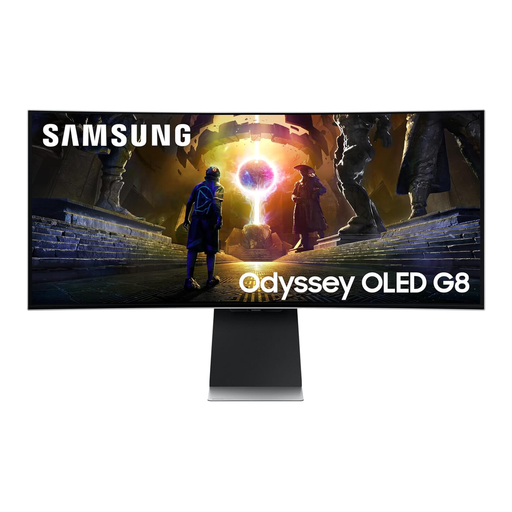
Consider this for wide-screen RPG play if its curved format fits your desk and your games present well on it. The product name specifies WQHD and 175Hz; check exact-model variable refresh rate support, text comfort and the display modes available from your PC.
No: choose a refresh rate in light of the frame rates your games and PC can deliver at your preferred resolution. A 240Hz monitor does not make a game running at 100 frames per second run at 240 frames per second.
Check the exact monitor’s compatibility, your NVIDIA GPU and operating system, and the connection and settings you intend to use. NVIDIA describes G-SYNC as matching monitor refresh rate to GPU frame rate to address tearing and minimise stutter and input lag.
No: HDR image quality depends on more than the label. RTINGS highlights contrast and bright highlights as important, so compare evidence for the exact monitor rather than treating its HDR designation as the whole answer.
Follow the care guidance for the exact monitor and check its current warranty terms. ASUS describes OLED Care and cooling measures on its PG32UCDM as intended to reduce burn-in risk; that model-specific manufacturer claim does not mean image retention is impossible.
Contact the retailer and keep your order and fault details. GOV.UK states that consumer law protects purchases of faulty goods made remotely or in person; the appropriate remedy depends on the circumstances of the fault.