
24/7 Customer Support

Free returns

Same-day & Next-day Delivery

Quality Guaranteed

Unlock Your Welcome Offers: FREE Delivery | Up to 80% OFF | Free 30-day JoyPlus trial
Download the APP
Choosing science kits for kids can be harder than it appears. A colourful box may promise hours of discovery, yet some sets contain only a few repeatable activities, require extra household materials or prove too complicated for the stated age range.
Parents, grandparents, carers, teachers and home educators should look beyond dramatic packaging. The right kit should match the child’s age, interest and attention span while offering clear instructions, suitable equipment and realistic supervision requirements.
“Dozens of experiments” sounds appealing, but the number alone does not indicate how useful or reusable a kit will be. Some activities may be variations of the same process, while others depend on consumables that are quickly used.
Check whether the set includes:
For example, a crystal growing kit may offer several formations but still require patience and careful preparation. This can be valuable learning, provided the child understands that results may take time.
Chemistry kits for children and kits containing chemicals should never be judged solely by the front-of-box age recommendation. Look for warnings about small parts, eye protection, skin contact, ingestion and adult supervision.
A kit suitable from age eight may still require an adult to prepare materials, monitor the activity and clean the work area. Battery-powered STEM science kits also need care: button batteries can be hazardous if swallowed, so unused and used batteries should be kept away from young children.
A child fascinated by machines may quickly lose interest in a plant-growing set, while a keen geologist may find a simple slime science kit limiting. Match the subject to the learner:
Age guidance is a starting point, not a guarantee of independent use. For younger children, educational toys for ages 4-14 should have short, simple activities and large, easy-to-handle components. The Science Mad Early Skills Science Lab is listed from age four and includes 10 experiments with a 28-page illustrated manual.
Older children may be ready for multi-step activities. The Science Mad Chemistry Lab is listed from age 10 and includes more than 80 experiments, 10 laboratory chemicals, 21 pieces of equipment and a 50-plus-page manual. Its methylated spirit burner and chemical materials make direct adult supervision particularly important.
Compare what is included rather than relying on phrases such as “complete lab”. A useful kit should identify the equipment and materials clearly. Look for items such as:
For electrical circuit kits, check the power source and components. The Science Mad SM37 Electrical Circuit Lab requires two AA batteries, which are not included. The Science Mad 2 in 1 Plasma Globe and Energy Stick Set uses four AA batteries and three AG10 button cell batteries, listed as included.
Before purchase, read the product warnings and follow the supplied instructions. Check for CE or UKCA marking where applicable, an appropriate age label and warnings written clearly for the UK market. These indicators do not remove the need for supervision.
Also consider where the activity will take place. Slime, plaster, dyes and chemical solutions can stain surfaces. Use a washable worktop, protect clothing, keep food away from the experiment area and wash hands afterwards. Never transfer kit chemicals into unlabelled containers.
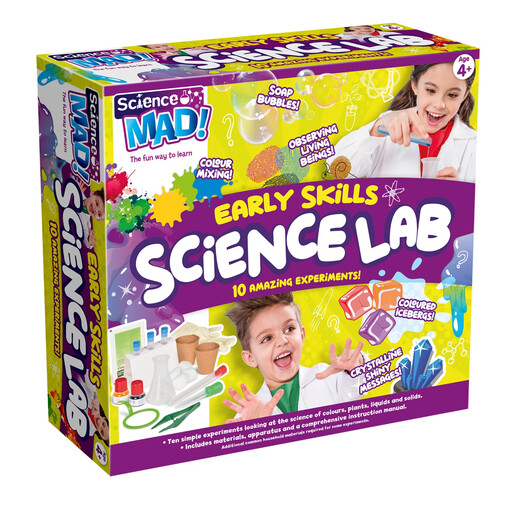
Why This Fits Their Persona: A manageable introduction for children from age four, suitable for short, supervised activities at home or in an early-years learning setting.
Its age guidance and illustrated 28-page manual make the activity scope clearer than a kit relying on vague claims about endless experiments.
Includes test tubes, a flask, a pipette, food colouring and seeds; no batteries are required.
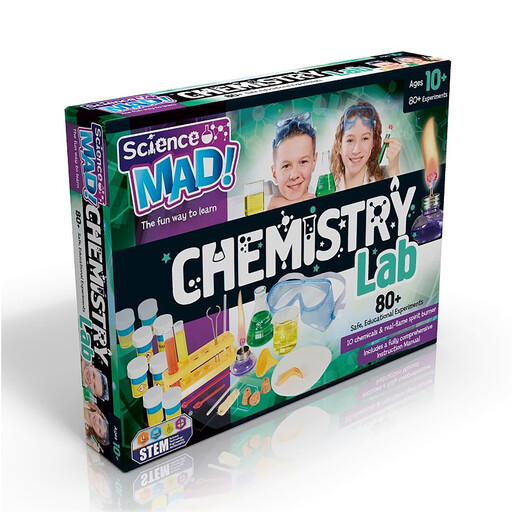
Why This Fits Their Persona: Designed for children from age 10 who want a structured home laboratory experience rather than a single demonstration.
The listed experiment count is supported by named equipment, chemicals and a detailed manual, while the warnings make adult supervision explicit.
Includes 21 pieces of lab equipment, 10 chemicals, safety glasses and a 50-plus-page instruction manual.
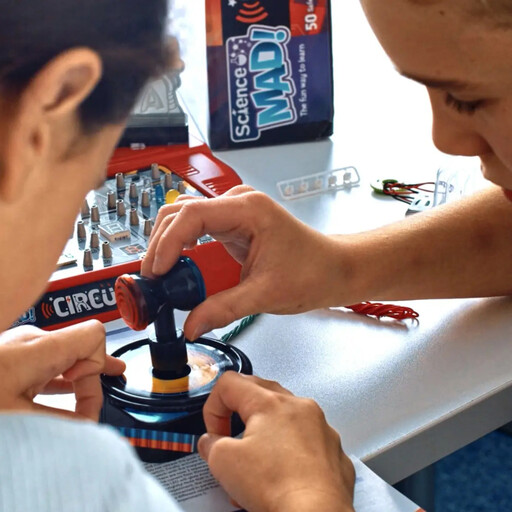
Why This Fits Their Persona: A focused choice for children from age eight who prefer building, connecting and troubleshooting over mixing substances.
It has a defined learning purpose and reusable circuit components, avoiding a kit that depends mainly on short-lived consumables.
Supports multiple basic circuit structures and includes detailed guides; it requires two AA batteries, sold separately.
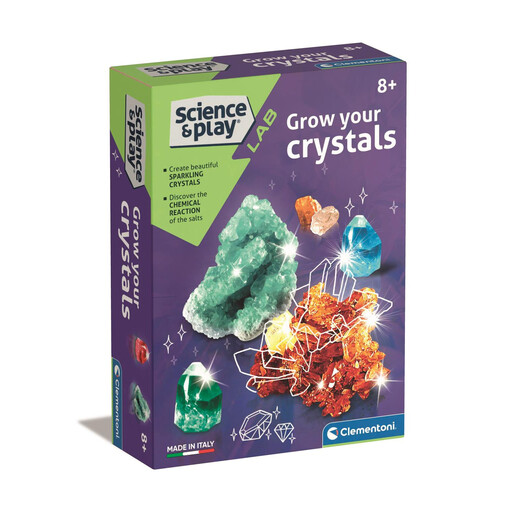
Why This Fits Their Persona: Suitable for ages eight to 14, this set fits children who enjoy observing gradual changes and learning about geology and chemistry.
The activity has a clear outcome—growing crystal formations—and includes an illustrated manual explaining the process rather than relying only on visual effects.
Includes plaster moulds, beakers, blotting paper and materials for translucent, coloured crystal formations; no batteries are required.
We have compiled a complete, real-time list of products that fully satisfy these strict selection criteria and UK safety regulations.
Many are designed for home use, but suitability depends on the activity. Simple plant, slime or circuit projects may work well on a protected kitchen table. Chemical activities, burners, plaster excavation and experiments involving heat require direct adult supervision. Always follow the product instructions and keep children and pets away from the work area.
This varies by design. Reusable equipment in an electrical circuit kit or laboratory set may support repeated activities, while crystals, slime and cosmetic materials are consumable. Check the contents list before buying and consider whether replacement ingredients are readily available.
Some do. Batteries, household ingredients, water, cleaning materials or replacement chemicals may be needed. For example, the Science Mad SM37 Electrical Circuit Lab requires two AA batteries, while the Discovery Electrical Circuit Action Experiment Set also lists two AA batteries as not included. Factoring in these small costs helps avoid surprises after purchase.