Who might choose each format?
The useful distinction at breakfast is whether you want a declared dark-chocolate basis, a water-mixed drink or a product that meets a guest’s allergy requirements.
Dark-cocoa breakfast drinkers
If a pronounced cocoa character matters more than quick preparation, look at declared dark-chocolate percentages and the instructions for making the drink. Marks & Spencer lists 72% minimum cocoa solids for its 72% Dark Drinking Chocolate and directs you to stir it into hot milk; check the current pack for allergy suitability.
Hosts making several breakfast dishes
A measured water-mixed option may be easier to prepare alongside a full Scottish breakfast. Tesco and Twinings give instructions for making Options Belgian Choc with 11 g powder and 200 ml hot water; Twinings suggests adding a little milk if you want a creamier drink.
People checking for food allergies
Check the current pack for every drink you plan to serve, rather than treating “dark” or “Belgian” as an allergy indication. Marks & Spencer warns that its Belgian Dark Hot Chocolate Flakes are not suitable for people with milk, nut or peanut allergies; the Options Belgian Choc ingredient list includes milk permeate powder. Food Standards Scotland advises avoiding the allergen that triggers a food allergy.
What should you check before buying?
Decide what you mean by strong, then check the preparation method and the current pack before comparing finished mugs.
| Priority | What to check | Your needs |
|---|
| Dark-cocoa character |
Look for a declared cocoa-solids percentage on dark chocolate products, and read the preparation instructions. Marks & Spencer declares 72% minimum for its 72% Dark Drinking Chocolate and 70% minimum for its Belgian Dark Hot Chocolate Flakes; neither figure is a taste-test score. |
I want a dark-cocoa drink with breakfast, rather than choosing from words such as “indulgent” alone. |
| Preparation |
Check whether the product calls for hot milk or hot water, and how much powder to use. Options Belgian Choc specifies 11 g in 200 ml hot water; Tesco describes making Cadbury Drinking Chocolate with three teaspoons and hot milk. |
If I am preparing several breakfast dishes, a water-mixed mug may fit the available time; otherwise I can plan to heat milk. |
| Allergens |
Read the current ingredients and allergy statement for the exact product. Marks & Spencer marks its Belgian Dark Hot Chocolate Flakes as unsuitable for people with milk, nut or peanut allergies, while the listed Options Belgian Choc ingredients include milk. |
When serving someone with an allergy, I need to check the particular pack before making their drink. |
| Serving figures |
Compare nutrition on the same basis: powder amount, liquid and finished serving. Tesco reports 40 kcal and 5.7 g sugars for Options Belgian Choc prepared with 11 g powder in 200 ml water; Sainsbury’s reports 73 g sugars per 100 g of Cadbury Drinking Chocolate powder. |
I want figures that describe the mug I will actually make, rather than comparing a water-prepared serving with powder that will be mixed with milk. |
Brand and range references
These examples show different product formats; a brand name alone does not establish how dark a particular drink will taste or whether it suits an allergy.
M&S Collection
Marks & Spencer lists a 72% Dark Drinking Chocolate and Belgian Dark Hot Chocolate Flakes with 70% minimum cocoa solids.
- The stated cocoa-solids percentages help identify these particular dark-chocolate formats.
- The Belgian Dark Hot Chocolate Flakes are marked unsuitable for people with milk, nut or peanut allergies; check the exact product’s current label.
Options
Options Belgian Choc is an instant drink with instructions for mixing 11 g powder into 200 ml hot water.
- Tesco reports 40 kcal and 5.7 g sugars for that specified water-prepared serving.
- Its listed ingredients include milk permeate powder; its 21% cocoa-powder figure is not a dark-chocolate cocoa-solids percentage.
Cadbury
Tesco describes Cadbury Drinking Chocolate as a powder stirred into hot milk.
- The milk-based preparation method is clearly stated for this product.
- Sainsbury’s lists sugar first and reports 73 g sugars per 100 g powder; these are not figures for the finished drink.
Galaxy
Tesco lists Galaxy Drinking Chocolate in its drinking-chocolate range.
- Galaxy offers another named drinking-chocolate product to compare by its current pack details.
- Do not assume a dark-cocoa percentage from the brand name; check the particular product’s ingredients and instructions.
Tesco
Tesco lists its own Drinking Chocolate and Finest Côte D'Ivoire Indulgent Drinking Chocolate alongside branded products.
- The listing identifies distinct Tesco drinking-chocolate products to examine separately.
- Check the exact pack for its cocoa content, ingredients and allergens rather than inferring them from the range name.
Joybuy hot chocolate options
These Joybuy powders are options to consider for a breakfast drink. Check their current packs if a declared dark-chocolate percentage or a particular preparation method is central to your choice.
 No image available
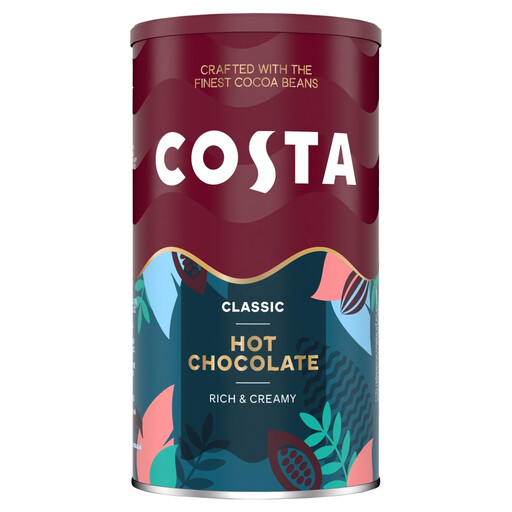
Costa Hot Chocolate 300g
A hot-chocolate powder to consider if you plan to make a breakfast drink with milk or a plant-based alternative. For a specifically dark-cocoa drink, check the current pack’s cocoa information and preparation instructions rather than treating the product name as a measure of strength.
View on Joybuy
 No image available
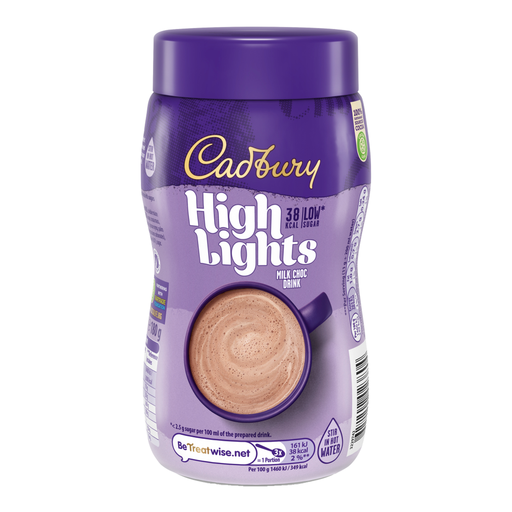
Cadbury Highlights Milk Chocolate Drink 180g
If you want a quickly prepared breakfast drink, check the current pack before choosing this one: the supplied descriptions differ on its preparation method. Its product description identifies milk as an allergen. Check the pack’s serving figures before making a nutrition comparison, and do not treat this variant as the same product as standard Cadbury Drinking Chocolate.
View on Joybuy
Questions about choosing hot chocolate
How can I check whether a hot chocolate has a dark-cocoa basis?
Look for a declared cocoa-solids percentage on a dark-chocolate product, then check its description and preparation method. Marks & Spencer states a minimum of 72% cocoa solids for its 72% Dark Drinking Chocolate and 70% for its Belgian Dark Hot Chocolate Flakes. Neither percentage predicts how every person will perceive the finished drink.
Should I compare the powder panel or the finished mug?
Use the same basis for both drinks. Tesco’s Options Belgian Choc figures cover 11 g powder in 200 ml water, while Sainsbury’s Cadbury Drinking Chocolate figure of 73 g sugars per 100 g describes powder that Tesco says to prepare with hot milk. Check the amounts and liquid before comparing finished servings.
Is dark hot chocolate suitable for someone with a milk allergy?
Do not assume it is. Marks & Spencer marks its Belgian Dark Hot Chocolate Flakes as unsuitable for people with a milk allergy, and Options Belgian Choc lists a milk ingredient. Food Standards Scotland advises avoiding the allergen that triggers a food allergy, so check the current pack for the exact drink.
Does a food business have to provide allergen information?
Yes. Food Standards Scotland states that businesses must provide allergen information for prepacked and non-prepacked food and drink, including information about the 14 allergens that must be declared under UK law. For packaged hot chocolate, read the current product label before serving it.


